

Building an MVP is critical in product development because it allows you to quickly test market reactions and iterate on working versions of your product. Unfortunately, few businesses understand how to create MVP and integrate it into their product development processes. We've discovered that there are a few frequent mistakes that companies make when creating MVPs that impair the overall efficacy of the process.
Amazon, Airbnb, Groupon, and Dropbox, among the most successful firms and products today, all began as minimal viable products. In this piece, we'll go over the five most common mistakes teams make when creating an MVP, as well as how to avoid them when you're starting out. But before all, you need to know the basics.
What Is MVP in Programming
A minimal viable product (MVP) is the initial commercially viable version of your product, created with the bare minimum of functionality to satisfy early adopters and validate the usability and demand assumptions that will be used to develop the final product.
Frank Robison created the concept in 2001, and Steve Blank and Eric Ries, two consumer development and management entrepreneurs, popularized it. It's a relatively new strategy that's been used by a number of companies to assist them avoid lengthy production procedures and gain immediate, actionable feedback.
What Is the Purpose of an MVP
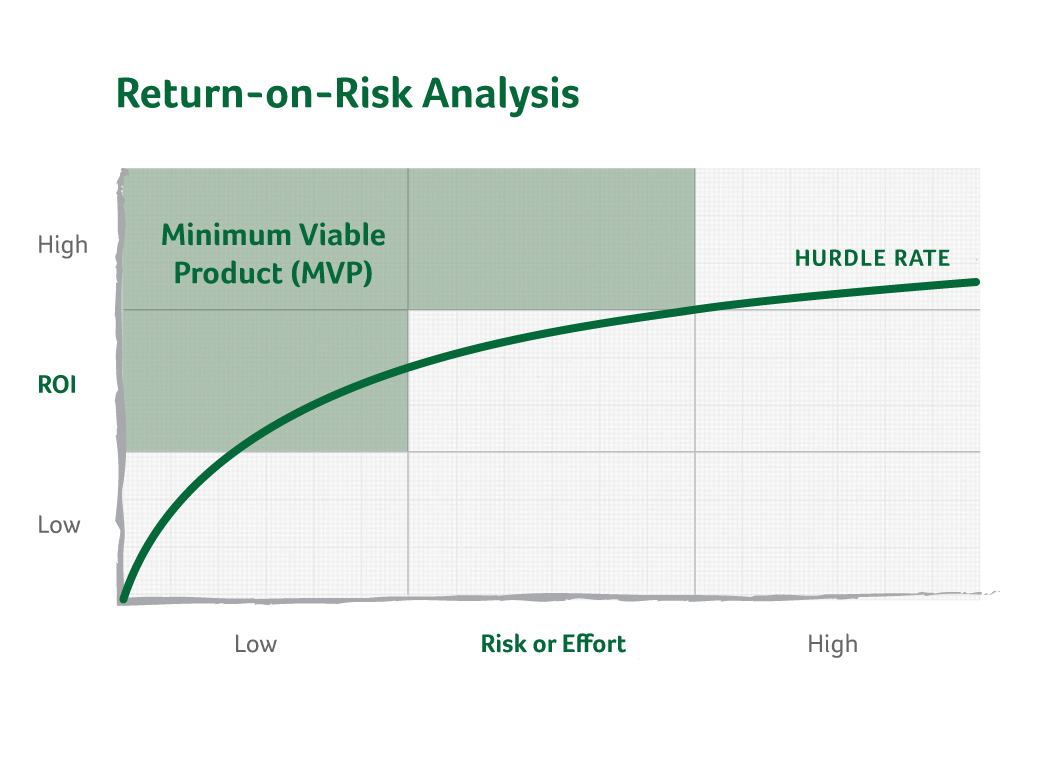
"Minimum Effort, Maximum Learning" is the mantra of an MVP. The Build-Learn-Repeat Model is reinforced by MVP. An MVP is a rough but functional version of your ultimate product that was designed to test real user behavior with a real product, allowing you to test your ideas in the real world. It is of utmost importance to build MVP before launching your final product.
Gets your initial customers: The MVP's purpose is to help you get your first customers and give them a taste of what you have to offer.
Gets initial input: Another purpose of MVP is to get preliminary feedback on whether or not your offering is needed.
Validates your riskiest assumption: Your riskiest assumption is usually your unique selling proposition, which is validated using a minimum viable product before putting everything into a business model based on it.
Validates marketing strategy: Using an experimental but viable product to test your product strategy allows you to discover the majority of your target audience's characteristics, habits, wants, and needs. This aids you in developing your final product with a marketing approach that is "less likely to fail."
Avoids overbuilding: When establishing a product hypothesis, entrepreneurs tend to include a lot of undesired features. During the MVP stage, the usability and demand for this product hypothesis are validated.
In order to leverage all the benefits, you must adopt several MVP strategies. And avoiding the most common mistakes comes at first before doing that.
Creating an MVP - 5 Mistakes You Must Avoid
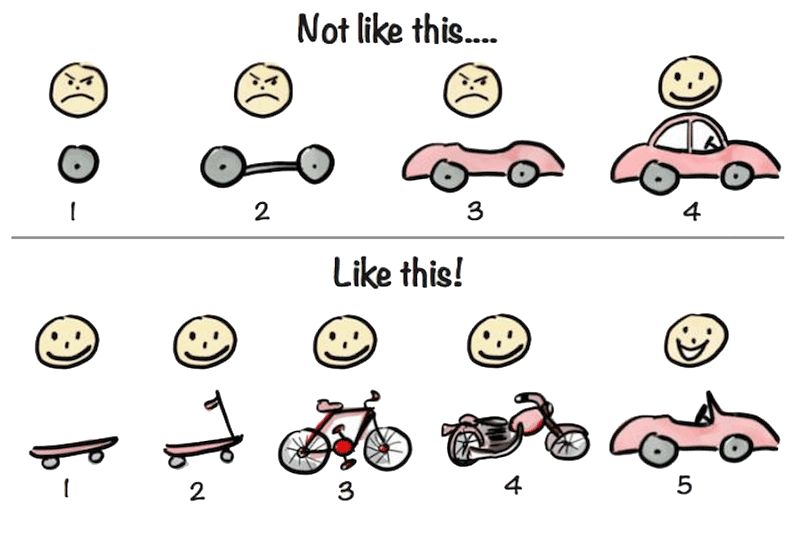
1. Wanting a Complete Product
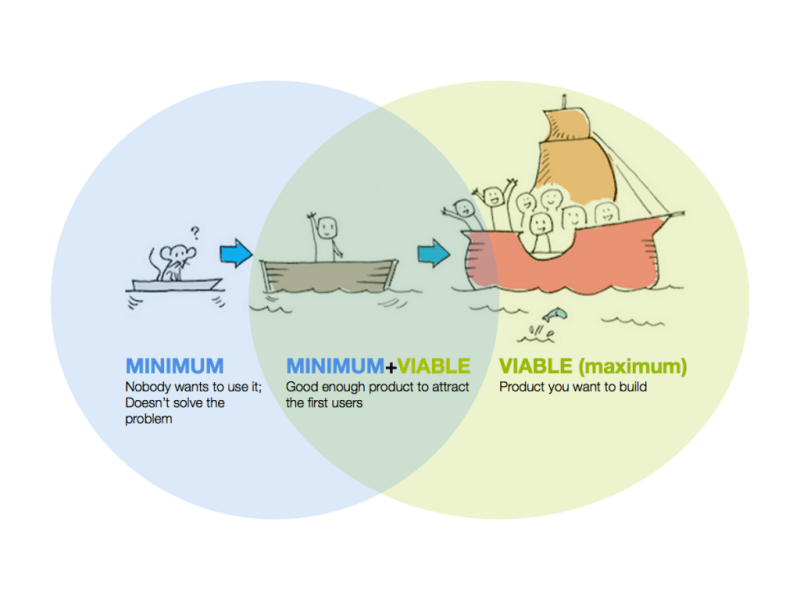
Startups frequently make the mistake of misinterpreting the objective, or idea, for which an MVP is created. You build MVP to obtain a bare-bones product produced just for the goal of testing the startup's most basic proposal.
This attitude to the product causes them to misunderstand the needs of the users. This regrettable occurrence results in the waste of software product development time, resources, and effort in the pursuit of a final product.
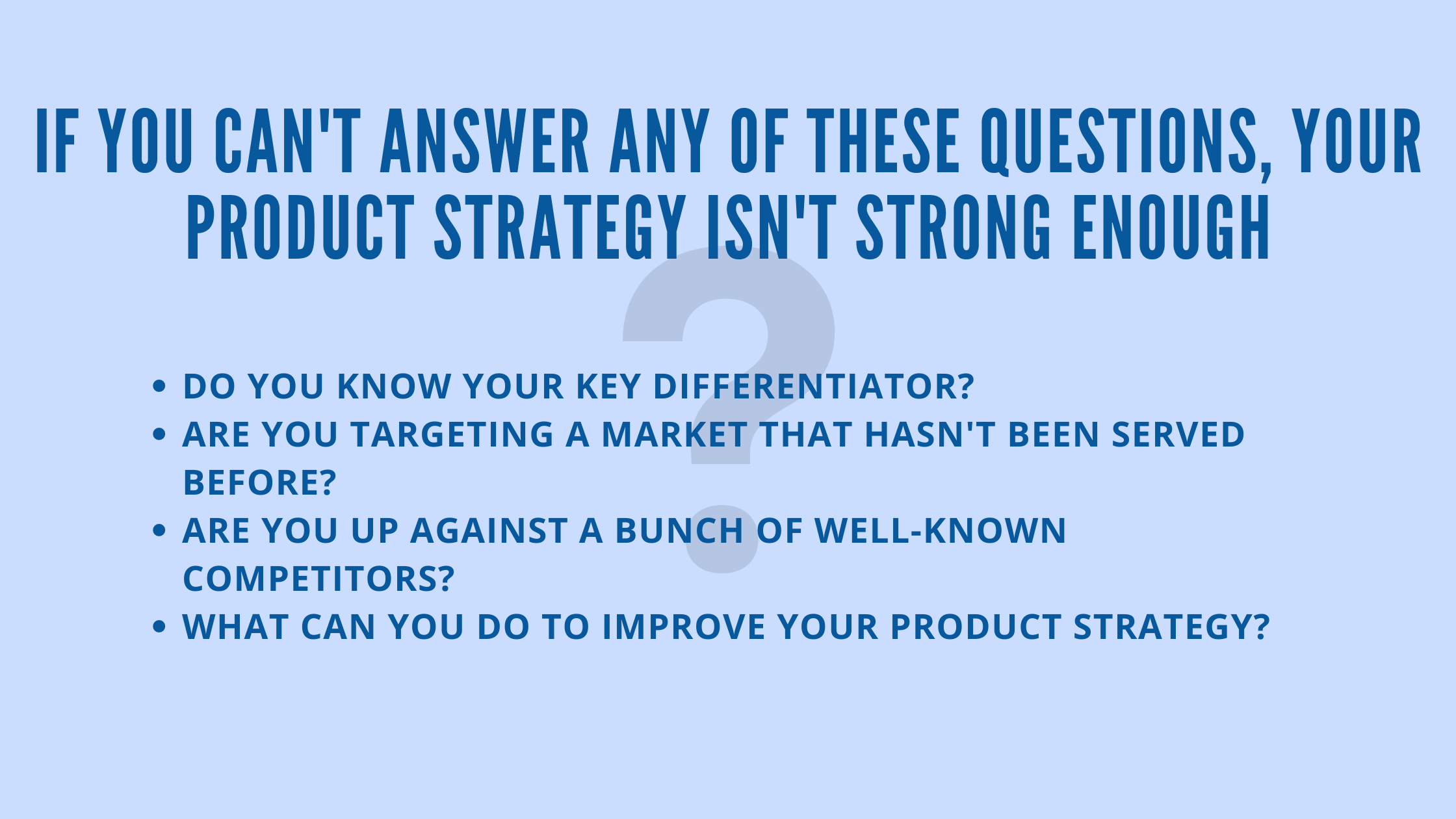
2. Having Inadequate Product Strategy
Consider your product strategy to be the heart of your business. If your engine isn't working properly, you won't be able to travel very far. Although many entrepreneurs are concerned about running out of cash, I feel that a poor product strategy is far more risky.
If you can demonstrate that your product works, even if it isn't setting any world records just yet, you'll be able to seek further funding if you need it. When your plan falls behind, though, things become more challenging.
Following an ineffective product strategy can result in the following risks:
- Keeping your employees occupied rather than productive
- Failing to sustain customer engagement and retention
- Blowing your marketing budget and failing to produce sufficient outcome
Undoubtedly inadequate product strategy can weaken your overall MVP strategies and hence the final product.
Also Read: MVP Development Guide: Market Research and Customer Pain Points
3. Feature Overload
It's like climbing a mountain to achieve commercial success with your product. You can employ numerous technologies and target different audiences to reach your business aim, just as there are several trails that lead to the summit.
Both processes, however, are guided by the same principle: taking too much with you will make it more difficult to progress and achieve the top. And so, feature overload is a common mistake that not only delays the MVP development process but also may result in losing the purpose.
When it comes to creating an MVP, feature overload immediately corresponds to:
- Postponing the release of your first version of your product - If there are too many features in your MVP testing becomes unnecessarily a lengthy and tiresome process. Most importantly, you may end up postponing the release date of the first version of your product
- Needing to modify product modules that did not bring value to your customers - Feature overload can imply that you need to modify a lot of product modules that serve no purpose to the customers. No doubt that it results in the wastage of time and resources
- You'll run out of money faster and won't be able to fulfill your goals - This pointer is well-explained by the above two pointers. Not only your investment will fall short but it will be difficult to reach your goals due to such feature overload
How Do You Recognize Feature Overload?
You can easily recognize feature overload once you build MVP in the following ways -
The Development of Your MVP Will Take More than Three Months
Based on my experience working on innumerable MVPs over the years, I believe that 2–3 months is an acceptable timetable to build an MVP. If your development team's estimate surpasses this timeframe, it's a good idea to take a second look at your timeline.
No Idea about the Tasks Required to Achieve Your MVP's Main Goal
Can you explain why you're creating your MVP in detail? It's a clue that you're in trouble if you can't answer this question in one short statement. MVPs that have been optimized are laser-focused. You won't be able to tell when you've crossed the line and started overstuffing your MVP with features if you don't have a clear goal in mind.
Solution: At least 5 times, ask yourself why you're constructing your MVP
Sakichi Toyoda, a Japanese inventor who created the foundations for the Toyota Group, came up with the notion of the 5 Whys. When faced with an issue, he thought that you should ask yourself "why" five times to get to the bottom of it and avoid it from happening again.
The 5 Whys method is an excellent way to address an overburdened MVP. Be as explicit as possible while utilizing it. Avoid industry jargon and buzzwords, which are frequently employed to hide hazy and directionless ideas.
Determine which of your product assumptions are causing problems for the project
Consider the actions you want your users to take, and then eliminate any product assumptions that don't fulfill those requirements.
To clearly put down the cause-and-effect relationship, you can use the following format:
- This capability is something we believe in
- As a result, this will happen
- When we see measurable results
Make a two-dimensional feature map of the area
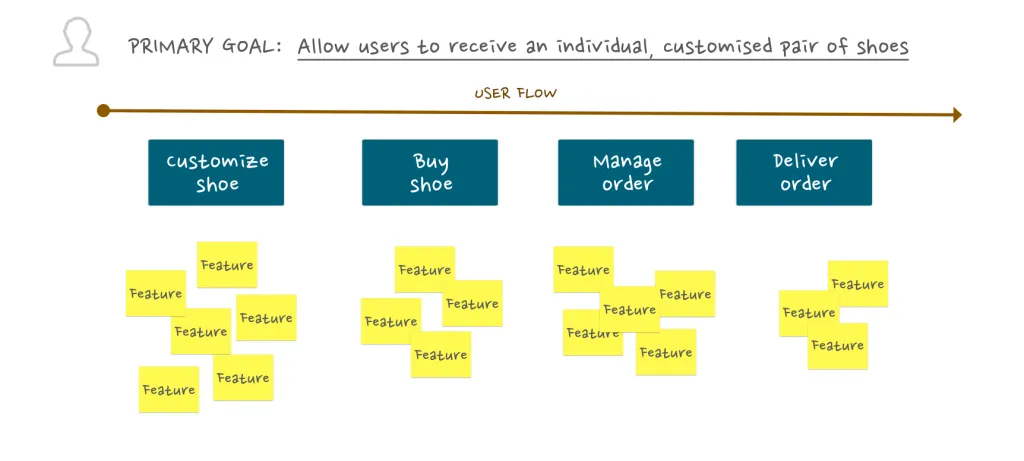
Although narrative mapping can be done in a variety of sophisticated and complex methods, you can start with a simple graph. Simply picture yourself in your client's position and write down the steps as you would go through them.
Also Read: 6 Effective Tips to Scale Product from MVP
4. An Over-engineered MVP
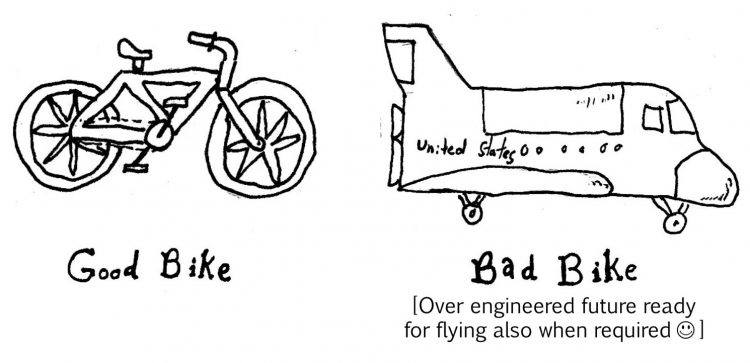
Trying to build MVP with every feature from scratch is not only unnecessary, but also wasteful. Attempting to recreate the wheel by generating all aspects from scratch without using existing libraries would only result in you spending too much money and achieving too little.
Over-engineering your MVP can have major ramifications for your project. For instance, instead of using frontend frameworks, allocating a large portion of the budget and development time to custom development and manual architecture setup will cause the wastage of time and resources. Also, spending too much time on continuous integration during the first weeks of development work and not focusing on providing value for the end users can seriously impact the core product quality.
On the other hand, generating code that will not be useful in later versions of the product will just delay your project without adding any value to the products as well as the end-users.
How Can You Ensure that Your MVP is Not Over Engineered?
Keep the Team Up to Date
Make sure everyone on your team is on the same page when it comes to the product's business context, the reasons you're producing an MVP, and the assumptions you want to test.
Keep an Eye on Your Tech Debt
Don't be afraid to take on some technical debt, but do it in a way that is both sustainable and controllable.
Make Use of Off-the-shelf Parts
Making use of existing libraries and components is perfectly acceptable. They will speed up the development process and free up some funds that might be spent on product strategy instead if they are properly adapted.
Request a Variety of Development Models
If you're working with a custom software development company, request quotes that represent alternative delivery techniques for your MVP. Examine your choices.
5. Excessive Feedback
Although obtaining a lot of input may seem like a good thing when you're just starting out, you must be selective about who you get it from and what you apply during the MVP stage. Narrow it down to what will best help you achieve your main goal and meet the needs of your target audience.
You risk the following if you try to implement too much feedback:
- A slower rate of development and a postponement of the debut
- Reworking the product multiple times
- Losing sight of the big picture and failing to plan ahead
- Wasting money
By keeping your strategists busy implementing unnecessary modifications and neglecting long-term planning, you're underutilizing your core resources and lowering team morale.
Solution: How to Ensure the appropriate amount of feedback?
Form a Customer Advisory Board
Make a list of up to five strategic clients who suit your ideal client profile if you get a lot of feedback. Those are the clients for whom you're creating your MVP, and addressing their wants is your top focus. Regularly seeking their advice will also demonstrate to them that you appreciate their opinion.
Make Client Feedback More Efficient
You may have gathered feedback from a variety of sources, including customer surveys, emails, and meeting minutes. Make a plan for how you'll collect and use the information.
Use Your Primary Hypothesis During Review
Have a clear notion of what you want to learn from your client feedback before you evaluate it. It's easy to become overwhelmed by the sheer number and breadth of feedback, so determining which components are the most significant is crucial.
First and foremost, you want to know if the product you're designing is useful and if your customers are satisfied with it. Make a list of the remaining input and prioritize it so you don't get carried away with minor modifications.
Create and Maintain a Transparent Validation Board
Using a physical whiteboard to acquaint your coworkers with the hypotheses you put down might assist ensure that everyone is on the same page when it comes to critical assumptions.
Wrapping Up
A critical component for building mvp for software development should be an exciting creative experience for designers, developers, and everyone on the product team, whether they're working on key features, responding to market research, or prototyping.
Overall, your MVP has a good chance of succeeding if you avoid these five typical blunders. Make sure you undertake thorough market research and prototyping. Include only the features that are required for the product to function, direct development with data analytics, and understand how your MVP can scale.
If you take the time to examine all of these factors, you'll be able to construct an MVP that fulfills its objective while also assisting you in developing a superb market-ready product.
If you are looking for an end-to-end solution - MVP to product development, get in touch with us.
Krunal Shah
Krunal Shah is the CTO and Co-founder at Third Rock Techkno. With extensive experience gained over a decade, Krunal helps his clients build software solutions that stand out in the industry and are lighter on the pocket.
 | Let's connect!