
HIPAA is short for Health Insurance Portability and Accountability Act. Passed in 1996, the act outlines a number of rules and regulations for the protection of patient health data in any form. Applicable only to the US territory, the act protects the patients and their data security. If an organization fails to comply with these rules, they have to pay hefty sums of money as penalties. Hence, if you are a company that is planning to build a healthcare software solution, ensure that you understand and adhere to the complete HIPAA compliance checklist for software development.
HIPAA Compliance Rules and Requirements
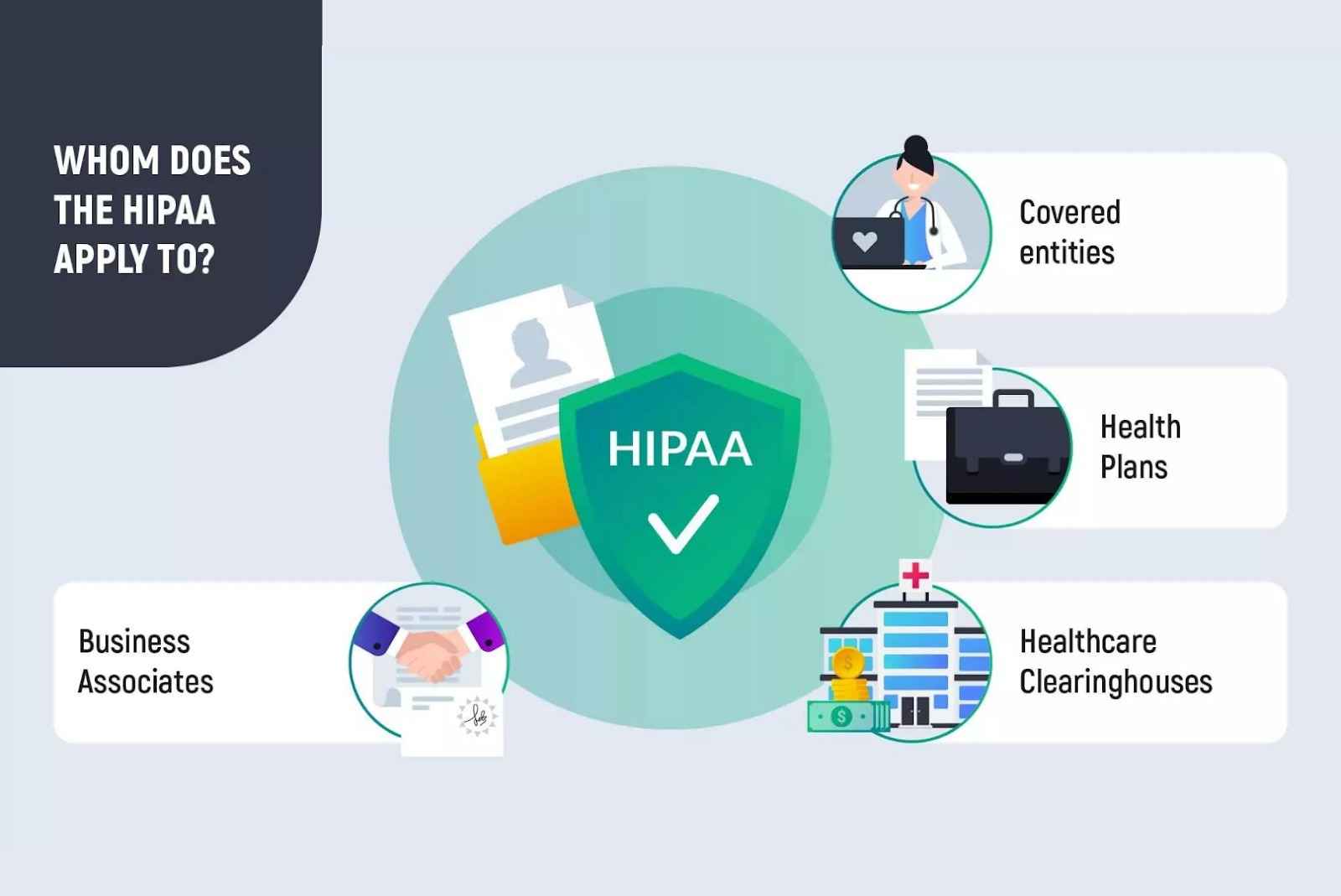
HIPAA rules apply to the collection, storage, use, transfer, disclosure and destruction of medical data by all the stakeholders. Before you go on to read the rules, let’s first understand the legal terminology associated with HIPAA requirements.
1. What is Protected Health Information in HIPAA?
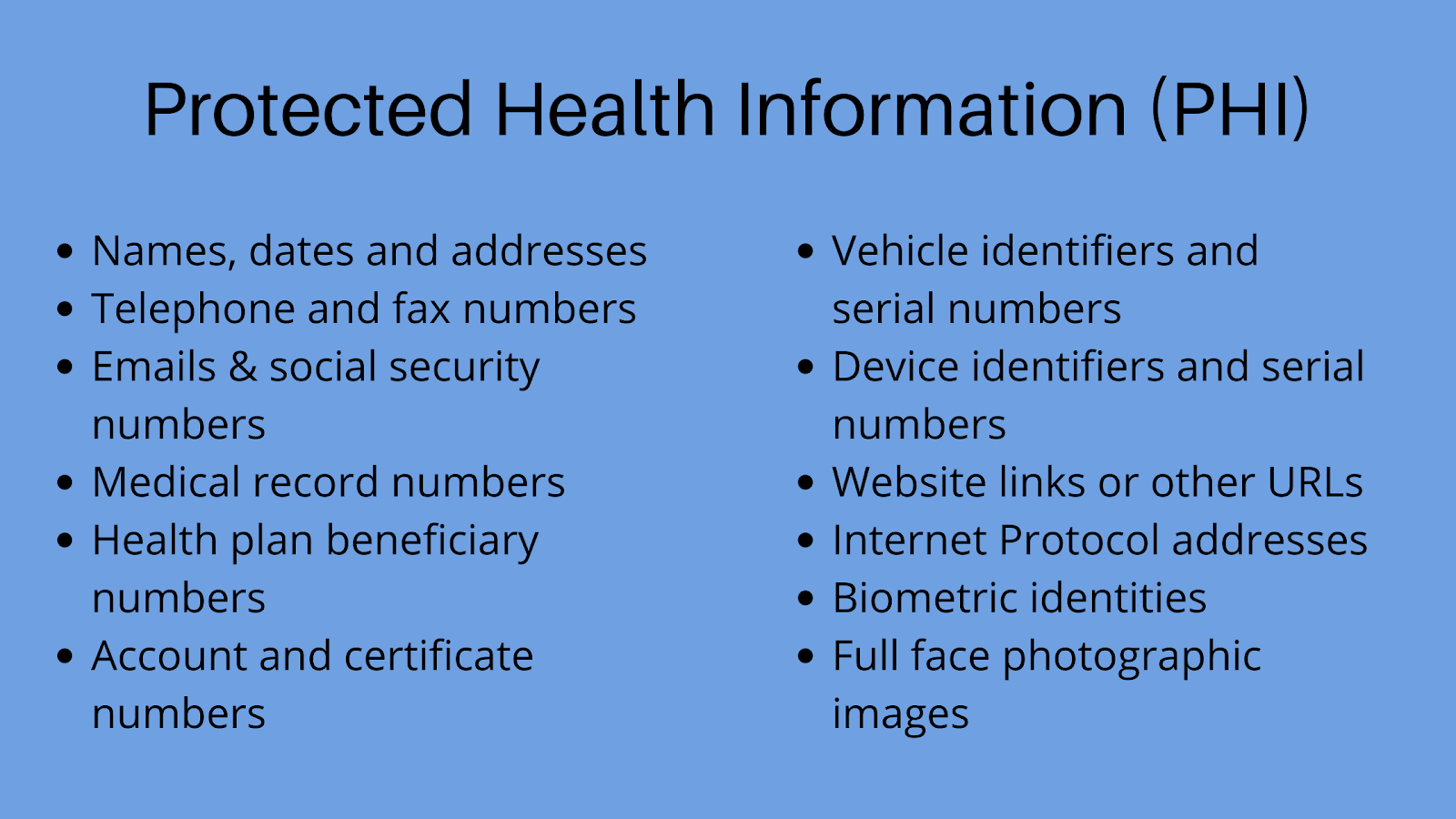
The subject matter of HIPAA is Protected Health Information or PHI. The main purpose of the act is to protect PHI. PHI of patients includes their personal details like contact numbers and addresses as well as their medical records.
2. Who are the covered entities according to the HIPAA Act?
A covered entity is anyone who works in the healthcare industry and/or can access PHI. In that sense, hospital admin staff, medical staff, or insurance agents, can be covered entities under the HIPAA.
3. Who are Business Associates under the HIPAA Act?
Business associates are those who do not work in the medical field directly but closely function with the covered entities. Examples include IT specialists and lawyers. Since they collaborate with medical institutions, they also have access to the PHI. The complete HIPAA compliance checklist for software development is majorly useful to this category of stakeholders.
HIPAA Compliance Rules For Software Development
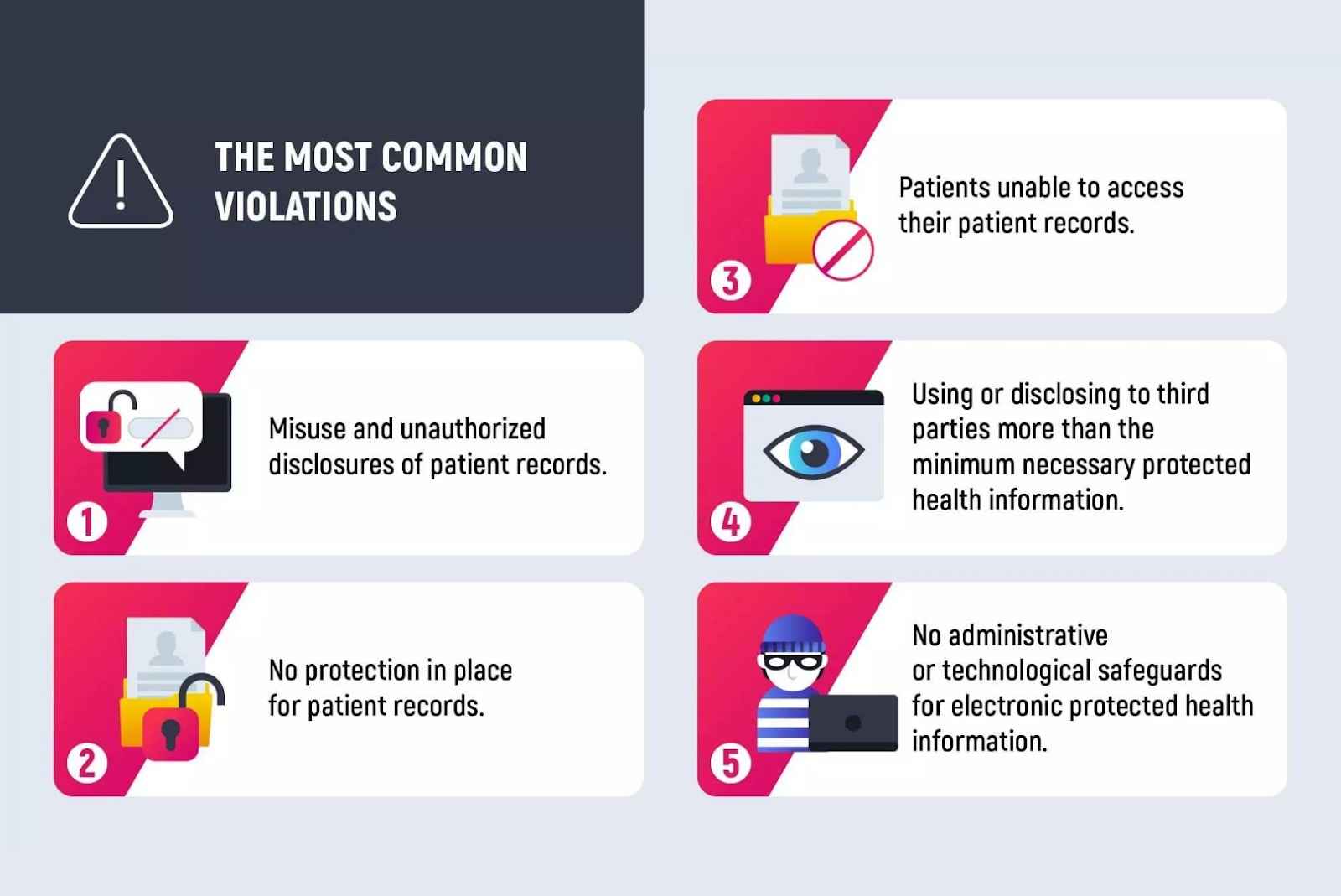
Today, electronic PHI storage solutions have replaced traditional paper-based methods. However, the same electronic modes pose additional risks of data breach.
Most often, PHI data breaches result in financial loss irrespective of the number of records stolen. Hackers steal private information with the intention of selling it for money. Although, unauthorized exposure of data is only one of the risks involved.
Modifications in the classified data is not an uncommon threat. Moreover, changes made in a patient's medical records and certain diagnoses can mislead the course of treatment. Such situations put the patients at a greater risk of personal damage and can even prove to be fatal for them.
To avoid all the above risks and disasters, the HIPAA defines 5 major rules that all healthcare software applications must follow:
1. The HIPAA Privacy Rule
As per the latest update, the HIPAA Privacy Rule constitutes the requirements regarding PHI protection. Therefore, clinical history, payments for healthcare treatment, and any other medical information must be secure and inaccessible to third-parties.
Additionally, the rule describes those certain situations under which certain people can access PHI without patient authorization. It also defines the limitations and rights of the patients.
Under this rule, the patients can examine their personal medical records and request copies of the same. In case of a mismatch or an error, the patients may also request corrections.
2. The HIPAA Security Rule
The HIPAA Security Rule lays down conditions for PHI security. It includes specific recommendations and limitations regarding health information security. Essentially, this rule helps in identifying, correcting and preventing future security risks.
The rule dictates that the covered entities are required to conduct a periodic data breach risk analysis in order to ascertain reliable PHI protection.
3. The HIPAA Enforcement Rule
The HIPAA Enforcement Rule clarifies the investigation provisions and financial penalties in situations of a data breach. However, the penalty amount varies with the number of medical records exposed and the frequency of data breaches in an organization.
Generally, a first-time breach can cost an organization from $100 t0 $50,000 but the subsequent breaches can cost as high as $1.5 million.
4. The Breach Notification Rule
According to this rule, if the data breach has affected less than 500 individuals, then the organization must send a notification to all those individuals within 60 days of the discovery of the breach. The company must also inform the Office For Civil Rights of the US Health and Human Services within 60 days of the start of a new calendar year.
If more than 500 individuals are affected by a data breach then the organization is obliged to notify the media as well.
5. The Omnibus Rule
The Omnibus Rule was added in January 2013 and adds to the above-mentioned rules. Typically, this rule extends the obligations of business associates to comply with the HIPAA rules while dealing with PHI.
Complete HIPAA Compliance Checklist for Software Development
Building web or mobile applications for healthcare providers is a serious business. Naturally, it comes with its fair share of repercussions if the app breaches any provisions of HIPAA compliance. Therefore, it’s essential to have a clear understanding of how to make a healthcare software application HIPAA compliant.
The Security Rule of the HIPAA lays down certain requirements as a foundation for data safety in all software tools. To help you develop secure solutions, we’ve come up with a complete HIPAA compliance checklist for software development.
1. User Authorization
The US government classifies the degree of identity assurance in software applications into four levels. The lowest levels employ only a single-factor authentication. Thus, if a user is able to freely access the system with only a password, the level of security is the lowest. Higher levels make use of multi-factor authentications wherein users need to verify their mobile phones, email addresses, etc.
To make your software HIPAA-compliant, you need to include at least two of the below-mentioned factors:
Knowledge: A visitor is required to enter a unique data, the knowledge of which is held only by the legit user. Example: PIN or password.
Possession: The users are provided with additional data, like security code, by the platform. Thus, the visitor needs to enter that data so as to ensure legal possession of the information.
Inherence: A biometric scan is used to verify an inherent characteristic of the user that can't be copied or modified.
Location: Allowing access only if the user is located in a particular location at the time of access.
A HIPAA-compliant software solution must remember its users. Moreover, it should allow doctors to access patient data without having to follow the complex protocol every time they need vital information.
2. Remediation Plan
The remediation plan is a security plan that details the measures taken by the business associates for patient data protection. So it documents safety best practices, including the following aspects:
- A list of all the tasks that will be undertaken to ensure data security
- Clear identification of each team member’s responsibility for the same
- Plan of action to overcome challenges in future
Hence, the remediation plan is the main document that you need for HIPAA compliance in terms of safe software development practices. However, the main challenge here is to figure out the exact tasks that your organization needs to fulfill security compliance.
So a combination of medical and software expertise is essential for composing an all-encompassing remediation plan for HIPAA compliant software.
3. Emergency Mode
An emergency mode plan guides an organization's plan of action during an attack. It specifies the methods, tasks, and practices to keep the records of the patients safe during an emergency. Therefore, this emergency plan of your HIPAA compliant healthcare app must contain the following information:
- A complete list of all the team members along with their roles, contact, and responsibilities.
- Details of all the digital healthcare systems that the organization uses
- A step-by-step procedure for implementing the plan (how, when, by whom)
- Recovery procedures
In this plan, business associates must clearly specify the possible risks and characterize the emergencies in which the plan can be effectively used. This helps in performing better threat assessments and be prepared for an actual crisis.
4. Authorization Monitoring
The app developers and owners should check the efficiency and safety of the access algorithms at regular intervals of time. So the following authorization precautionary measures are a vital part of the complete HIPAA compliance checklist for software development:
Activity logs and audit controls
Employ an automated system of risk detection in order to easily identify any suspicious attempts made to enter the system. By keeping a track of the activity logs of all the users, you must be able to learn the patterns of interactions with the app.
Automatic log-offs
Any healthcare software should be designed in such a way that a user automatically logs-out from the system as soon as their shift is over. Thus, you can reduce the chances of profile penetration.
Access control in emergency situations
The system must have an option to let the organization access the user’s profile in a case of emergency, even if those team members aren’t physically present.
5. Data Backup
According to this provision of the HIPAA, all the electronic protected health information (ePHI) must be duplicated on another dependable data storage. This implies that you must create a backup of the patient details, records, images, etc, regularly. It is important for the organization to concentrate on the following aspects to make their software HIPAA-compliant:
Redundancy: The data on your system must be copied at least three times. Additionally, you must store it on at least two different storage at different locations.
Encryption: Data encryption is an easier and faster method for the protection of data. The applications should use a 256-bit AES protocol and two-factor authentication for maximum data security.
Transfers: In the event of a transfer to public services or cloud providers, the data must be encrypted with a 256-bit AES protocol. This ensures that even if a file is leaked on the server, its contents are not revealed.
Monitoring: In an unfortunate event of backup system failure, the system must be immediately able to alert the organization’s team.
A great advantage of consistently backing up the data is the fact that even if the initial file copy is jeopardized, its contents will remain safe. Moreover, you can easily recover original data from the secondary copies by the organization.
HIPAA Compliance Software Certification
The federal governing body for monitoring HIPAA compliance is the Office of Civil Rights (OCR). It falls under the purview of the Department of Health and Human Services in the US. They do not give out any certifications for HIPAA compliance. Moreover, they do not endorse or encourage any other organization claiming to give HIPAA compliance certification.
So there is no certificate that you can get for your HIPAA compliant software. Instead, just follow the complete HIPAA compliance checklist for software development to ensure patient data.
Choose Trusted Development Agencies to build HIPAA Compliant Software Solutions
Now you have a comprehensive HIPAA compliance checklist at your disposal. So the next step is to onboard a team with in-depth knowledge and expertise in healthcare applications. It requires years of technological experience to build the right software solution for healthcare organizations.
At Third Rock Techkno, we build software solutions that meet all the security standards applicable globally. Over the past 7 years, we have put together the best development, design and testing teams that leverage industry-leading trends to deliver top-notch solutions to our clients.
If you have a healthcare app idea, our expert developers, best development practices and time tested processes can turn it into a market-ready and lucrative web or mobile application.
Looking For Expert Guidance on Your Dream Project?
Our diverse team of industry leading veterans can help you build the most viable solution.
Schedule a free consultation call