A fifth-grade teacher pulls up an AI-powered reading assessment on her tablet. Within seconds, it identifies three students who need additional phonics support and automatically adjusts their learning path for the week.
Meanwhile, a high school chemistry teacher launches a virtual lab simulation that allows students to safely experiment with reactions that would be too dangerous or too expensive to conduct in a physical classroom.
This isn't a glimpse into some distant future. Today, 60% of teachers use AI in their regular teaching routines.
The classroom technology landscape has transformed dramatically. What was once limited to projectors and computer labs has evolved into a sophisticated ecosystem of AI-powered learning platforms, interactive digital tools, and intelligent teaching technology that adapts to every student's needs.
Whether you're a teacher looking to enhance student engagement, a school administrator evaluating technology investments, or an EdTech professional staying current with industry trends, this guide covers the essential tech tools for teachers and classrooms in 2025.
Why Modern Classrooms Need Better Technology Tools
Traditional classroom technology treated every student the same way. A single lesson plan, delivered at one pace, is expected to work for thirty different learners with thirty different learning styles. We've always known this approach falls short, now we finally have technology for the classroom that can do better.
The shift isn't just about replacing chalkboards with smartboards. Today's teaching technology fundamentally reimagines how information flows between teachers and students.
AI-powered platforms analyze learning patterns in real-time. Adaptive systems adjust difficulty based on individual performance.
Digital tools for the classroom create feedback loops that would be impossible to manage manually.
Consider the time equation alone. Teachers spend countless hours on administrative tasks, grading assignments, tracking attendance, creating assessments, and generating progress reports.
Modern education software tools automate these processes, freeing educators to focus on what actually matters: inspiring students and providing personalized support where it's needed most.
The global EdTech market has responded to this demand, with digital learning tools becoming essential infrastructure rather than optional enhancements.
Schools that haven't adapted aren't just missing convenience, they're missing opportunities to reach students who learn differently, struggle silently, or need challenges beyond the standard curriculum.
Essential Tech Tools for Teachers in 2025
The most effective tech tools for teachers solve real problems without creating new ones.
They integrate smoothly into existing workflows, require minimal training, and deliver measurable improvements in student outcomes.
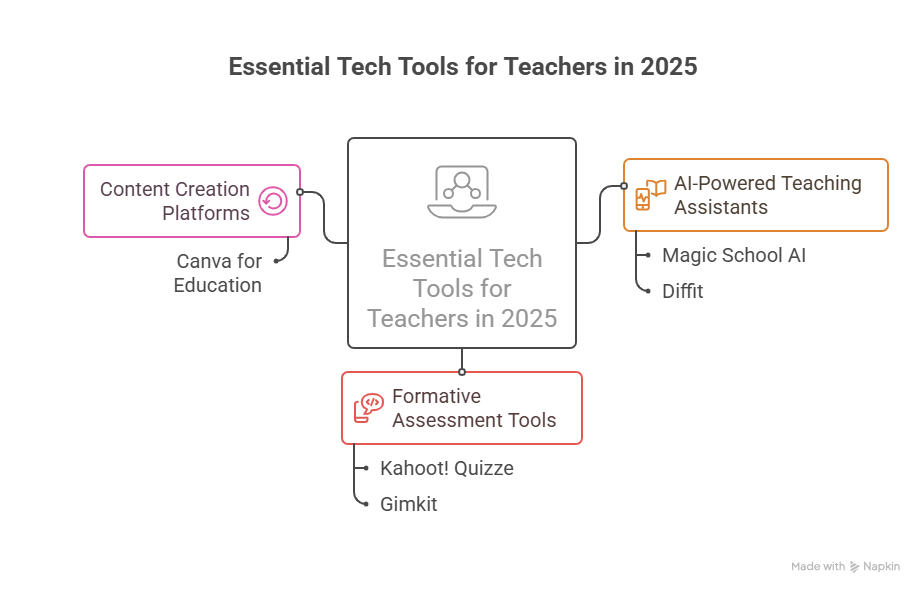
AI-Powered Teaching Assistants
Platforms like Magic School AI and Diffit have become indispensable technology tools for teachers who need to differentiate instruction across diverse classrooms.
These tools generate lesson plans, create assessments at multiple reading levels, and produce explanation variations for complex concept tasks that would take hours to complete manually.
MagicSchool AI offers over 80 different tools within a single platform, from rubric generation to email composition to creating multiple explanations for a difficult topic.
Diffit specializes in text leveling, transforming any article or video into content appropriate for specific grade levels while generating comprehension questions automatically.
Formative Assessment Tools
Real-time assessment has transformed classroom dynamics. Technology tools for teachers like Kahoot! Quizze and Gimkit turn knowledge checks into engaging activities while providing immediate data on student understanding.
The power isn't in the gamification, it's in the feedback loop. Teachers can identify misconceptions within minutes rather than waiting for graded tests, allowing for immediate intervention and instructional adjustment.
Content Creation Platforms
Canva for Education and similar teacher technology tools have democratized design. Creating professional-quality presentations, worksheets, and classroom displays no longer requires graphic design expertise.
Templates specifically designed for educators make production fast, while collaboration features enable students to develop their own visual communication skills.
Build EdTech That Teachers Actually Use
We develop AI-powered learning platforms, custom LMS solutions, and classroom technology tools for EdTech companies worldwide.

Best Digital Tools for the Classroom
Effective digital tools for the classroom share common characteristics: they're intuitive enough that technology doesn't become a barrier to learning, robust enough to handle real classroom conditions, and flexible enough to support different teaching styles.
Learning Management Systems
Google Classroom and Canvas dominate the LMS space for good reasons. These technology tools for the classroom provide centralized hubs for assignments, resources, communication, and grades.
The key differentiator isn't features, but both platforms offer comprehensive functionality, but ecosystem integration.
Google Classroom works seamlessly with Google Workspace tools that most students already use. Canvas offers deeper customization and more sophisticated analytics, making it popular in higher education and districts with complex reporting requirements.
Interactive Whiteboard Platforms
Physical interactive whiteboards have given way to software solutions that work across and display. Tools like Miro, FigJam, and Whiteboard. Chat enables collaborative visual work whether students are in-person, remote, or hybrid.
These classroom tech tools excel at brainstorming, concept mapping, and collaborative problem-solving. Students can contribute simultaneously from their own devices, making participation more equitable than traditional hand-raising dynamics.
Video-Based Learning Tools
Edpuzzle and Nearpod transform passive video watching into an active learning experience. Teachers embed questions, polls, and discussion prompts directly into video content, ensuring engagement throughout and providing data on where students struggle or lose interest.
AI-Powered Learning Platform and EdTech Tools
The most significant shift in edtech tools involves AI moving from novelty to necessity.
AI-Powered platforms don't just deliver content, they learn from student interaction and continuously optimize the learning experience.
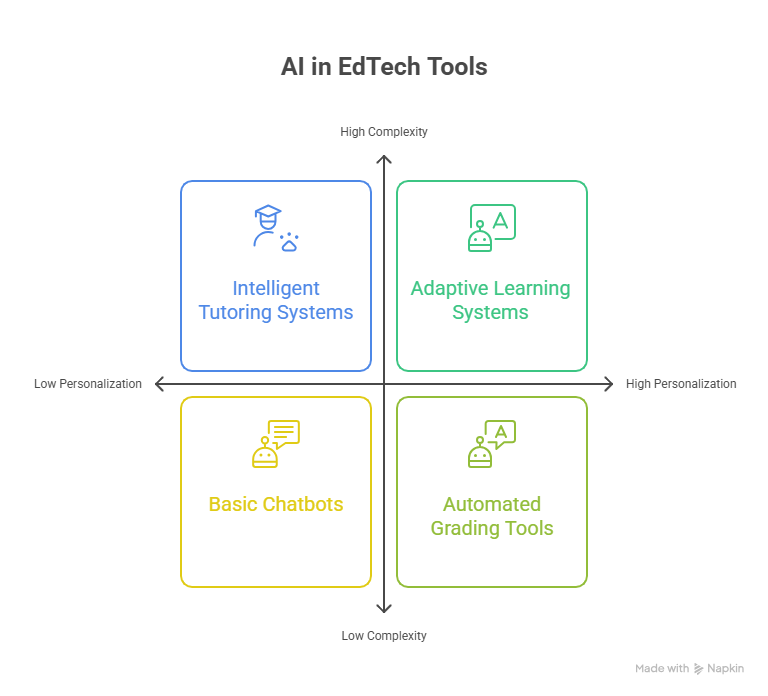
Adaptive Learning Systems
Platforms like DreamBox(mathematics), Lexia (Literacy), and Khan Academy leverage AI to create truly personalized learning paths.
These digital learning tools continuously assess student knowledge, identify gaps, and adjust content difficulty in real time.
The sophistication goes beyond simple right-or-wrong tracking. Modern adaptive systems analyze how students arrive at answers, identifying procedural misunderstandings versus conceptual gaps and responding with targeted interventions.
Intelligent Tutoring System
AI tutors like Khanmigo provide on-demand support that supplements classroom instruction.
Unlike simple chatbots, these systems are designed with pedagogical principles that guide students toward understanding rather than simply providing answers.
For teachers, these edtech tools extend instructional capacity. Students who need additional practice or explanation can access support outside class hours, arriving better prepared and allowing classroom time to focus on deeper exploration.
Automated Grading and Feedback
AI-powered assessment tools handle routine grading while providing detailed feedback.
Platforms can evaluate writing assignments, identify common errors across a class, and generate personalized improvement suggestions, transforming assessment from a time drain into a learning opportunity.
Interactive Classroom Technology Tools
Engagement remains a persistent challenge in education. Interactive classroom technology tools address this by transforming students from passive recipients into active participants.
Game-Based Learning Platforms
Prodigy, Blooket, and Gimikit apply game mechanics to academic content. Students earn rewards, compete on leaderboards, and progress through levels, all while practicing curriculum-aligned skills.
The technology tools used in the classroom in this category work because they tap into intrinsic motivation rather than relying solely on external pressure.
Student Response Systems
Modern polling and response tools go far beyond multiple-choice clickers. Platforms like Mentimeter and Poll Everywhere support word clouds, open-ended responses, Q&A sessions, and collaborative ranking exercises.
These technology tools in the classroom give voice to students who might not speak up in traditional discussions.
Virtual and Augmented Reality
Immersive technologies are becoming accessible classroom technology examples rather than expensive experiments. Google Arts & Culture offers virtual museum tours and historical site explorations.
Merge Cube enables students to hold and manipulate 3D objects. These tools make abstract concepts tangible and distant places accessible.
Your EdTech Vision. Our Development Expertise.
From concept to classroom, we helps you create educational technology that transforms how students learn.
Educational Technology Tools for Students
The best educational technology tools for students meet learners where they are, supporting different learning styles, accessibility needs, and skill levels.
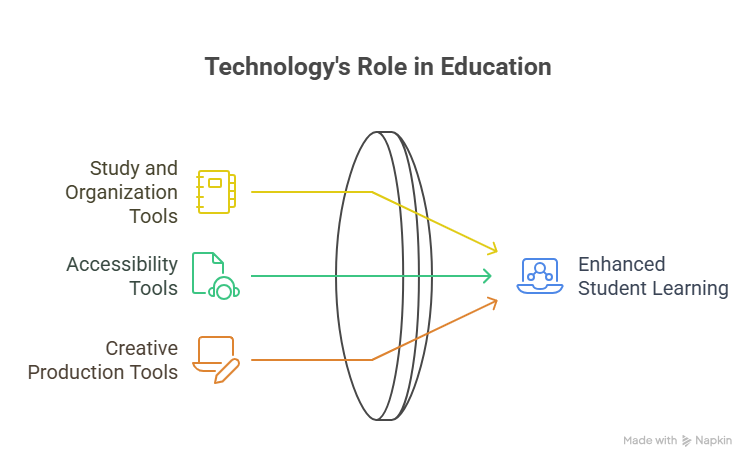
Study and Organization Tools
Quizlet remains essential for vocabulary and concept review, with AI-enhanced study modes that optimize retention. Notion and similar platforms help students develop organizational skills that extend beyond academics.
These student learning tools build capabilities students will use throughout their careers.
Accessibility Tools
Technology for educators must include tools that ensure all students can participate fully. Read&Write provides text-to-speech, speech-to-text, and vocabulary support across platforms.
Immersive Reader, built into Microsoft products, offers similar functionality. These aren't accommodations for some students, they're options that benefit many learners.
Creative Production Tools
WeVideo, Canva, and Book Creator enable students to demonstrate understanding through multiple modalities. A student who struggles with written essays might excel at video explanations. These educational technology tools for students expand how learning can be expressed and assessed.
Education Software Tools for School Administration
Classroom technology exists within broader institutional systems. Education software tools for administration create the infrastructure that supports teaching and learning at scale.
Student Information System
PowerSchool and similar platforms manage student data, attendance, grades, and family communication. Integration between SIS platforms and classroom technology tools for teachers eliminates duplicate data entry and ensures information flows where it's needed.
Communication Platforms
Tools like ClassDojo and Seesaw bridge the classroom and home, keeping families engaged in student progress. These technology platforms for educators support multiple languages and communication preferences, making engagement more equitable across diverse communities.
Analytics and Reporting
Data-driven decision making requires technology resources for teachers and administrators that surface actionable insights. Modern platforms aggregate information across tools, identifying patterns that would be invisible when examining individual data sources.
How to Choose the Right Classroom Technology
With thousands of available tools, selecting the best technology tools for the classroom requires systematic evaluation rather than chasing trends.
- Start with problems, not products
Identify specific challenges in your teaching or school before evaluating a solution. The best technology resources for the classroom are those that address real needs rather than creating new workflows to support.
2. Prioritize integration
Technology for classrooms works best when tools communicate with each other. Evaluate how new platforms connect with existing systems before committing to adoption.
3. Consider the total cost
Free tools may require more training time or lack essential features. Paid tools communicate with each other. Evaluate how new platforms connect with existing systems before committing to adoption.
4. Consider the total cost
Free tools may require more training time or lack essential features. Paid tools may include support and professional development. Evaluate the complete investment, not just licensing fees.
5. Pilot before scaling
Test technology for teachers with a small group before district-wide rollout. Real classroom conditions reveal issues that demos and reviews miss.
6. Plan for support
Even intuitive tools require ongoing support. Ensure adequate training resources and technical assistance exist before expecting widespread adoption.
Ready to Build the Next Great EdTech Tool?
We've helped companies launch AI-powered education platforms used by thousands of educators.
The Future of Teaching Technology
The trajectory of technology for classrooms points toward increasingly personalized, AI-enhanced learning experiences. Several trends will shape the next generation of teacher tech tools and classroom technology.
- AI becomes Invisible Infrastructure
Rather than standalone AI tools, intelligence will be embedded throughout educational platforms. Every tool will adapt, recommend, and optimize automatically.
2. Interoperability Standards Mature
Rather than standalone AI tools, intelligence will be embedded throughout educational platforms. Every tool will adapt, recommend, and optimize automatically.
3. Assessment Transforms
Continuous, embedded assessment will replace high-stakes testing events. Technology will evolve learning as it happens, making separate testing increasingly obsolete.
4. Human connection remains central
Despite technological advancement, education remains fundamentally human. The most effective technology for educators will amplify teacher capabilities rather than attempting to replace human judgment and relationships.
The school and institutions preparing for this future are investing not just in purchasing tools but in building capacity to evaluate, implement, and evolve their educational technology ecosystems continuously.
Conclusion
Educational technology tools have moved from nice-to-have supplements to essential classroom infrastructure.
The key isn't adopting every new platform or chasing every trend. It's building a coherent ecosystem of digital tools for the classroom that work together, support your specific educational goals, and evolve as needs change.
Whether you're a teacher exploring your first edtech tools or an administrator planning district-wide technology investments, the principles remain consistent: start with clear objectives, prioritize integration and usability, and never lose sight of the human relationships at the heart of effective education.
Ready to build custom educational technology solutions?
We help EdTech companies and educational institutions develop AI-powered learning platforms, custom LMS solutions, and interactive classroom technology.
FAQs
What are educational technology tools?
Educational technology tools are digital tools, software, and platforms designed to enhance teaching and learning. They include classroom technology tools, learning technology tools, and educational technology software used by students and teachers.
What are the best educational technology tools for students in 2025?
The best educational technology tools for students in 2025 include interactive learning platforms, AI-powered study tools, virtual classrooms, and digital assessment tools that support personalized learning.
How are edtech tools used in modern classrooms?
Edtech tools are used for interactive lessons, online assignments, student assessments, collaboration, virtual learning, and blended classroom environments.
What technology tools are used in the classroom?
Technology tools used in the classroom include smart boards, educational apps, learning management systems, online quizzes, digital textbooks, and classroom management software.
What are interactive classroom technology tools?
Interactive classroom technology tools include smart displays, live polling tools, gamified learning apps, and collaboration platforms that increase student engagement.
What are the best technology tools for the classroom?
The best technology tools for the classroom include educational technology platforms, student engagement tools, digital assessment software, and online learning systems.
What are educational technology resources for teachers?
Educational technology resources for teachers include lesson-planning tools, digital content libraries, teacher tech tools, classroom analytics software, and assessment platforms.
How do learning technology tools improve student learning?
Learning technology tools improve student learning by offering personalized content, real-time feedback, interactive lessons, and flexible access to educational resources.
What technology resources for teachers are trending in 2025?
In 2025, popular technology resources for teachers include AI-powered teaching assistants, adaptive learning platforms, virtual classrooms, and automated assessment tools.
Why are technology tools important in the classroom?
Technology tools in the classroom improve engagement, simplify teaching workflows, support diverse learning styles, enable remote education, and prepare students for a digital future.
What are some classroom technology examples used in schools?
Classroom technology examples include smart boards, student response systems, educational apps, video conferencing tools, and digital whiteboards.
How can teachers choose the right educational technology tools?
Teachers should choose educational technology tools based on ease of use, curriculum alignment, student needs, scalability, security, and classroom compatibility.