
Full-stack developers have been the talk of the town for a long time now. Some can’t help but emphasize how budget-friendly hiring a full stack developer is. However, others are still hesitant to entrust one developer with all the aspects of their software project. So how do you know whether it’s the right decision for you to hire a full-stack developer?
Here’s a complete guide, detailing everything you must know before you hire a full-stack developer for your project.
What does the term full-stack developer mean?
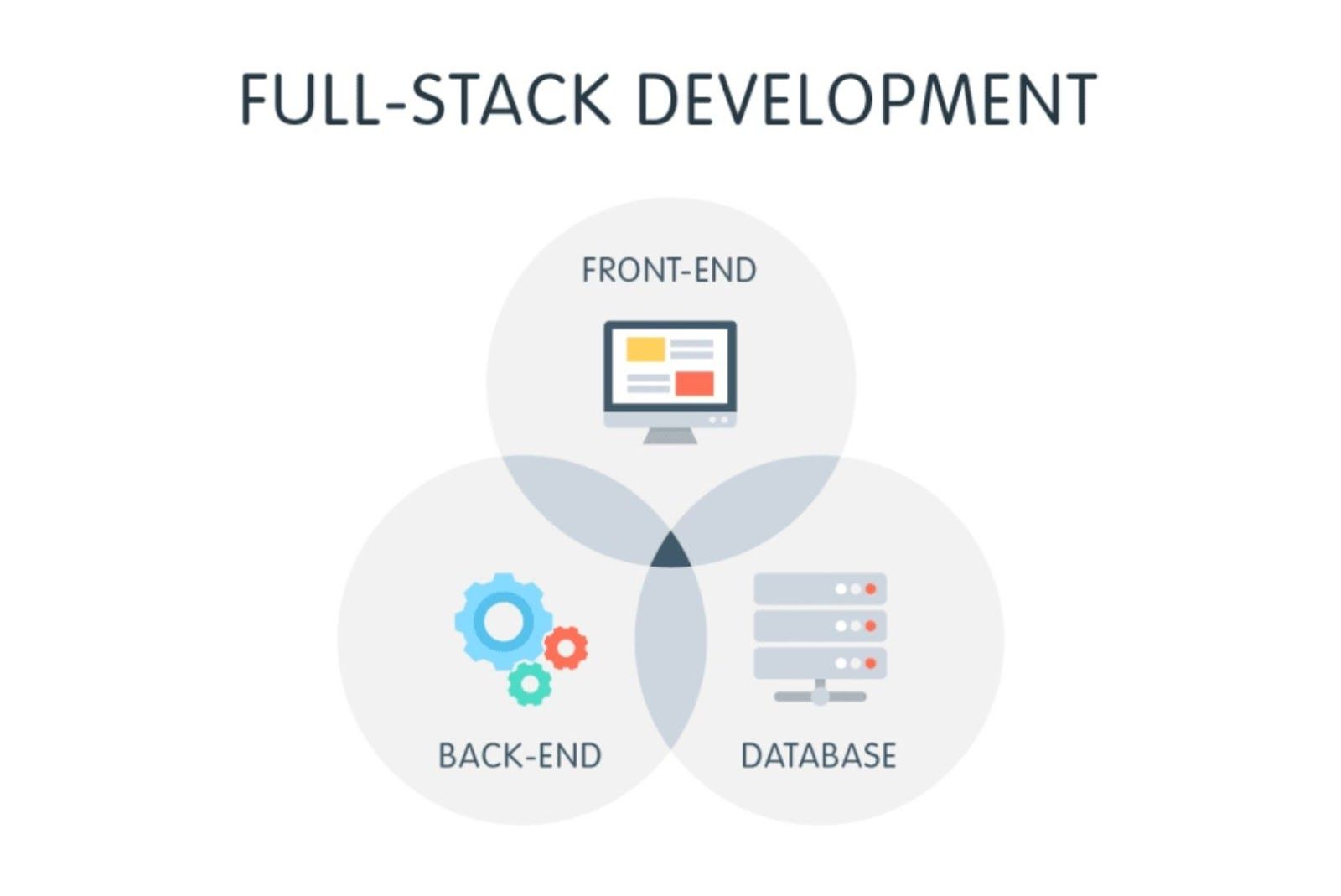
Web application development requires implementation of a variety of web technologies. It basically consists of three main parts:
Front-end
This is the part that the user sees and interacts with. It’s majorly associated with the UI /UX design of the web application.
Back-end
This is the under the hood part which is hidden from the users and is responsible for ensuring that the entire operation runs smoothly.
Hosting
This is the part that is concerned with hosting the website on a server.
The technological expertise required to program for front-end and back-end differs. A full-stack developer is a person who has the required technological expertise to program for both the front-end as well as the back-end and also has the know-how of web hosting.
What does a full-stack developer do?

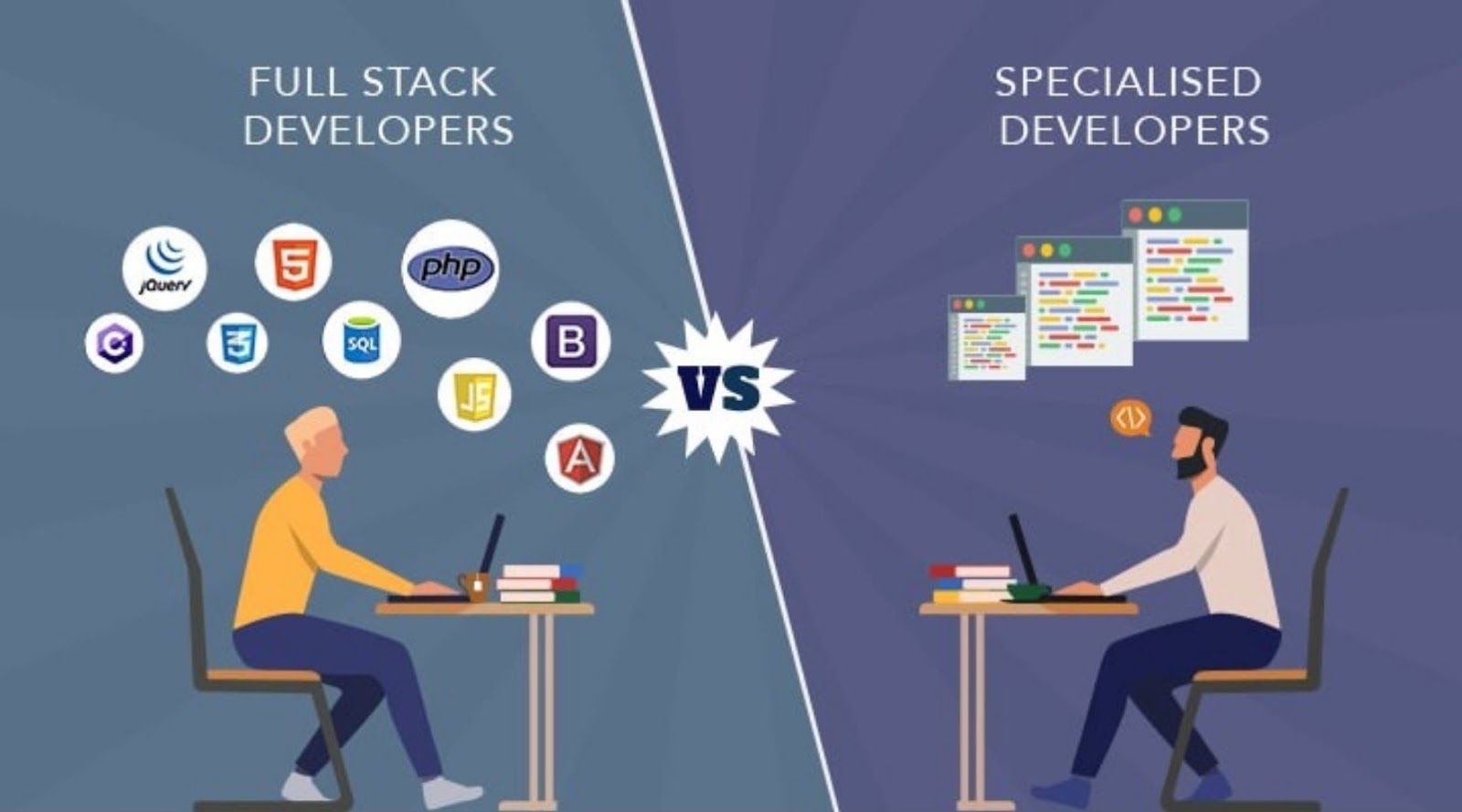
Web application development commonly requires separate teams handling the front-end and the back-end process. Front-end developers are concerned with building the user interfaces while back-end developers build the software engines that power these interfaces.
Full-stack developers are versatile experts who can build both the front-end and the back-end of a web application.
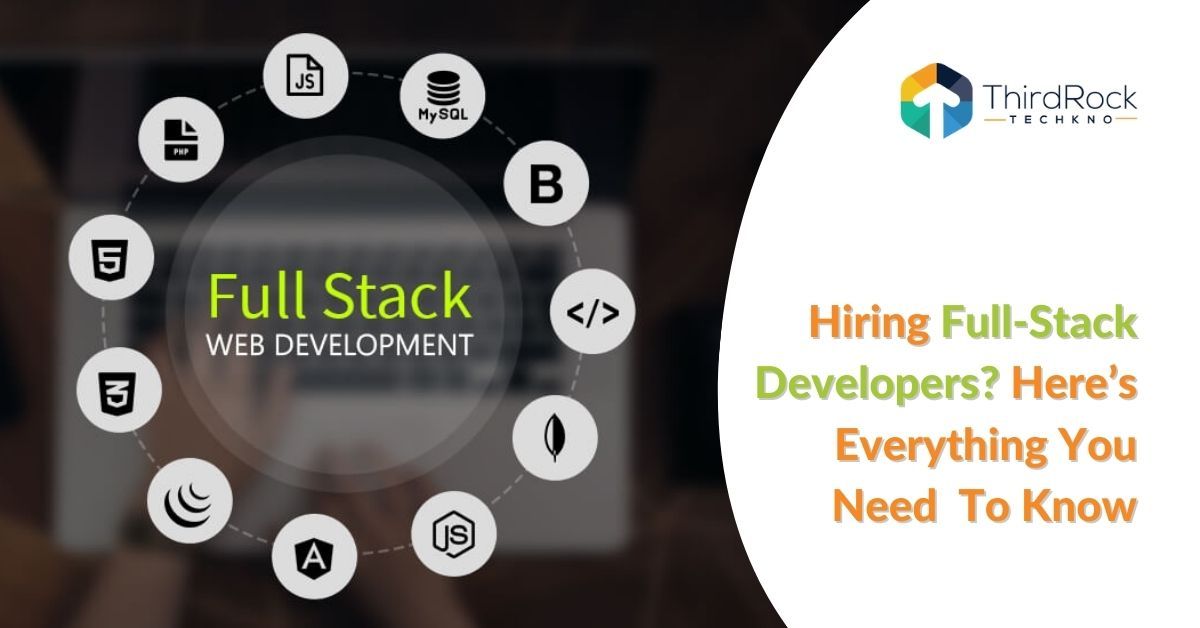
So a full-stack developer is proficient in major technologies like JavaScript, PHP, Ruby, MongoDB, Nodejs, Angular, Apache, and more. Using these, the developers are able to design the web app, take care of its server-side coding as well as the database management aspects.
Apart from being masters in coding, full-stack developers are also adept at understanding the requirements of the client.
Thus, full-stack developers normally have the following responsibilities
- Code for front-end as well as the back-end
- Identify the testing techniques for web applications
- Coordinate with other developers as well as with clients
When you should consider hiring a full-stack developer
Hiring a full-stack developer may yield you the most benefits in the following situations:
When building a new web project from scratch
If you are building a new website from scratch, then it would be best to go with a full stack developer. This is because a full stack developer will not only help in programming for the front-end as well as the back-end, he/she will also help in coordinating the team.
When cost is a major constraint
If you hire a full-stack developer, you won’t have to hire separate developers for different technologies. Thus, it’s a much more budget-friendly option compared to hiring multiple specialists for one project.
When you need a technical partner
Full-stack developers have the complete technical know-how of developing a web app. As they have a broad knowledge of the field, they can oversee all the technological operations themselves and help you in building the product efficiently.
When you only need an MVP
Initially, when you are just starting, all you need is a robust minimum viable product (MVP). Full-stack developers are fairly proficient in all the skills required to build a quick MVP. So it’s best to just hire one developer when your budget is a tight constraint.
MVP For Startups: How it Helps Reduce Development Costs
Read MoreWhen you should not hire a full-stack developer
Although full-stack developers possess a wide range of skills, they may not be the right fit for certain kinds of projects. Here’s when you should not hire a full-stack developer:
When your app has attained a certain level of scalability.
If your application has reached a certain scale, it’s best to have separate people handle separate work. You don’t want to overburden one developer with the entire workload.
It’s also possible that a full-stack developer may not have the specialization required to handle that level of complexity in the application.
When you require only single-layer work
There are many instances where knowledge of a single layer is sufficient. For example, if you want to create only an API service, then you should go for hiring only a back-end developer.
When speed and load optimizations are an indispensable priority
Once your web application has started to gain huge traffic, you might face the need to optimize its speed or load handling capabilities. In this case, you will need someone who has years of experience in a technological layer. These experts are very familiar with all the problems and bottlenecks of a technology they work upon.
Full-stack developers might not prove to be the best fit as they might not be able to extract the full capability of a particular technology. So without a doubt, go for hiring specialized experts in front end as well as backend technologies if your web app gets a lot of traffic every day.
Top skills to look for while hiring a full-stack developer
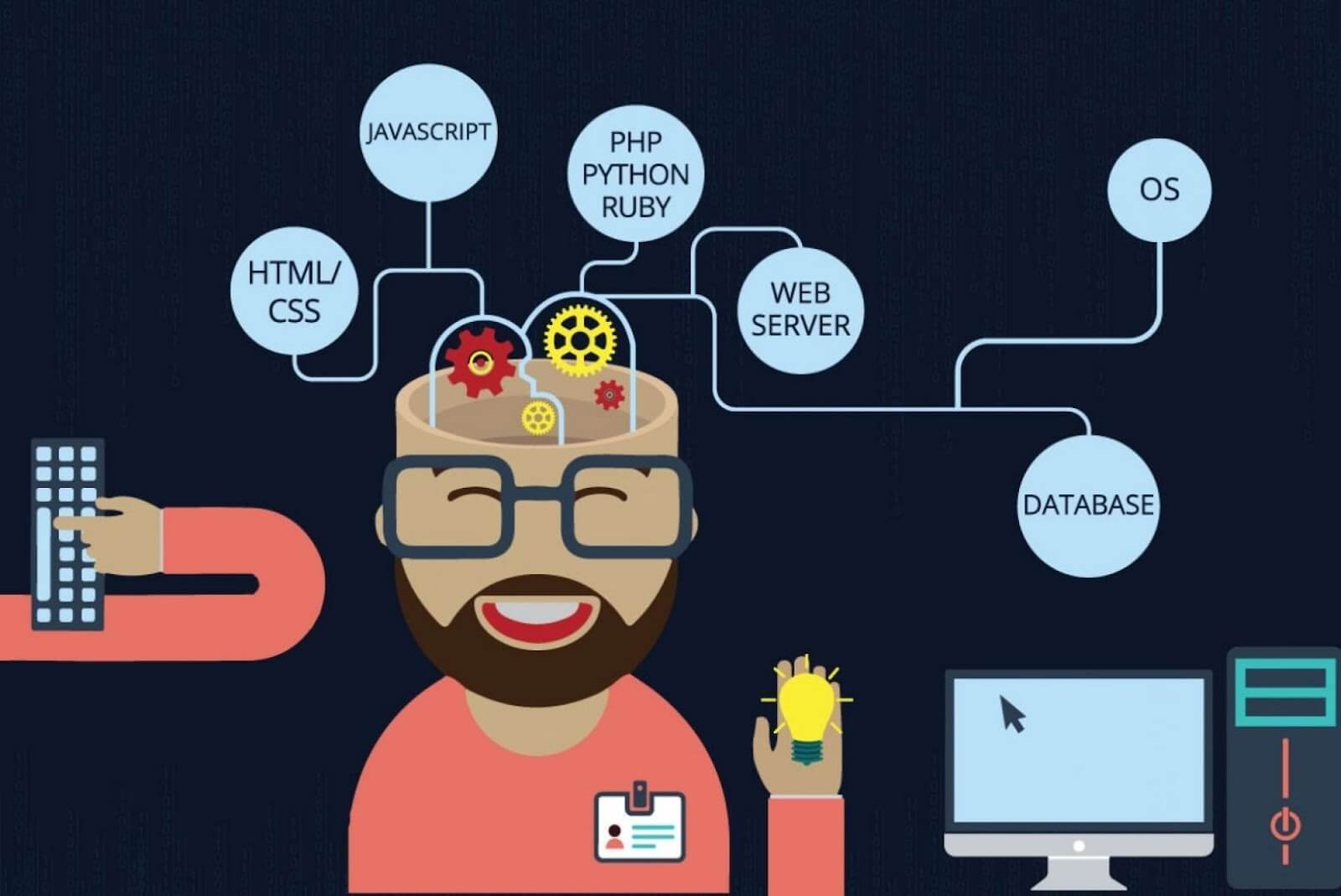
To start with, a full-stack developer must have a degree in computer science, years of experience in working with various technologies, and should be proficient in multiple programming languages.
Moreover, they should also have good managerial skills as they often need to coordinate with different front-end and back-end teams.
The most challenging aspect of being a full-stack developer is to stay updated with trends in all the technologies they work with. So it’s vital that they are passionate about reading and learning a lot. If they aren’t able to keep up with the latest trends, they may not be a good fit for your project.
Lastly, a critical skill to look for in a full-stack developer is the ability to visualize the big picture. They should be able to put together all the requirements and share insights on how things should move forward to achieve the end goal.
Therefore, whenever something goes wrong, a full-stack developer should be able to point it out and resolve the bottlenecks.
Technical skills to look for in a full-stack developer
The following is a brief list of the skills a full-stack developer must possess to build a whole web application.
Front-end development skills of a full-stack developer
- Proficiency in client-based scripts like AJAX
- Web fundamentals like HTML, CSS and JavaScript
- Ability to work on HTML, CSS frameworks like Bootstrap and Foundation
- Good knowledge of major JavaScript frameworks like AngularJS, Reactjs, and Vuejs.
- Should be able to work with libraries like Backbone.js, Knockout.js, jQuery, and Ember.js.
Back-end development skills of a full-stack developer
- Should be good at working with server-side technologies like Apache, J2EE, Nginx, etc.
- Should know server-side languages like Python, Ruby, PHP, JavaScript, and Perl
- Ample knowledge about database management technologies like MongoDB, Microsoft SQL MySQL, and Oracle
- Should be able to differentiate between relational and non-relational databases and decide when to choose one over the other
- Should have the necessary skills to design the schema of a database
- Knowledge about API development, designs, and RESTful services
Additionally, full-stack developers should be able to increase the efficiency of your hosting environment and manage it well.
Cost to hire a full-stack developer
For all these versatile skills, how much does it cost to hire a full-stack developer?
We have studied the analysis by job portals like Indeed in addition to our own analysis of average full-stack developers on platforms like LinkedIn and Glassdoor.
We found that the average salary of a full-stack developer in regions like Australia, Europe, Canada, and the USA is around $110 per hour. This is the hourly rate in case you want to hire a full-time developer. If you want to hire a freelancer, then the rate will be $50- 150 per hour.
Compared to developed nations, developing nations like India can prove to be a better place for hiring a full-stack web developer. The average hourly rates of full-stack developers in India can be as low as $25. However, there are developers with varying levels of expertise. So the range can be anywhere between $25 and $80 per hour.
India is a country where knowledge is abundant. With 2.5 million STEM graduates passing out every year, the market for software developers is quite competitive.
Because India is an IT powerhouse, the full-stack developers from India are considered quite experienced and reliable. Corporate giants like Microsoft, Ford, and Google have entrusted Indian developers for decades now. On the other hand, small businesses prefer Indian developers too because of their cost-effectiveness.
How to hire the right full-stack developer for your project

While hiring a full-stack developer, you could either check their previous work portfolio or give them a real-life problem test to solve with specified requirements. An ideal way is to do both.
You should then check their front-end development skills. See how they have brought out the beauty of the design, compatibility, responsiveness, and performance in their previous work.
Moreover, evaluate their database skills by checking the schema designs, the way data is stored, the number of queries, and the execution speed of the queries.
Lastly, check their server management skills by asking how they install and secure the servers.
See what web servers they use, how they optimize the setup for efficiency, and finally how they plan to deploy the app.
Scope your project well before hiring a full-stack developer
In order to find the right fit for your project, make sure you scope your project requirements well. Only then you will be able to filter the right kind of developers.
Evaluate the bids on the basis of not only costs but also the value they will bring in
You will be very inclined to shortlist candidates or bids on the basis of how cheap they are. Don’t make this mistake. Instead, check how each expert or a team of experts can maximize the ROI in the long run.
Hiring freelancers may sound like a cost-efficient solution at first. However, the potential risks of not hiring a professional software development company may increase the costs in the later stages.
Hire full-stack developers from Third Rock Techkno to maximize your ROI
Third Rock Techkno is a full-service software development agency with a rich experience spanning over 6 years. We have been trusted by enterprises as well as small businesses for supreme quality development services that ensure high profitability.
Our team comprises not just developers but also business consultants who strive to strike the right balance between your technical preferences and business goals. We follow a strictly professional approach while providing you with a dedicated full-stack developer who is the best choice for your software project.
We promise cost=efficient services while elimination any risks that you face while dealing with freelancers. Our talent pool is talented and reliable. We will ensure they are always available with the best solutions in case of any issues or bugs.
Build World-Class Software at Competitive Rates
We prioritize value over cost. Our industry experts both in the US and in India ensure your unique software needs are met while also maximizing the ROI.
Get free cost estimation for your project