
Did you know, 90% of the start-ups fail and the failure in developing an efficient and highly demanded product is one of the top reasons behind it? And this is one of the main driving forces behind adopting MVP (Minimum Viable Product) development across the globe.
Who would have guessed that when Frank Robinson coined the term "minimum viable product" in 2001, it would become a "must-see" concept for mobile app development companies, startups, and even organizations? It's for the present. Because, in the age of mobile applications, knowing what your clients want from your product is critical to your survival. And that is precisely what a minimal viable product does for your company. The popularity of MVP validates your simple version of a fresh idea for mobile feature creations while also increasing your company's overall success. This essentially aids the corporation in bringing the finished product to market. In this blog, we will give you a detailed overview on how long it takes to build an MVP and the related information you need to know.
As popularized by Eric Ries, the minimal viable product (MVP) is the simplest product version that a company wants to bring to market in order to gauge user reactions and feedback.
Steps to Build an MVP
An MVP should be built in such a way that its planned functionality is completely realized. The MVP should be seen as a full release. It should be reliable, fast, and scalable, if possible. Keep in mind, however, that an MVP can have a limited feature set. It's fine to include "coming soon" sections in your MVP. It's also fine to get input from users within the MVP itself. In reality, asking input can substantially improve the MVP's effectiveness as long as it does not degrade the overall user experience. Before estimating the time needed to develop an MVP, it is important to outline the steps.
1 . Examine the Marketplace & Product Vision
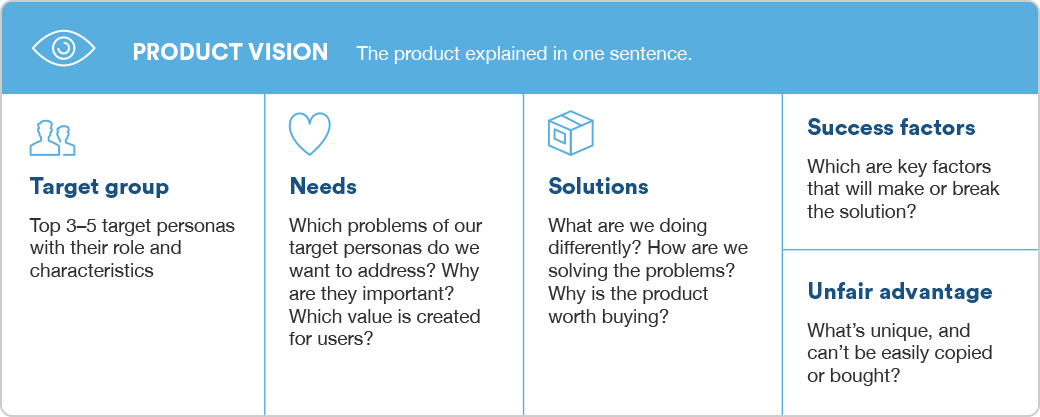
Any successful business starts with a market analysis, a target audience definition, and a determination of what users' problems you're aiming to solve. It will assist you in defining the primary elements that your new product will be built upon. After conducting market research, you must develop an idea for your future product, which will include a feature description, a basic workflow for your application, and sketches.
2. Select a Software Development Company
Once the product vision is complete, it must be translated into functional specifications and design. When you don't have a technological background, it's not always straightforward to do it yourself. So hiring a seasoned and dependable software development company appears to be a good choice. Before you choose a development business, make sure that the company -
3. Get Ready for MVP Development
This is the moment to work closely with your vendor to develop, validate, and prioritize your product specifications. You and your vendor should decide what features your MVP will include based on the needs priority. The vendor will produce functional and technical requirements for develop MVP based on this, and you will confirm them. The vendor should also give you advice on which technologies will make up the best stack for your product's high performance.
Your development provider should offer you time and cost estimates for your MVP development based on the specs and designs. Following that, the vendor will recommend the best development team composition for you, as well as the most convenient communication circumstances for you to stay updated about progress and participate in meetings and discussions. These were the five essential phrases to begin the construction of your MVP.
Also Read: MVP in Agile: How to do it the Right Way?
Guide to Scoping MVP
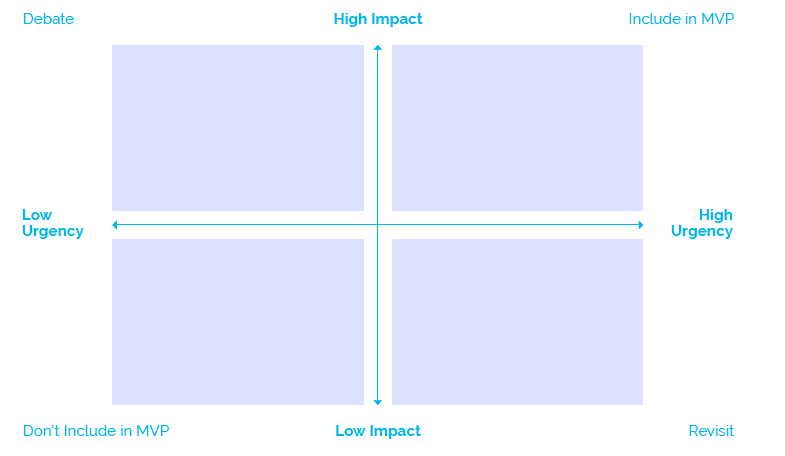
Imagine the story of a user attempting to reach the goal your platform offers as a starting point for your first draft. With a fine level of granularity, sketch down the flow/paths of each of these steps. When scoping a project, it is the most basic and fundamental component to consider. It's more vital to concentrate on long-term business objectives than on brainstorming features. Let’s have look at the important steps to chalk out your MVP scope -
Decide Business Goals
Brainstorming sessions can assist you in compiling a list of all required and optional key features. What is the benefit of this? With your business goals in mind, you'll be able to choose which characteristics the product requires at the time. Does this seem appealing to you?
This is why, rather than focusing on features, paying attention to a development project's business impact goals is more important. The following are some examples of popular company impact goals:
- Obtaining funding from a venture capitalist or an angel investor
- Getting your first customers is a big step
- Product-market fit is confirmed
- Taking action in response to customer input in order to increase client retention
- Scalability of the product to service a large number of clients.
You'll need to create a market-fit product and make adjustments based on these objectives.
Start Slowly And Consistently
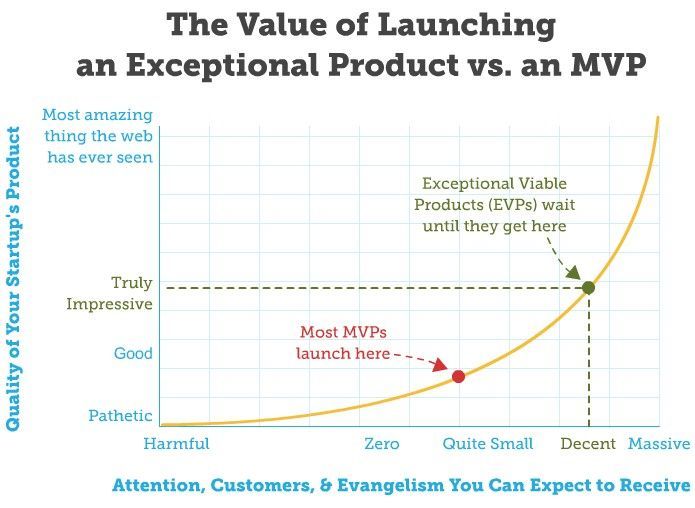
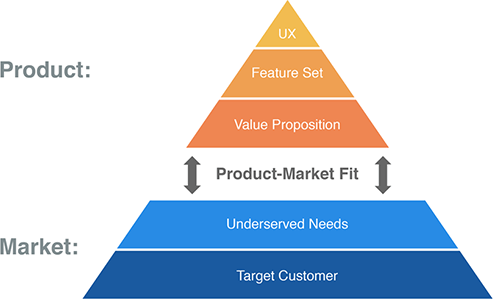
You don't need to spend all of your efforts on developing a complicated product when you're just getting started. Instead, you should start small and gradually expand up your product or service as your consumer base grows. This way, if you don't get the desired number of consumers, your scale investment won't be wasted.
When seeking external funding, the best approach is to build a simple platform and then raise cash to build a more complicated system. At the same time, the quality of the first project development or demo product must not be sacrificed.
Keep it Minimal
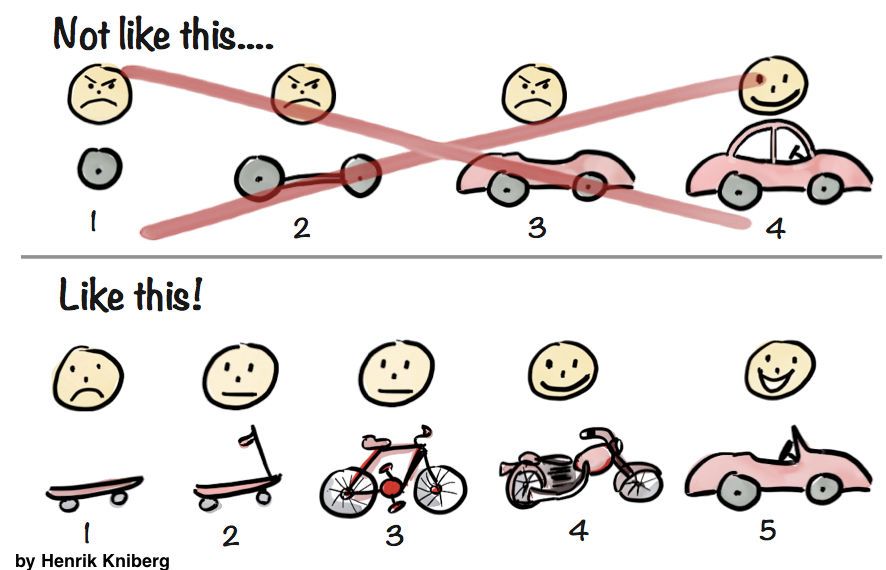
Minimizing your scope throughout the development cycle is the goal of the ideal minimum viable product programmer. You must create a clear flow chart that allows you to navigate through each use case. There are a few crucial elements to consider for each action or phase in the process:
- Determine whether the action is definitely necessary before proceeding to the next.
- Identify the significance and need of a specific step.
- You should also see if there is a more straightforward, intuitive, and automatic approach to do that process.
- Determine the impact on the overall user experience if the step was skipped.
Reduce Your Scope Incrementally
Walk through each use-case and ask yourself the following questions for each action/step:
- Is this step truly necessary before moving on to the next?
- Why is it vital to take this step?
- Is there a method to accomplish the purpose of this phase in a more easy, straightforward, or automated manner?
- What effect would the removal of this step have on the overall user experience?
- Is it possible to break this step down into smaller, more granular steps?
- During this phase, what should the user expect to see?
- If you find a phase that can be divided, simplified, or deleted, go over each use-case again to see how it affects the story and if it adds additional flexibility for future modifications.
Remember, less is more in this case. People don't judge software quality based on the sum of its parts. They judge on average, which means that having a few things that perform really well is preferable to having a lot of things that work mediocrely.
Estimating the Time to Build an MVP
The aim of the MVP is to ensure that you're on the right track with your product, and there's no better indicator of that than user input and the acceptance of the MVP itself. However, remember to accept every feedback with a grain of salt and an open mind. Because early adopters represent a small portion of your possible customer base, they may have a skewed idea of what your whole product should be. They do, however, continue to reflect the market. It is determined by the number of basic features and the complexity of the system.
You can't be specific because you may simply have a few basic functions in mind (for example, while designing a rudimentary CRM system) or believe you require a lot for your project. According to our experience, the process of creating MVP takes on average 3-4 months, and here's a chart with specific project kinds and approximate terms:
Project Type | MVP From | Average Time |
MVP for Startup | 1 Month | 3 Months |
MVP for CRM | 2 Months | 4 Months |
MVP for ERP | 4 Months | 7 Months |
Based on the sector/industry/tool/product, you can estimate the time needed to build the MVP -
Tool/Product/Sector/Industry | Estimated Time to Build an MVP |
MedTech Platform | 9 Months |
Risk Management Tool | 9 Months |
Lead Generation Software | 8 Months |
B2B SaaS Platform | 8 Months |
Digital Workplace | 7.5 Months |
P2P Marketplace | 6 Months |
Travel Insurance App/Website | 6 Months |
Business Loan Fintech Platform | 6 Months |
Fraud Prevention Platform | 6 Months |
Entertainment Software | 6 Months |
Digital Lending SaaS Platform | 5.5 Months |
Automation Services | 5 Months |
Sales SaaS | 4.5 Months |
Web Design Tool | 4.5 Months |
Home Insurance Platform | 4 Months |
Onboarding Software | 4 Months |
Aerospace Marketplace | 4 Months |
Telecommunication Platform | 3 Months |
Consumer Electronics | 3 Months |
Marketing Automation Tool | 3 Months |
Virtual Office Platform | 3 Months |
Smart Kitchen Tools | 2.5 Months |
Real Estate API | 2 Months |
AI Video Platform | 1.5 Months |
Virtual Office Platform | 1 Month |
OS Live Chat Tool | 0.5 Month |
Email Prospecting Tool | 0.5 Month |
Job Board for the Space Industry | 0.5 Month |
As we can see from the above data - on an average 4 months is required to develop most of the MVP products, provided the developer team is experienced and efficient.
Progress and AYTM teamed up to survey one hundred developers in order to find an answer to the frequently asked question, "How long does it take to build a mobile app?" According to their findings, developing an Android or iOS app takes three months on average, with 10 weeks dedicated to backend development and eight weeks dedicated to frontend development. For instance, developing an Instagram-like product should take 3 to 6 months, launching a social networking site like Facebook would take 9 months, and constructing a Pinterest-like product will take at least 120 days.
Whatever industry you're in, customizing the idea to your business aims and target audience's needs is bound to change the time it takes to construct a Minimum Viable Product. However, there are a few ways to speed up this process, such as using Backend as a Service.
A few more tips to follow through the research & scoping stage in order to reduce the time taken to build an MVP -
- Have a crystal-clear idea about the problem you are attempting to tackle, and how will you go about doing so
- In terms of demographics, behavior, app preferences, and others, target your specific potential users
- Decide what is your unique selling point and what sets it apart from what your competitors have to offer
You must find the defined outcomes from the stage marketing research and concept analysis as mentioned below -
- An in-depth knowledge on market and competition analysis
- A well-outlined Unique Value Proposition
- Complete idea for the product
For scoping, ensure you have the following outputs ready so that you can optimize them and reduce the time to build MVP as much as possible -
- User flows, specified functions that capture the product's layout and logic, preferably in the form of a Story Map that includes all of the MVP's functionalities as well as a roadmap of the product's technological recommendations for development
- Crude sketches of important/selected views
- Estimation of time and budget at a high level
Challenges to Build an MVP Quickly
While building an MVP in the minimum possible time is the target of every other business and product development, there are certain challenges that may act like obstacles to it. Here we have listed out some of the most common hurdles to build an MVP -
1. Getting caught up in scope creep
The kitchen sink syndrome, also known as scope creep, is a condition in which a project's scope expands beyond its original scope. The process of continuously improving a project's requirements as the system is built, which is typically the cause of projects going significantly over budget.
But, it's all too simple for a company to fall victim to scope creep. You just grow fond of a disruptive notion after you've come up with it. You find it difficult to reduce the scope to the bare minimum because you want to present it in all its grandeur to the investors and the rest of the world. Not to mention the fact that the longer you think about conquering the market, the more likely you are to come up with new features. However, taking this method may compromise on-time delivery, put a burden on your budget, and, in the end, jeopardize your company's existence.
2. Difficulty to Define the Minimum Value Proposition
Consider a completely different scenario: a startup that is so focused on keeping their MVP as simple as possible that it neglects to include critical functionality. Although not as common as scope creep, this problem nonetheless exists - frequently as a result of initiatives failing to focus adequately on what constitutes added value for their target audience. We've all seen it a dozen times, yet it still demonstrates our point. Giving your consumers a one-wheeled vehicle won't benefit them at all; instead, a scooter makes more sense. In the same way, software development works.
3. Inefficient or Inexperienced Team
Even if they believed themselves a code one-man army, constructing an MVP is an unrealistic undertaking for an entrepreneur to complete alone. That's why it's critical to work with a dependable IT partner who can provide not only competence and a lean strategy, but also experience with fast launching digital goods. As a result, you can be confident that the team composition they recommend will match your evolving demands. The vendor's expertise working with businesses in various verticals aids in the selection of the correct tech stack. What matters in the case of a Minimum Viable Product are the installation cost and time, future scalability, and community support. Of course, it's tempting to aim for the latest and greatest, but hype-driven development can sometimes do more harm than good to your project.
However, before we wrap up, here come some more quick tips to build an MVP faster -
- Determine which features are required and which can be added later
- Simple, quick-to-implement solutions are best
- At all costs, don't strive for perfection. You're putting a business idea to the test, not a general-purpose programme
- Find early adopters to test and provide feedback on your app
However, before we wrap up, here come some more quick tips to build an MVP faster -
- Determine which features are required and which can be added later
- Simple, quick-to-implement solutions are best
- At all costs, don't strive for perfection. You're putting a business idea to the test, not a general-purpose programme
- Find early adopters to test and provide feedback on your app
Wrapping Up,
Before starting the software MVP creation, you need to define the scope of your MVP. This is useful not just for visualizing the project and its various stages, but also for understanding the SDLC (Software Development Life Cycle). Try to be as detailed as possible regarding the scope, and clear up any question as soon as it arises.
The better you specify the MVP scope, the better your software MVP will be, and the higher your project's success percentage will be. MVP functions as an airbag, allowing for the predicting of a product's economic and technological potential, as well as its implementation. It allows you to make commercial and technological decisions based on evidence rather than guesswork. As a result, the primary purpose of creating an MVP is to test the concept or product in the market.
If you are looking for experts' guide to build MVP and make your product a huge success, get started with Third Rock Techkno’s all-in-one solutions for web & app development.
Krunal Shah
Krunal Shah is the CTO and Co-founder at Third Rock Techkno. With extensive experience gained over a decade, Krunal helps his clients build software solutions that stand out in the industry and are lighter on the pocket.
 | Let's connect!