
Believe it or not, adaptive learning has increasingly become a core part of the modern education system and corporate training. This AI-powered learning platform and educational technology integration are in growing demand, especially for personalized learning experiences and adaptive learning implementation.
We can say that in 2025, this adaptive learning trend is going to grow more than ever as educational institutions and organizations start offering personalized education experiences that make it easy for educators and trainers to provide individualized learning based on student needs. Implementing adaptive learning solutions is becoming essential for modern education.
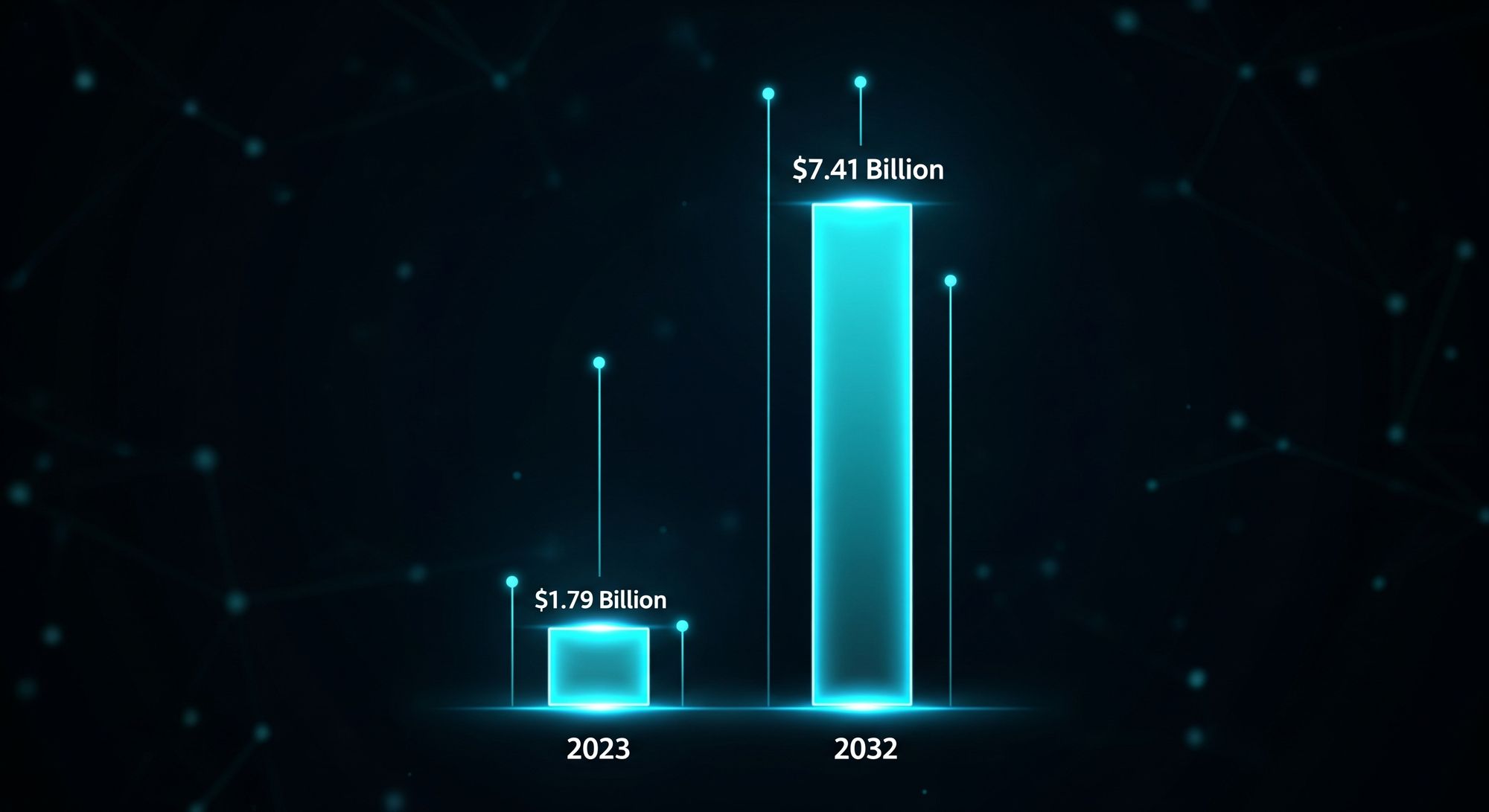
Let's look at some of the numbers; according to a report by Research and Markets, the market size was estimated to be USD 1.79 billion in 2023, and now it's expected to grow to over 7.41 billion in 2032. That's over 24.02% CAGR for adaptive learning platforms and educational technology solutions!
One of the popular examples we can talk about that has created an impact is Arizona State University; they have integrated adaptive learning on a platform named Cogbook for biology courses. Today, they have over 200,000 students worldwide with proven reduced dropout rates by 90% and, on top of that, improved student performance by 24%. This demonstrates the power of adaptive learning implementation in higher education!
Benefits of adaptive learning include enhanced student engagement, improved learning outcomes, and personalized curriculum delivery. AI in education is transforming how educational institutions approach personalized learning, making adaptive learning strategies more effective than traditional teaching methods.
This blog will guide you through some of the actionable adaptive learning strategies and approaches if you are looking to implement adaptive learning for both educational environments and corporate training settings. We'll explore best practices for adaptive learning, technology integration, and implementation methodologies that drive successful personalized education outcomes.
Machine learning education and educational AI are reshaping how we approach student-centered learning. Whether you're implementing adaptive learning platforms in K-12 education, higher education, or corporate learning environments, this guide provides comprehensive adaptive learning implementation strategies for 2025.
Quick answer
Implementing adaptive learning means using data and AI to adjust content, pace and difficulty to each learner in real time. A successful 2026 rollout starts with clear learning objectives, well-tagged content, the right adaptive engine or LXP, a focused pilot, and continuous measurement — not just buying a tool and hoping it works.
What is Adaptive Learning and Why Implement It in 2025?
Let's understand what adaptive learning is and its benefits of adaptive learning. We will also go through a few adaptive learning implementation challenges that educational institutions face when they implement adaptive learning solutions.
The Benefits of Adaptive Learning
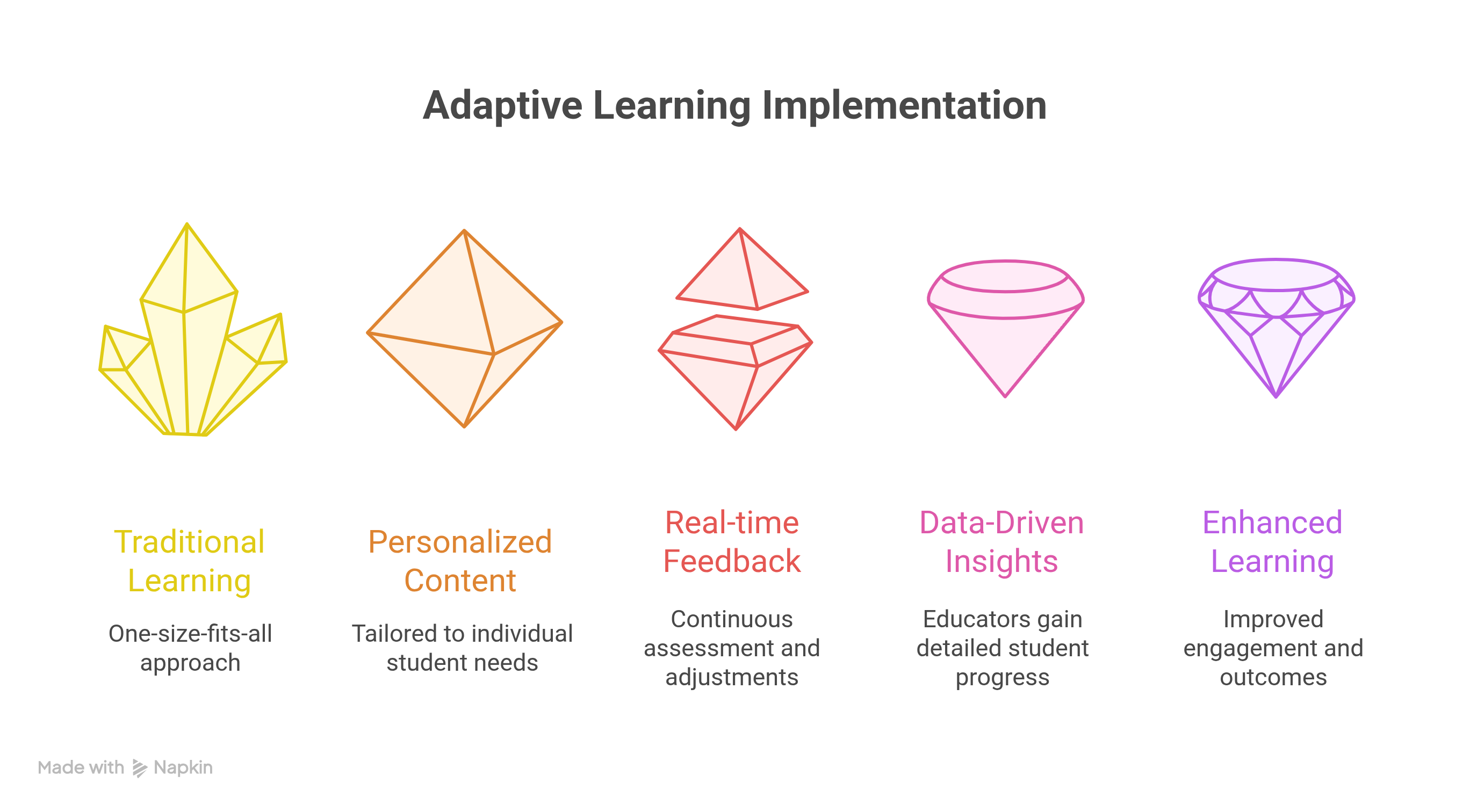
Adaptive learning platforms offer a number of significant educational benefits, including enhanced student engagement and improved learning outcomes:
- Improve Student Engagement
This adaptive learning platform offers custom content suggestions to each student based on their abilities, interests, and interactions. Personalized learning experiences through adaptive learning technology keep learners engaged and motivated. AI in education enables intelligent tutoring systems that adapt to individual student needs, making digital learning more interactive and effective.
Student engagement increases significantly when adaptive learning strategies provide real-time feedback and personalized curriculum adjustments. Educational technology that adapts to learning preferences creates more meaningful learning experiences for diverse student populations.
- Personalization Education Excellence
One of the major benefits of adaptive learning is that it provides a personalized learning experience, which leads to better educational outcomes. Personalized education through adaptive learning implementation ensures that each student receives individualized instruction tailored to their learning pace and comprehension level.
Machine learning education algorithms analyze student performance data to create adaptive assessment strategies that optimize learning pathways. This personalized learning approach is fundamental to successful adaptive learning strategies in modern education.
- Enhanced Learning Outcomes
As we mentioned earlier, adaptive learning platforms offer personalized learning experiences and cater to every student and their needs based on their academic performance. This individualized approach helps achieve better learning outcomes and improved student performance across various educational settings.
Learning analytics from adaptive learning systems provides educators with detailed insights into student progress, enabling data-driven instruction and targeted interventions. Educational AI ensures that learning objectives are met through optimized learning paths.
Your Students Deserve Better Than One-Size-Fits-All
Stop losing bright minds to boredom and struggling learners to frustration. See how personalized learning changes everything.

Challenges in Implementing Adaptive Learning
Let's discuss adaptive learning implementation challenges as well. This will help you understand all aspects of implementing adaptive learning in educational environments.
Technological Infrastructure Barriers
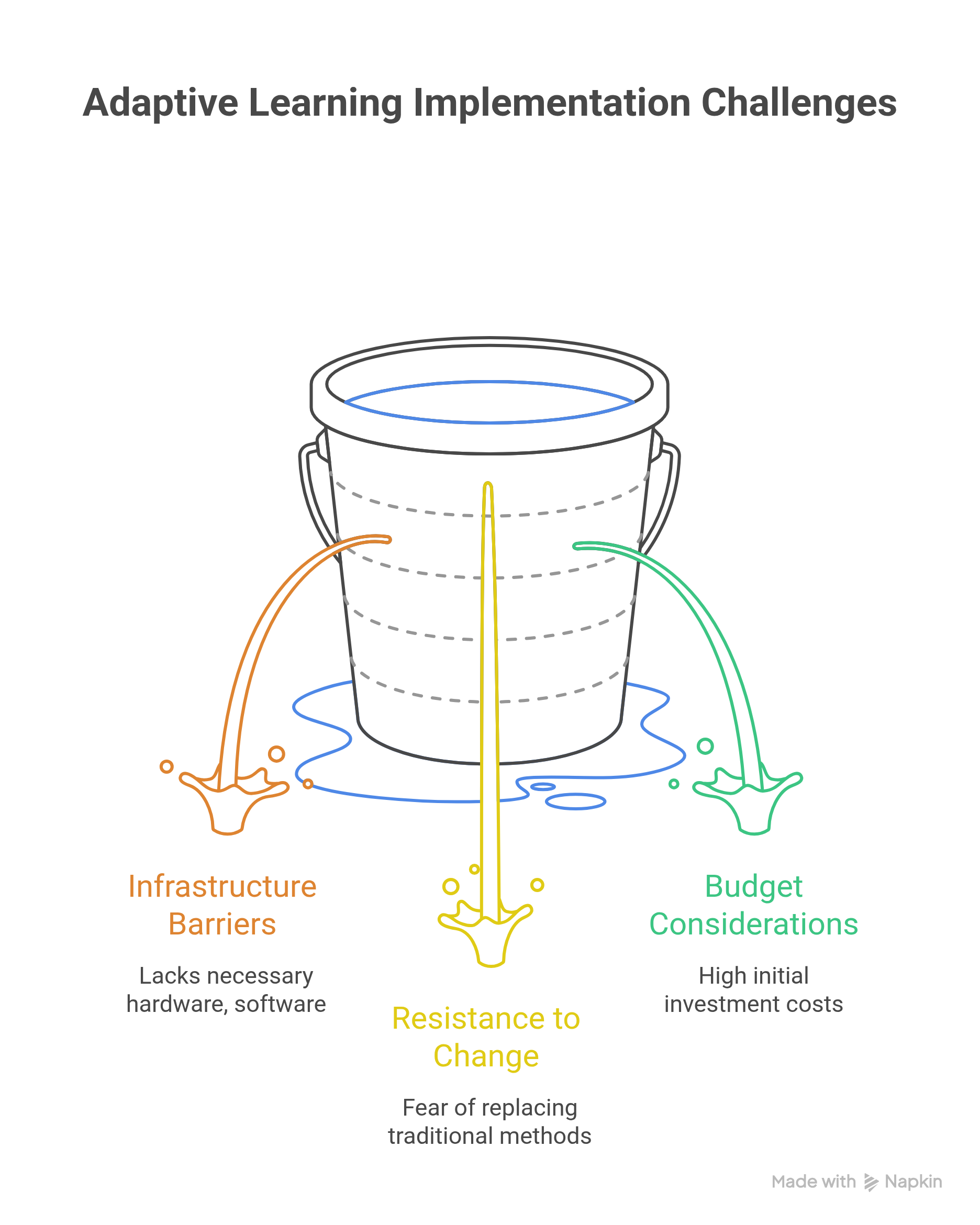
When it comes to adaptive learning implementation, it requires robust technological infrastructure, including AI-powered platforms, learning management systems, and data analysis tools. Educational technology integration demands significant IT infrastructure investments.
A good example would be schools that may lack the necessary hardware or software to support adaptive learning platforms. Digital learning infrastructure requirements include reliable internet connectivity, modern devices, and cloud-based learning systems for effective adaptive learning technology deployment.
EdTech solutions require technical expertise for platform integration and ongoing system maintenance. Many educational institutions struggle with technology adoption due to insufficient IT support and outdated infrastructure.
- Resistance to Educational Change
Many students and educators may resist changing traditional teaching methods, fearing that adaptive learning could replace conventional educational approaches. Change management in education requires careful stakeholder engagement and professional development.
Teacher training for adaptive learning platforms is essential for successful implementation. Educators need support to understand how AI in education enhances rather than replaces traditional teaching methods. Student adaptation to personalized learning environments also requires guided transitions.
- Implementation Costs and Budget Considerations
The initial investment in adaptive learning platforms and teacher training can be substantial, especially for smaller educational institutions or organizations. However, long-term benefits of adaptive learning include cost savings through improved efficiency and better educational outcomes.
Budget planning for adaptive learning implementation should consider licensing costs, professional development expenses, technical support, and ongoing maintenance. While upfront costs may seem high, adaptive learning ROI includes reduced dropout rates, improved student performance, and enhanced institutional reputation.
Funding strategies for educational technology can include government grants, educational partnerships, and phased implementation approaches that spread costs over multiple budget cycles.
Built Wrong = Money Down the Drain
Work with developers who've actually deployed learning platforms that work. Get it right the first time.
Essential Steps to Implement Adaptive Learning Successfully
- Assess Organizational Readiness for Adaptive Learning
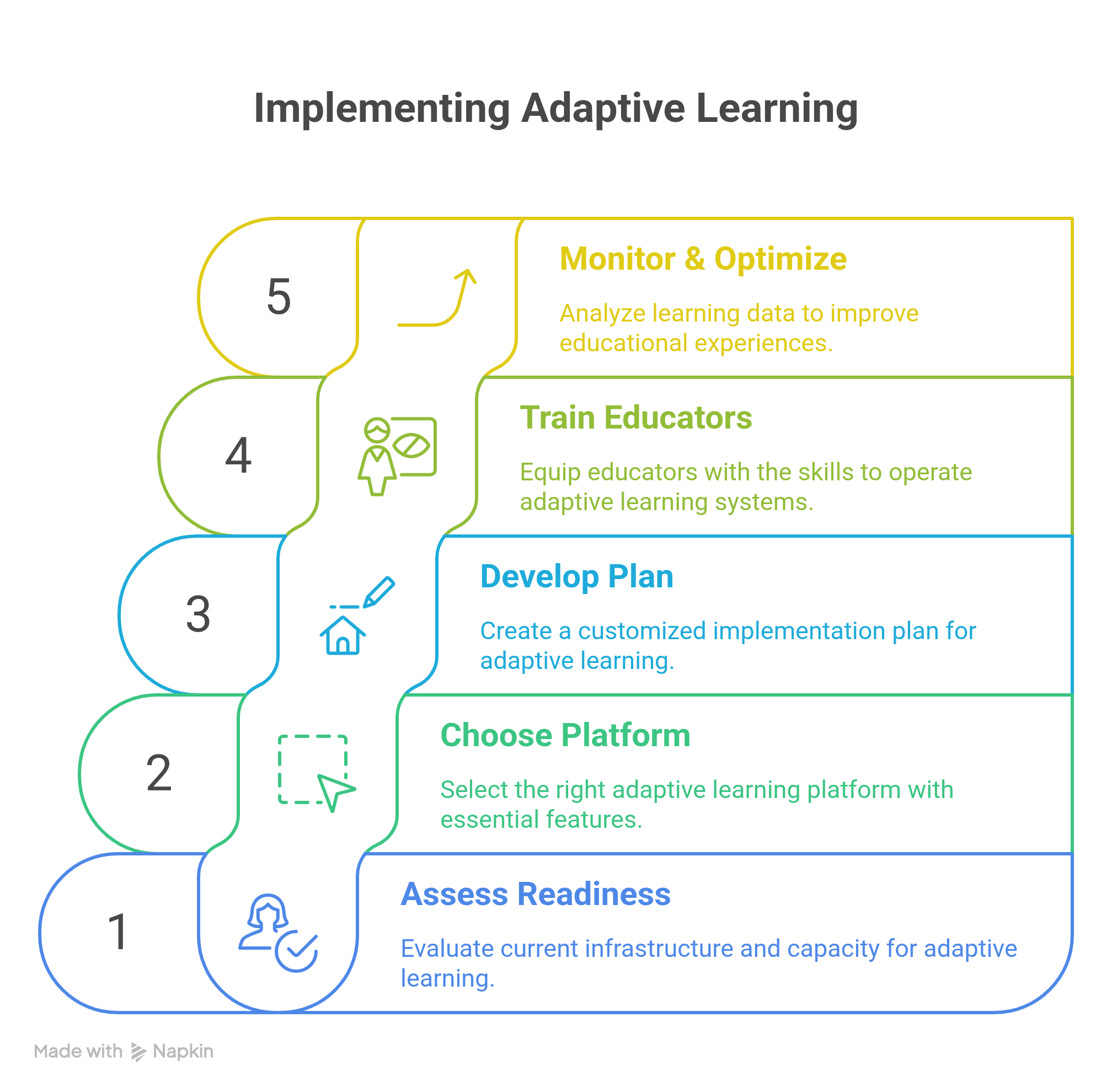
Before implementing adaptive learning, it's crucial to assess your current technological infrastructure and organizational capacity. This adaptive learning implementation assessment should include everything from hardware to software to internet connectivity for educational technology integration.
For example, you might need to evaluate your current learning management system to determine if it can integrate with adaptive learning platforms. It's important to ensure adaptive learning strategies align with specific learning objectives and your educational goals.
Infrastructure Assessment Checklist
- Technology readiness for AI-powered learning platforms.
- Network capacity for real-time data processing.
- Device compatibility with adaptive learning technology.
- Staff technical competency for educational technology adoption.
- Budget allocation for adaptive learning implementation.
For instance, a corporate training program might focus on improving employee productivity through a personalized learning experience. Once you have a clear understanding of organizational readiness, you can customize the adaptive learning platform to meet your unique educational needs.
2. Choose the Right Adaptive Learning Platform
When selecting an adaptive learning platform, here are the essential platform features you should prioritize for successful adaptive learning implementation:
AI Capabilities: Ensure your platform uses artificial intelligence to provide personalized learning experiences and real-time content suggestions based on student performance. AI in education should enable intelligent tutoring systems and adaptive assessment capabilities.
Learning Analytics: The adaptive learning platform should provide comprehensive data analytics that offer detailed reports to help educators track learners' progress and identify areas for learning improvement. Educational data mining capabilities are essential for personalized education optimization.
For example, Knewton, an adaptive learning platform, provides personalized content delivery and comprehensive learning analytics, making it one of the popular choices for educational institutions seeking effective adaptive learning solutions.
Advanced Platform Features
- Machine learning algorithms for content personalization.
- Real-time progress tracking and performance analytics.
- Seamless LMS integration capabilities.
- Multi-device accessibility for flexible learning.
- Scalable architecture for growing educational programs.
Vendor Evaluation Checklist
To help you select the most suitable adaptive learning platform, we have prepared this comprehensive vendor assessment checklist.
- Does the platform offer AI-driven personalization and intelligent content delivery?
- Can the adaptive learning system integrate with your existing educational technology infrastructure?
- What level of learning analytics and student performance tracking does the platform provide?
- Is the adaptive learning platform scalable and flexible for future educational growth?
- What are the implementation costs and ongoing platform maintenance expenses?
- Does the vendor provide comprehensive training and technical support?
3. Develop a Customized Implementation Plan
Before a full-scale adaptive learning deployment, consider starting with a pilot program. This phased implementation approach allows you to test the adaptive learning platform and gather user feedback for making necessary adjustments.
For example, a university might implement adaptive learning in a single course before expanding to other academic departments. This gradual rollout strategy helps identify implementation challenges and ensures a smoother adaptive learning integration process.
Phased Rollout Strategy
A phased rollout strategy involves gradually implementing adaptive learning across your educational organization. This could mean starting with a single course or department and expanding adaptive learning adoption over time.
Implementation Phases
- Phase 1: Pilot testing with select courses and educators.
- Phase 2: Department-wide deployment with enhanced training.
- Phase 3: Institution-wide rollout with full support systems.
- Phase 4: Optimization and scaling based on performance data.
4. Train Educators and Administrators
Professional development programs are essential for equipping educators and administrators with the skills needed to operate adaptive learning systems effectively. These training programs should cover both technical aspects of the platform and pedagogical strategies for maximizing learning outcomes.
Comprehensive Training Components
- Platform navigation and features utilization.
- Data interpretation and learning analytics application.
- Personalized instruction strategies using adaptive technology.
- Student engagement techniques for digital learning environments.
- Troubleshooting and technical support procedures.
Ongoing Support and Resources
To ensure continuous improvement in adaptive learning implementation, provide ongoing professional support. This might include regular check-ins, refresher courses, and an online resource base where educators and administrators can find answers to common adaptive learning questions.
Support Infrastructure
- Help desk services for immediate technical assistance.
- Professional learning communities for best practice sharing.
- Regular webinars on advanced platform features.
- Documentation libraries with implementation guides.
- Peer mentoring programs for new users.
5. Monitor and Optimize the Learning Experience
One of the primary benefits of adaptive learning is its ability to analyze learning data to monitor student progress and optimize educational experiences. Learning analytics enable educators to identify students who are struggling in specific subject areas and provide targeted interventions.
Data-Driven Optimization Strategies
- Real-time performance monitoring for immediate interventions.
- Learning pathway analysis for curriculum improvement.
- Engagement metrics tracking for content optimization.
- Predictive analytics for an early warning system.
- Outcomes measurement for program effectiveness.
Similarly, corporate trainers can measure the effectiveness of training programs and make adjustments as needed based on employee performance data and learning analytics insights.
Continuous feedback loops:
Creating feedback loops between learners, educators, and administrators is crucial for optimal adaptive learning implementation. Regular surveys and feedback sessions help students and trainers identify areas needing improvement, ensuring the personalized learning experience remains aligned with organizational objectives.
Feedback Collection Methods
- Student satisfaction surveys for learning experience assessment.
- Educator feedback sessions for platform usability evaluation.
- Administrator reviews for implementation effectiveness.
- Performance data analysis for objective improvement identification.
- Stakeholder interviews for strategic alignment verification.
Effective Strategies for Implementing Adaptive Learning in 2025
- Personalized Learning Pathways
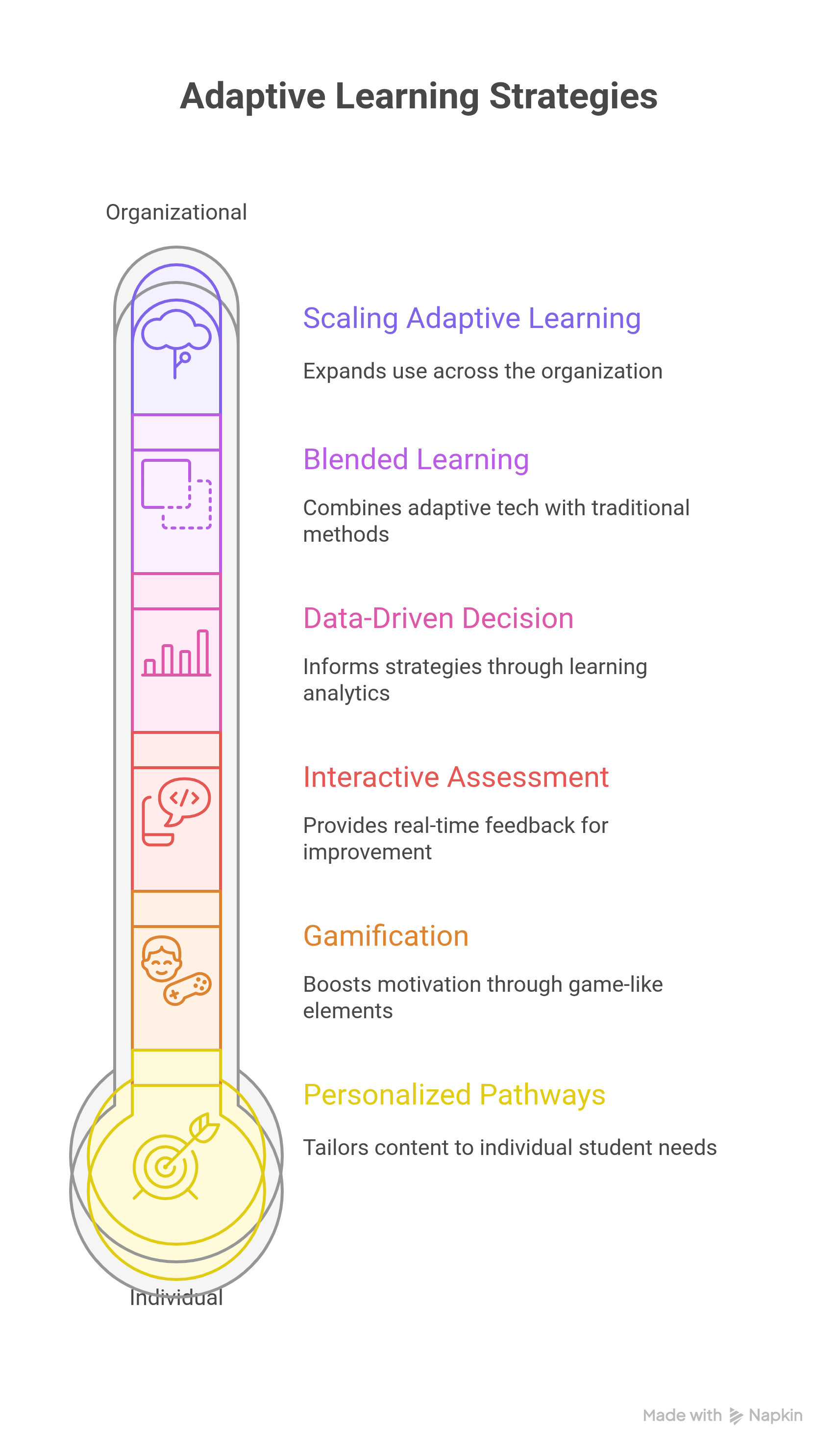
Personalized learning pathways are at the core of adaptive learning implementation. By customizing educational content to each student's individual needs, you can create a more engaging and effective learning experience. AI-powered adaptive learning systems analyze student performance data to create customized learning paths that optimize educational outcomes.
Let's take an example: an online learning course might adjust the difficulty of adaptive assessments based on the learner's performance, ensuring that they are constantly challenged at an appropriate learning level. Machine learning algorithms in adaptive learning platforms continuously refine personalized curriculum delivery based on real-time learning analytics.
Benefits of personalized pathways:
- Enhanced student engagement through relevant content delivery.
- Improved learning outcomes via individualized instruction.
- Optimize learning pace for diverse student populations.
- Targeted skill development based on competency gaps.
- Increased retention rates through personalized education approaches.
2. Gamification and Engagement Techniques
Gamification in adaptive learning is an effective way to boost student engagement and learning motivation. Interactive learning platforms incorporate game-based elements where students might earn points, badges, or achievements for completing learning tasks, creating a sense of accomplishment and encouraging continued educational participation.
Gamification is basically a good way to boost engagement and motivation. Some of the platforms have a different concept, like students might earn points or badges for completing tasks, which can create a sense of achievement and encourage continued participation.
Gamification strategies for adaptive learning platforms include
- Progress tracking through visual learning dashboards.
- Achievement systems that reward learning milestones.
- Competitive elements that promote peer collaboration.
- Interactive challenges that adapt to student skill levels.
- Reward mechanisms that motivate continuous learning.
Interactive Assessment for Enhanced Learning
Interactive assessments are another effective way to maintain learner attention and provide meaningful feedback. These adaptive assessment tools give real-time feedback, which helps learners track their academic progress and identify areas for improvement.
For example, an interactive quiz in an adaptive learning system can adjust question difficulty based on the student's responses in real-time, ensuring they are appropriately challenged. AI-driven assessment tools provide immediate feedback and personalized recommendations for learning improvement.
3. Data-Driven Decision Making
Learning analytics can be extremely valuable in tracking learners' progress, predicting educational outcomes, and making informed decisions about instructional strategies. Educational data analysis enables educators to implement adaptive learning more effectively through evidence-based teaching approaches.
A great example would be schools that use predictive analytics to identify students at risk of falling behind and provide targeted interventions to help them succeed. Data-driven adaptive learning ensures personalized support reaches struggling students before academic performance declines significantly.
Key analytics metrics include
- Learning progression rates and skill mastery inducators.
- Engagement levels and time-on-task measurements.
- Assessment performance trends and learning gaps.
- Behavioral patterns in digital learning environments.
- Predictive indicators for student success.
Adaptive Testing Methods:
Adaptive testing includes adjusting the difficulty of test questions based on the learner's performance. This personalized assessment approach ensures that learners are being evaluated at an appropriate level while providing accurate measurements of their academic abilities.
Computer adaptive testing benefits include
- Precise ability measurement through optimized question selections.
- Reduced test anxiety via appropriate difficulty levels.
- Efficient assessment with fewer questions needed.
- Real-time performance evaluation and feedback.
- Personalized testing experience for diverse learners.
4. Blended Learning Models
Blending adaptive learning technology with traditional teaching methods can create highly effective hybrid educational approaches. For example, a university might combine online adaptive learning modules with in-person lectures and group discussions. This blended learning model helps students benefit from the flexibility of adaptive learning while maintaining the social and collaborative aspects of traditional education.
Blended learning advantage:
- Flexible learning schedules accommodating diverse student needs.
- Enhanced personalization through digital adaptive tools.
- Maintained social interaction via face-to-face components.
- Optimized resource utilization in educational institutions.
- Improved accessibility for diverse learner populations.
Creating a Hybrid Learning Environment:
Creating a seamless hybrid learning environment integrates adaptive learning platforms with other educational methods. A good example would be a corporate training program that uses adaptive learning to deliver personalized content online while including group activities and collaborative discussions.
Hybrid environment components:
- Digital learning platforms for personalized instruction.
- Virtual collaboration tools for remote engagement.
- Physical classroom space for hands-on activities.
- Integrated assessment systems spanning multiple modalities.
- Unified progress tracking across learning environments.
5. Scaling Adaptive Learning Across the Organization
Scaling adaptive learning across an educational organization involves expanding its use to reach more learners and educational programs. Organizational scaling requires a well-planned implementation strategy that ensures consistent deployment, effective resource allocation, and continuous support for adaptive learning initiatives.
You can start by identifying key areas where adaptive learning can have the most educational impact, such as high-enrollment courses in educational settings or critical skills training in corporate environments.
Scaling strategies include:
- Phased rollout across departments and programs.
- Pilot testing before full implementation.
- Stakeholder engagement at all organizational levels.
- Change management for smooth transitions.
- Performance monitoring throughout the scaling process.
Resource Allocation and Budgeting:
Proper resource allocation is crucial for scaling adaptive learning successfully. This includes financial resources for platform licensing and human resources such as instructional designers, data analysts, and IT support staff.
For example, an educational institution might need to invest in additional server infrastructure to handle increased data loads as more students use adaptive learning platforms. Similarly, corporations might need to budget for ongoing training and technical support for employees using adaptive learning systems.
Budget considerations:
- Technology infrastructure and platform costs.
- Professional development for educators and staff.
- Technical support and maintenance expenses.
- Content development and customization investments.
- Performance monitoring and analytics tools.
Cross-Department Collaboration
Collaboration across departments is essential for the successful scaling of adaptive learning initiatives. In educational institutions, this involves coordination between academic departments, IT services, and administration to integrate adaptive learning into the broader curriculum framework.
Collaborative partnerships are crucial in corporate settings where HR departments, IT teams, and individual business units must align training programs with organizational goals and strategic objectives.
Collaboration benefits:
- Unified implementation approaches across departments.
- Shared resources and expertise for efficient scaling.
- Consistent quality standards for adaptive learning programs.
- Integrated support systems for users and administrators.
- Aligned outcomes with organizational objectives.
Stop Guessing. Start Knowing.
Find out exactly which adaptive learning approach fits your budget, timeline, and goals. No sales pitch just straight answers.
Conclusion
In 2024, the implementation of adaptive learning can transform education and corporate training by providing personalized learning experiences that are customized to the individual needs of learners. Adaptive learning technology represents the future of educational innovations, enabling AI-powered personalization that enhances student engagement and learning outcomes.
Now is the time to take action and begin your journey toward implementing adaptive learning in your educational institution or corporate environment. Adaptive learning strategies discussed in the guide provide a roadmap for successful educational technology integration and digital transformation.
Whether you're starting with a small pilot program or planning a large-scale rollout, the adaptive learning implementation strategies and insights provided in the guide will help you navigate the process and achieve educational success. Benefits of adaptive learning include improved student performance, enhanced engagement, and cost-effective education delivery.
If you are looking for a custom app development company to build educational technology solutions, we at ThirdRockTechkno can help you develop an EdTech platform with adaptive learning using AI in education.
We have a decade of experience in custom software development and have in-house AI experts to help you create the best personalized learning solutions that will help grow your educational business. Visit us today for adaptive learning platform development!
Planning an adaptive learning platform? Third Rock Techkno builds AI-driven learning experience platforms and education software with adaptive engines tailored to your learners and curriculum. Book a free scoping call.
Considering a custom learning platform but unsure if your institution is ready? Take our AI readiness assessment to understand your technical requirements, budget considerations, and timeline before making a decision.