
Whether it is developing a native or a cross-platform application, choosing the right technology remains the most essential part. Having the right app development platform will render the project much-needed impetus and improve its quality.
React Native and Swift have been two of the leading iOS app development platforms over the years. Due to their qualities, iOS developers have often remained confused to choose between React Native vs Swift as to which framework will lend their app a unique interface.
React Native is a JavaScript framework, while on the other hand, Swift is an exciting iOS programming language. So whether to opt for iOS apps with React Native or Swift remains a hard nut to crack.
Therefore, in this blog, we will cover all the aspects that will help the developers to make the right choice and kick-start the iOS application development process on the right note. Here we have compared Swift vs React Native on different technical aspects and have also listed the major apps developed through the platforms.
What is React Native?
React Native is based on JavaScript and the framework that focuses on building device agnostic mobile apps. The open-source framework is written with a combination of JavaScript and XML-esque markup, popularly known as JSX. The React Native platform is backed up by Facebook and allows the developers to share an almost high number of codes between the apps. Thus, it majorly reduces the overall cross-platform app development time.
This is the reason why more than half of the developing community loves to develop their apps with React Native.
Read More: 5 Most Inspiring Apps Built with React Native in the Mobile App Development Front
Marketing leading apps developed through React Native
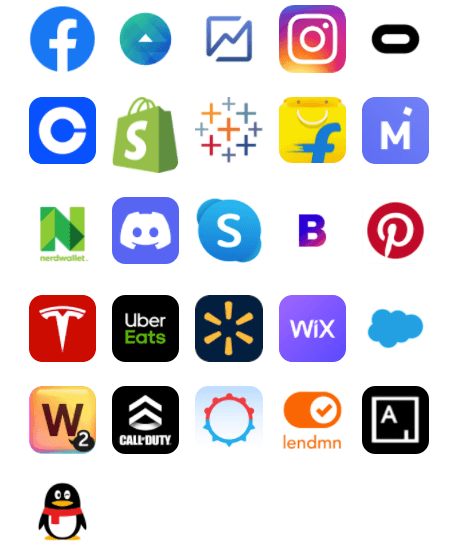
Why hire React Native developer is a question pertaining to every business? To give a fair idea, below is the list of business leaders that have reaped in rich advantages by developing Android and iOS apps with React Native.
- Walmart- The app has improved user experience and streamlined in-app animations, similar to the native functions
- Instagram: Through React Native, the social media platform implemented push notifications in the form of WebView. It did so without developing a navigation structure.
- Facebook: The app has a supportive mobile user interface and a simple navigation.
What is Swift?
Swift is a general purpose programming language developed by Apple and first released in 2014. As it is a multi-paradigm programming language, it is used to design apps for macOS, tvOS, watchOS, etc. Moreover, the modern software design makes Swift more flexible, reliable, expressive and very efficient.
The language has a human-friendly syntax and it is easy to write, read and maintain. Moreover, Swift also incorporates Apples' Cocoa Touch frameworks and Cocoa.
Market leading apps build through Swift
Like React Native, there are some popular apps built using Swift. We have curated a list of the best applications for better understanding.
- Twitter: The social networking platform has used Swift in its iOS version and since then have rendered smooth and fast user experience
- Lyft: Through Swift, the taxi booking application has become lighter, compact, more responsive and easy to maintain.
- Airbnb: The travel agency app has utilized the interoperability features of Swift in multiple ways.
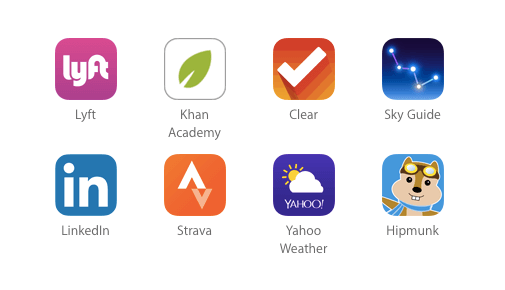
After understanding React Native Vs Swift in brief, it is time to compare them on different parameters.
Read More: 5 Things To Consider When Building Large-Scale Web Applications
React Native vs Swift- A side by side comparison
To understand if React Native and Swift are ‘worth their salt’, we have compared them using multiple specifications. Let us begin:
React Native Vs Swift- Performance
The performance of Swift vs React Native is gauged on various parameters such as memory usage, CPU consumption, GPU speed, etc. Based on the tests, React Native pinned down Swift on memory usage and GPU speed, while Swift had the upper hand in CPU consumption. Moreover, React Native allows the developers to embed native codes in the app and use different tools for different tasks.
Thus, from a performance point of view, React Native is far ahead as compared to Swift.
Winner: React Native
React Native Vs Swift: User Interface
The power behind React Native is JavaScript and it helps in leveraging the internal APIs to run native elements. Thus, despite the user interface being indistinguishable, it becomes easier for the developers to code in React Native. Moreover, because of the JavaScript development-legacy, developers can build apps for different sized iOS devices such as iPhone and iPad with ease.
As Swift is an iOS-native language, it is necessary to code from scratch when it comes to app development. Moreover, as the language is designed by Apple, it has absolutely no issues with integrating into the app design.
Winner: React Native
React Native Vs Swift: Stability
Swift has all the capabilities to produce Native apps that will leverage all the possibilities of the platform. Moreover, when it comes to dealing with heavy tasks and graphical effects, Swift pins down React Native in the battle of Swift vs React Native. Thus, Swift renders more stability to the platform.
React Native is not really producing native apps despite being a leading development framework. It’s entire work is mainly based on leveraging the internal libraries and APIs to make the application function. This means that there are more layers added to the development process making it a bit unstable.
Winner: Swift
React Native vs Swift: Platform’s maturity
React Native was launched in 2015 while Swift in 2014. Thus, in terms of years of being in the business, there is little to choose between the platforms. But the significant differences begin in their working process.
As React Native is powered by JavaScript, it has a more streamlined process. It is easier for the developers to code and spot the issues in the framework. Therefore, this not only speed up the entire development process but also makes bugs spotting easier.
Designing with a programming language always becomes a tedious process and the story of Swift is no different. Being a new programming language after Objective-C, Swift is the backbone of every software. But since the design process is thorny, it loses the battle of platform maturity between Swift vs React Native.
Winner: React Native
Read More: Why Flutter App Development Is the Future in 2022: Flutter 2.8 Amplifies its Dominance
React Native Vs Swift: Speed of Coding
Through Swift, the developers can build a native iOS application in a conventional way. As the language took off the legacy of Objective C, it has made the process smoother getting rid of the drawbacks.
While on the other side, because of JavaScript, React Native has become a powerful workhouse for website applications. Moreover, the language has been around for more than two decades and is easier to learn and supports various tools. Thus, with the speed of coding, developers find it easier to work with React Native as compared to Swift.
Winner: React Native
React Native Vs Swift: Platform documentation
The battle is neck to neck for Swift Vs React Native in documentation as both are maintained by larger organizations (Apple and Facebook). Both the platforms are organized, thus it helps the developers in reducing the app development time significantly.
Moreover, along with ease of documentation, there is another important aspect ‘ease and automation of documenting’. It becomes a deciding factor in developing applications as automated documents render the developers to add comments and export documents easily. Thus, it saves their precious time and enhances the development project.
So, with respect to automated documents, React Native is more sophisticated. The platform has all the tools to automate the delivery of documentation. Swift on the other hand, lacks this level of sophistication.
Result: React Native
React Native Vs Swift: Developer cost
For developing iOS apps, it becomes relatively cheaper to hire a React Native developer. Although there is no major difference in hiring a single coder whether it is Swift or React Native. The latter becomes cheaper when the developers are hired as a team.
Moreover, along with being budget friendly, React Native does not compromise on the quality of the project. Thus, in the long run, it becomes a win-win situation for the business organizations.
Winner: React Native
React Native vs Swift: Availability of the developers
Building a team of JavaScript codes is comparatively easier because the language is popular and has been around for a long time. On the other hand, since Swift is relatively new, there are significantly lower number of professional developers for companies to choose from.
Close to 2/3rd (65%) (Stack Overflow) of the developers would consider choosing JavaScript is their preferred language. Whereas the number of coders choosing Swift is very low.
Winner: React Native
React Native vs Swift: Ease of learning
When it comes to learning React Native for iOS app development, the process is relatively simpler. But as web development is different from app, the entire situation changes and developers don’t feel at home with React Native. But to ease this situation, React Native has released in-depth documents and extensive libraries to improve the learning curve.
But with Swift, the learning curve is cutting edge for developers. Apple has designed a curriculum to help people understand the fundamentals of this modern language with ease. Moreover, Swift has Swift Playgrounds feature that makes the learning curve smooth even for people with no coding knowledge.
Result: Swift
Read More: How to Hire a React Native Developer - A Complete Guide
Advantages of React Native
Hiring React Native developers will render the business organization a significant benefit of their peers and allow them to scale ahead in their genre.
Rich ecosystem
React Native makes full use of the user interface libraries to automatically re-render the appearance of the application. The process of re-rendering is done with every state change
Hot-reloading
Due to the hot reloading feature, it becomes easier for the developers to add new codes directly to the live application
Native rendering
There is no need of HTML or CSS markup to natively render the APIs as React Native uses the host platform
Debugging
The platform has all the access to the debugging tools for intelligent error reporting.
Advantages of Swift
Since Swift is backed by Apple, it has some profound perks that assists businesses in developing state-of-the-art iOS apps.
Dynamic memory
The language has dynamic memory that helps in reducing the footprints and removes any issues of memory clogging.
Highly secured
Swift has a strong typing system with impeccable error handling capabilities. Therefore, this makes it easier to find the bugs and reduce the issues created by them.
Native rendering
The programming language uses several toolkits and libraries to render APIs and native codes with the help of Xcode.
Final thoughts: When to use React Native vs Swift
We have seen that the competition between React Native
Vs Swift is pretty intense and it is very little that differentiates them. Thus, as a concluding thought, here is a quick see through that will assist business houses to pick the best for their project.
When to choose React Native
· Developing cost effective app
· If the app requires hot reloading
· The app requires faster development
· If the goal is to build cross platform apps
When to choose Swift
· Developing single platform apps (iOS app development)
· Developing apps with high memory management and complex user interface
· Apps that require APIs and native features of iOS
Modern day businesses need to be flexible in choosing the app development framework as it will be vital in enhancing the performance of the app. Therefore, if you have an idea and are wondering whether to opt for Swift or React Native, contact us and we will render you the best-in-class solutions. Hire our multifaceted team of ReactJS developers or Swift developers that are experienced and skilled to provide quality solutions.