
Developing a Robust Real Estate App from Scratch
As the target audience keeps changing and new generations will come, real estate business owners' approach also needs to shift. National Association of Realtors (NAR) found that 58% of Millennials and 46% of Gen X buyers searched and found their houses on mobile devices.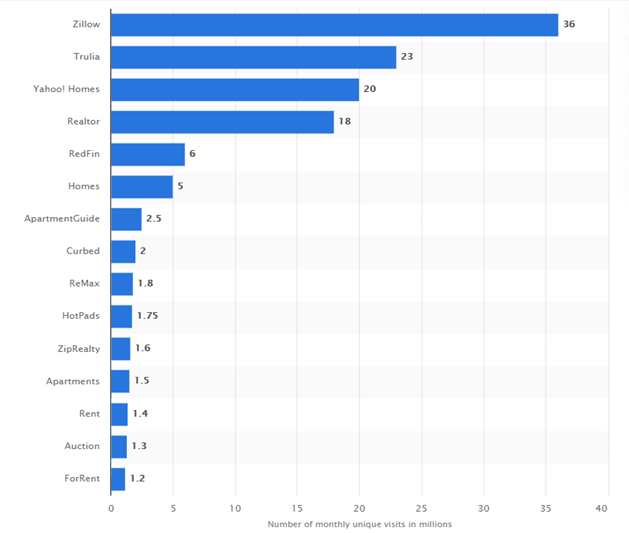
- Filling the rent and sale proposals
- A database with all the information related to the property for sale.
- Coordination with other real state agencies.
- Making the app a mediator between choosing an agent from the list and applying for a house.
Zeroing in with a Strategy
A real estate app does not have to cater to just one specific user. Before creating an app, you need to consider three main user groups: homebuyers, real estate agents, and administration. For example, agents and brokers may want to list and sell properties, and homebuyers and renters may wish to search for houses. Two features that are essential to any real estate app are:- Users should be able to search for properties on the map.
- Agents should be able to list their properties on the platform and other users' properties.
Also Read: MVP For Startups: How it Helps Reduce Development Costs
Choosing a Suitable Tech Stack
According to the NAR, real estate agents implement the most valuable technology tools. These tools include CRMs, document storage software, document creation software, and local MLS websites and apps. Thus, it is equally essential to build an app that equips such tools to solve the most common features the customers would want:- Need for updated information about each property
- Easily accessible data
- Engagement and connection
- CoreData or Realm for managing property lists
- Google places API for in-depth information about surrounding areas and Spatial Neighborhood API for demographics
- Google Maps API for creating customized maps.
- Spark APIs for normalizing MLS data streams.
- Facebook SDK for integrating Facebook login
- Java or Kotlin programming language for Android Apps, and Swift or Objective-C for Apple apps.
- Amazon S3 for cloud data storage for creating personalized ads.
- Firebase SDK for push notifications
Also Read: How To Choose A Tech Stack For SaaS Development
4 Prominent Features to Add to Your Real Estate App
Till 2026, the market for real estate software development is estimated to reach $13.46 billion. An efficient mobile app must offer information regarding all the crucial aspects. Hence, adding prominent features should be the primary focus for business owners.User Panel
- The user panel should include signup and login features. It would require users to register as well as verify their identities.
- It should also consist of map views to visualize all the house listings. An interactive map paired with the Map APIs would provide information about transport, schools, and other important surrounding areas.
- Details of brokers are another significant part of the database apart from property information, history, images, adding favorite properties, and a calendar to track the history of visited properties.
Admin Panel
- Admin panel is necessary for adding or removing the managed properties apart from integrating reporting and analytics.
- User management is another crucial feature of the admin panel that comprises managing both the brokers and customers. The admin can add, edit, update, block them depending on their activities.
- Revenue management enables admins to monitor and control the total revenue generated. Similarly, adding customer support management allows them to deliver quality support, convenience, and security.
Advanced Features
- Support for three-way communication by sharing profiles of brokers and properties with multiple users can further enhance the communication.
- Detailed information regarding the neighborhood areas like infrastructure, and crime rates can also increase the engagement and user experience.
Also Read: 8 Crucial Factors That Impact Mobile App Development Cost
To Conclude
It’s hard to imagine a real estate agency without a website. Not only do they have one, but they also use mobile applications to improve their services and beat the competition. Mobile applications provide undeniable benefits for both business owners and customers. Mobile applications allow industry leaders to make their services available via handheld devices and create brand awareness among the competition.No matter the development stage, mobile apps are an essential part of any company's marketing strategy. And just like everything else in this day and age, the success of the app starts with who you hire to help you develop it. It's not always easy to find the perfect combination of skills. Third Rock Techkno has skilled and experience real estate app developers who craft an app suitable to your needs. Whether its Apple or Android, we provide full assistance at every stage of app development from designing, testing, and launching.Krunal Shah
Krunal Shah is the CTO and Co-founder at Third Rock Techkno. With extensive experience gained over a decade, Krunal helps his clients build software solutions that stand out in the industry and are lighter on the pocket. | Let's connect!