

DevOps solutions have become widely popular around the globe due to its several advantages such as faster product delivery, better automation, resources optimization, and higher stability to operational environments, to name a few.
As stated in a recent market report, the global DevOps market is expected to reach $12.215 billion by 2026 from its benchmark of $4.311 billion while growing at a CAGR of 18.95% during the forecast period. And not only that, nearly 86% of the companies claimed that adopting DevOps strategies have helped them improve and speed up the process of software delivery.
No matter in which industry you are operating in, opting for the right DevOps strategies will help you improve your software development, delivery, and overall business. And in this blog, we will guide you through the top DevOps tools to use throughout the DevOps lifecycle stages. So, let’s get started.
Top DevOps Tools For DevOps Lifecycle Stages
No matter what the application area of DevOps is, it works through its key lifecycle stages as listed below -
- Discover
- Plan
- Build
- Test
- Monitor
- Operate
And
- Continuous Feedback
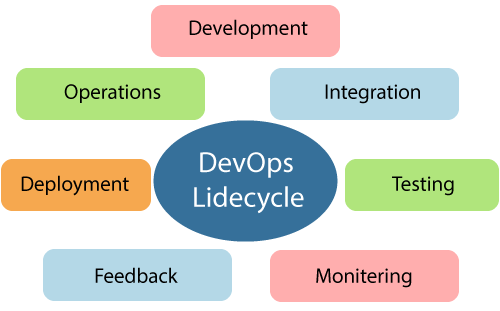
The best practice will be to use the relevant tools for each of the phases to optimize them and ensure better outcomes. Here’s a list of DevOps tools to be used in its different lifecycle stages.
1. Discover
Discover phase is the first stage of DevOps lifecycle where the DevOps team needs to research on the specific project and define the project scope to follow the right direction. Some of the popular DevOps tools to use in this phase are -
Mural
Mural is one of the popular DevOps tools that is used in the discovery stage to improve the collaborations among various teams, streamline real-time work among different teams, remove asynchronicity in a collaborative work culture and enhance the whole process flow for better outputs.
Key Features/Advantages of Mural
- Improves visual collaboration
- Helps unravel new ideas for your project
- Drives faster innovation
- Its templates, frameworks and other features improve meetings and their outcomes
- It’s supported by different browsers like Google Chrome, Safari, Firefox, Edge, and others
Jira Product Discovery
Jira Product Discovery helps the developers, project and product managers and other stakeholders take a dynamic and data-driven approach to research, plan and create the most suitable and competitive project plan to reach the software as well as overall business goals.
Key Features/Advantages of Jira Product Discovery
- Lets you easily plan and record the information and idea relevant to it
- Allows you to prioritize the process of planning, ideation, and research
- Facilitates easy and transparent collaboration among the stakeholders
- Ensures improved integrated product discovery and delivery
Miro
Miro is one of the highly sought-after DevOps tools that helps improve hybrid collaborations, brainstorming, meetings, project management, workshops and others. Not only does it help streamline and automate the relevant workflows, but helps improve strategic planning, diagramming as well as caters to your Agile culture.
Key Features/Advantages of Miro
- Help build collaborative strategies for product development
- Lets you visualize tasks, planning, dependencies and workflows
- Offers readymade and use case-specific workflows to speed up and improve the research and discovery
- Offers a compact solution to map customer journeys
- Gives dedicated solutions to align with your market, sales and overall business goals through streamlined discovery and research
2. Plan
The second stage of DevOps is planning where you need to chalk out a complete plan for product development, set of features and solutions to obtain, key problem statements to solve, market positioning, and others to reach your product and relevant business goals efficiently. Some of the quality DevOps tools to use in this stage are -
Confluence
Confluence is one of the most used DevOps tools in the planning stage for team workspace management, improving collaborations, streamlining documentations, and facilitating easy decision-making.
Key Features/Advantages of Confluence
- Boosts interactivity through highly functional and dynamic confluence pages
- Offers easy solution to structure planning and relevant information to optimize time and resources
- Bossts consolidation, collaborations and communications among the teams
- Helps organizing team communications and information exchanges
- Offers robust solution to accommodate dynamic requirements for team planning, information exchange and collaborations
Jira Software
Jira software is one of the most sought-after DevOps tools that helps in issue tracking, project management, and managing Agile development and planning. Some of its top features that make it a popular DevOps tool are given below.
Key Features/Advantages of Jira Software
- Project planning and issue tracking
- Offers high flexibility and automation to workflows
- Easy backlog prioritization
- Competitive sprint planning
- Robust Scrum and Kanban support
- Easy tasks assignment, tracking and reporting
See More: Why DevOps Is Important?
3. Build
This stage of DevOps refers to the process of product deployment and hence is often considered as the most crucial stage. To simplify the deployment process and ensure quality product deployment, you must adopt the proper DevOps tools. Some of the quality DevOps tools to use in this stage are -
Docker
Docker provides the developers with an advanced and simple-to-use platform to develop faster, and more accurately while utilizing the resources at their best.
Key Features/Advantages of Docker
- Simplifies repetitive and complex configuration processes
- Optimizes the development lifecycle for diverse product development
- Suitable to improve portable application development
- Its end-to-end solution includes APIs, UIs, and CLIs
- Offers robust security throughout the building phase
Puppet
Puppet is an infrastructure automation and delivery tool that is used in the build stage of DevOps to speed up the process and improve the output. If you are dealing with a complex infrastructure or working with limited resources, then it can be your choice to optimize your resources and get better outputs. Some of its top features catering to the requirements in this phase are as given below.
Key Features/Advantages of Puppet
- Offers complete automation of the build stage of DevOps
- Provides an easy solution to integrate diverse toolchains
- Accommodates your requirements for delivering at cloud-scale and cloud speed
- Helps keep the environment consistent throughout the build stage
- Offers open source development solutions for diverse ecosystems
GitHub
GitHub is a highly useful tool for this stage of DevOps that is used for collaborative coding. Be it receiving updates on the specific type of software development, gaining and sharing knowledge on a specific software development framework or rating each other’s work - GitHub enables your developer to improve the product building process through effective collaborations and communications.
Key Features/Advantages of GitHub
- Lets you automate diverse workflows related to software development
- Helps easily scan and fix issues and vulnerabilities during deployment
- Offers a compact solution for code reviewing, changes, and management
- Lets the developers communicate publicly or privately over a community to resolve issues
- Enables you to utilize AI-driven coding through the Copilot mode

4. Test
In this stage of DevOps, the testers need to scan and test the software to find out any possible bugs, errors or issues. Not only does this stage include the process of quality checking and fixing errors but also involves the tasks like test management, orchestration, and others. Some of the popular DevOps tools to use in this phase are as shown below.
Veracode
Veracode helps you achieve impenetrable security during the software testing or quality checking and deployment stage. Not only does it provide you with a single interface to ensure optimum security and complete adherence to the security policies in testing and building phase, but also helps you with the crucial insights and analysis.
Key Features/Advantages of Veracode
- Offers a complete platform overview in testing and analysis phase
- Provides with a dedicated solution to achieve DevSecOps in the testing and analysis phase
- Comes with a complete solution for quality testing and assurance for coding and framework
- Equipped with mitigation management feature
- Lets you run a range of testing and analysis processes such as software composition analysis, dynamic analysis, penetration testing, and others
Snyk
Snyk is another well known tool that is used in this phase of software testing and analysis. Its developer-first security solution ensures optimum security during the testing, quality checking, and quality optimization processes.
Key Features/Advantages of Snyk
- Helps avoid vulnerable dependencies to improve the testing/quality checking process
- Offers a robust security solution for all your cloud environments during this phase
- Improves the operational processes in the testing phase while offering an additional layer of security throughout
- Helps secure your code and improve its quality while optimizing your resources
5. Monitor
This is a significant stage in DevOps that refers to the monitoring of entire DevOps process cycles and stages like planning, development, integration, and testing. Also, in this stage, you avail a complete overview of the current status of product development, environment, infrastructure, and others. Some of the DevOps tools to use in this stage are given below.
Sensu
Sensu is a highly used DevOps monitoring tool that helps simplify the DevOps monitoring pipeline and the related workflows. It helps deliver monitoring as code on diverse cloud environments.
Key Features/Advantages of Sensu
- Helps consolidate diverse monitoring solutions
- Bridges the gaps in the monitoring mechanisms
- Automates the monitoring and diagnosis processes
- Reduces data silos
- Offers efficient monitoring solutions for both static and dynamic infrastructure
PagerDuty
PagerDuty enables you to monitor, track issues, and improve your product easily in this DevOps stage and hence is highly sought-after by the developers and testers.
Key Features/Advantages of PagerDuty
- Helps monitor and prevent issues that can impact your software or overall business
- Offers competitive monitoring solution to optimize the ultimate customer experience
- Helps with easy configuration of diverse monitoring tools
- Lets you keep track of server alerts easily
- Helps optimize quality during new product deployment or upgrading
See More: How Do Agile and DevOps Interrelate?
6. Operate
This stage of DevOps requires proper operational activities, collaborations, and consistency to ensure the optimum product quality. Also, the changes incorporation and issues/problem tracking is executed in this stage if any. Here are some tools that you can use to improve this stage.
Statuspage
Statuspage is a communication tool suitable to use in this stage of DevOps that facilitates better communication, helps with on-time problems solving, as well as consistency maintenance.
Key Features/Advantages of Statuspage
- Offers status communication solution for multiple teams, products, and solutions
- Ensures improved incident communication and problem tracking
- Helps handle downtimes without much ambiguities
- Helps build improved communication, collaboration, and transparency among multiple tools
- Helps with resources and cost optimization
Opsgenie
Opsgenie is another effective tool to use in this stage of DevOps that is focused to improve team operations, proper communications, on-call and alert management.
Key Features/Advantages of Opsgenie
- Centralizes diverse alerts and ensures on-time notification
- Helps prioritize critical alerts, manage group alerts and filters noises
- Utilizes multi-channel notifications to improve the teams’ operability
- Highly flexible to fit dynamic workflows
7. Continuous Feedback
In this stage of DevOps, customers’ feedback is taken to improve the product and make it a better fit for their key requirements. This phase requires incorporating certain changes in your product as well as the adoption of the right approaches and processes by your team. DevOps tools that you can use to simplify this stage are given below.
Slack
Slack provides a complete platform to deploy the continuous feedback process while improving cross-functional collaborations, to-the-point and faster response to diverse incidents, and proper changes implementation.
Key Features/Advantages of Slack
- Helps manage and track diverse tasks and processes for continuous feedback implementation
- Offers advanced search modifiers
- Helps set up reminders and lets you prioritize the feedback
- Lets you subscribe to RSS feeds
- Offers easy navigation, feedback tracking and checking
Pendo
Pendo is one of the most suitable DevOps tools to use in this stage. It lets you automate the feedback triggers and implement the required changes easily. Be it automating in Azure DevOps or facilitating easy feedback collection and integration, it helps simplify this stage.
Key Features/Advantages of Pendo
- Enables feedback automation
- Offers easy integration solutions for diverse apps
- Sets triggers with dynamic request statuses
- Triggers with feedback or build completion
Adopting the right DevOps tools can help you improve your DevOps phases and processes significantly as well as give you competitive advantages by improving your overall product and culture. And the above guide will help you choose the proper tools for each of the stages.

Also, you can opt for Third Rock Techkno’s professional DevOps solutions to ease your task and ensure full automation and optimum result. Check out our portfolio and contact us for a free consultation.