
- The educational games market is valued at over $12 billion (Verified Market Research).
- Pick by subject: DragonBox and Prodigy for math, Duolingo and Babbel for languages, Scratch and Kodable for coding, Minecraft and Roblox for creativity.
- Match the game to the child's age, and keep screen time to roughly 1 hour for ages 2 to 5, 1 to 2 hours for 6 to 12.
- Free apps are great for testing; paid apps remove ads and add adaptive personalization.
- Look for COPPA compliance and parental controls before you let a child play.
Traditional education often struggles to keep pace with the digital savvy of its learners, and the emergence of edutainment offers a promising bridge between the need for engaging educational methods and the allure of entertainment.
This fresh approach to learning games not only captivates the imagination of young minds but also taps into their inherent love for interactive learning and gaming content to achieve remarkable educational outcomes.
With the educational games market now valued at over $12 billion and growing rapidly, game-based learning has proven its effectiveness. Classroom studies consistently report higher productivity and engagement when lessons are delivered as games, and edutainment apps now help children learn everything from math and science to critical thinking and creativity.
Also, our Co-Founder Krunal Shah added that:-
“I’m happy to see how edutainment is changing the way we learn, making it more engaging and enjoyable. This approach not only improves the learning experience but also prepares our future generations for a world where technology and education go hand in hand.”
What Is Edutainment? Understanding Educational Gaming
Edutainment games represent a fusion of education and entertainment, designed to make interactive learning not just more engaging but also more effective. This approach represents a shift in educational gaming methodologies, using the power of technology, multimedia, and learning games to create environments that are both fun and informative.
Edutainment games transcend the traditional boundaries of classrooms and textbooks, offering a lively platform where educational goals are met with the excitement and engagement typically reserved for entertainment.
These learning apps align perfectly with the increasing demand for fresh education solutions that can engage students beyond the conventional classroom setting.
By integrating the principles of kids' edutainment games, educators and content creators can address a wide array of subjects, from mathematics and science to languages and the arts, in a manner that resonates with this tech-savvy generation. mobile educational games and gamification in education.
This method aligns perfectly with the increasing demand for fresh educational solutions that can engage students beyond the conventional classroom setting.
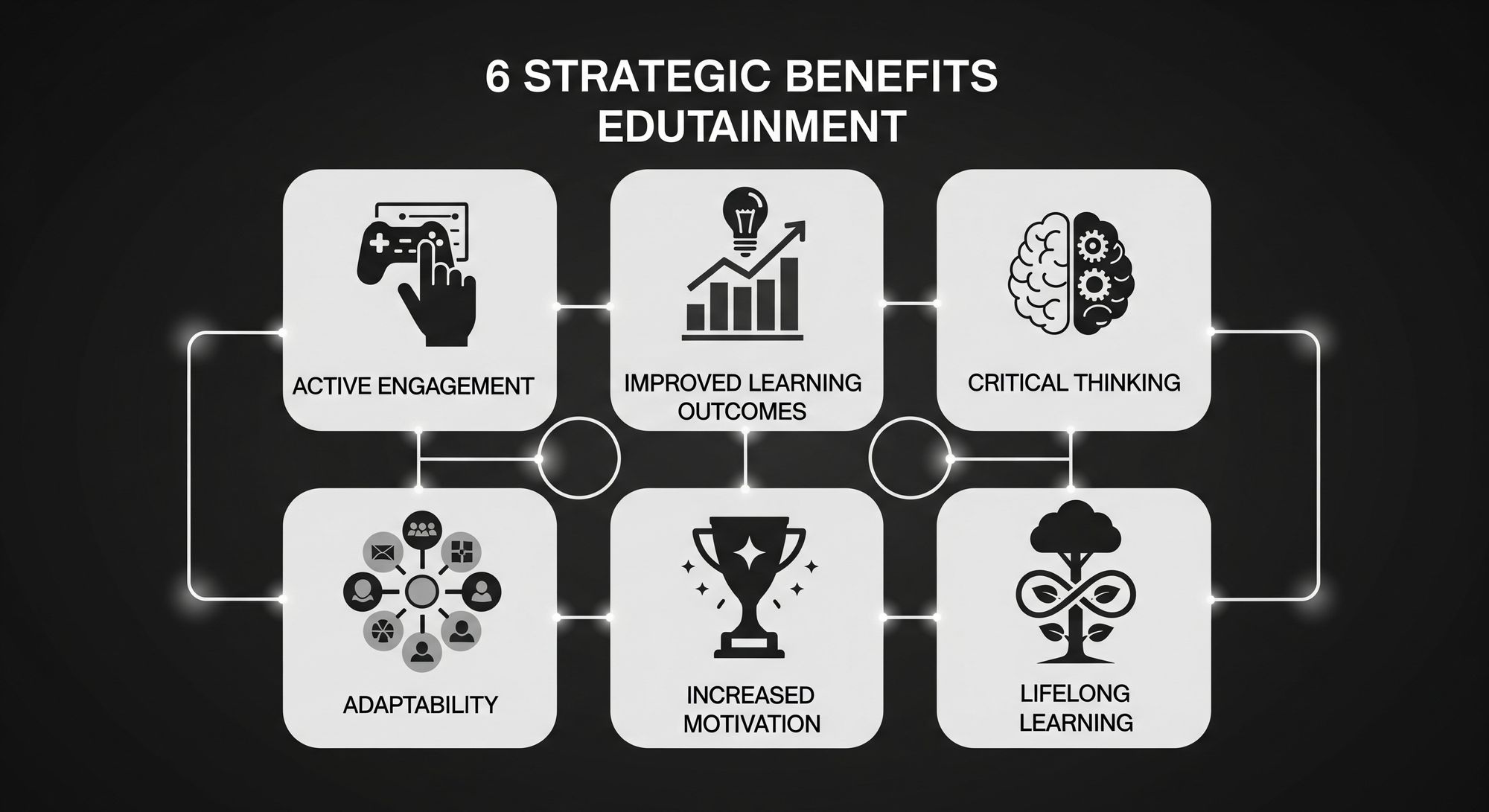
6 Strategic Benefits of Educational Games You Should Know
1. Active Engagement Through Interactive Learning
Traditional education often emphasizes passive absorption of information, leading to disengagement and poor retention. In contrast, edutainment games spark active participation. By incorporating elements like educational gaming mechanics and engaging content, learners become protagonists in their educational journey.
This method changes learning into an active process where students interact with learning games rather than merely absorbing information. Game-based learning is critical for building deep understanding, as actively engaged learners are more likely to retain information through educational apps that make learning lively and memorable.
This interaction is critical for building deep learning, as actively engaged learners are more likely to understand and retain information. Engaging students in this manner makes the learning process more lively and memorable, significantly improving the educational experience.
2. Improved Learning Outcomes with Educational Gaming
The engaging nature of edutainment games has a direct impact on learning outcomes. When education is enjoyable and interactive, it breaks down barriers to learning complex concepts and improves information retention.
Students find themselves more inclined to explore and understand subjects when they are presented through kids' educational games and edutainment apps.
This approach not only makes learning more accessible but also more effective, leading to better academic performance.
Edutainment's versatility across various subjects, from mathematics to languages, allows educators to tailor content to their teaching goals, further improving its effectiveness.
3. Critical Thinking Skills Development
Edutainment games excel in promoting critical thinking skills through challenges, puzzles, and problem-solving activities embedded in an interactive learning experience.
Educational games encourage learners to think critically, analyze situations, and make informed decisions, stimulating cognitive abilities key for personal and academic growth.
Developing critical thinking skills through game-based learning prepares students for real-world challenges, equipping them with the ability to approach problems logically and creatively.
These skills are invaluable, extending beyond the classroom into every aspect of life.
4. Adaptability to Different Learning Styles
One of the standout features of an edutainment game is its adaptability to various learning styles. Every learner is unique, with preferences ranging from visual and auditory to kinesthetic.
Educational games and learning apps offer diverse formats, ensuring that whether a student learns best through videos, interactive learning simulations, or auditory cues, there's content tailored to their needs.
This inclusivity maximizes learning effectiveness by catering to individual preferences, ensuring that no learner is left behind.
The ability of edutainment gaming to adapt to different learning styles highlights its role in creating a more personalized and effective learning game environment.
5. Increased Motivation Through Gamification
Incorporating gamification in education, a hallmark of edutainment games, significantly boosts learner motivation. Elements like points, badges, and leaderboards in educational apps introduce a competitive edge, changing learning into an engaging challenge.
This competition motivates learners to dig deeper into learning games, striving to understand and excel.
The rewards and recognition from educational gaming provide learners with tangible goals and a sense of achievement, further fueling their motivation to engage with educational content.
This approach not only makes interactive learning more enjoyable but also more rewarding, encouraging continuous engagement and effort.
6. Lifelong Learning Habits
Perhaps the most profound benefit of educational games is their ability to build a lifelong love for learning. By making the learning process enjoyable and rewarding, edutainment apps and learning games lay the foundation for continuous growth and curiosity.
Game-based learning instills in learners the understanding that education is not just a phase but a lifelong journey. The positive experiences associated with kids' educational games encourage individuals to continuously seek new knowledge and skills, keeping their minds active throughout their lives.
This commitment to lifelong learning is essential today, where continuous personal and professional development is key to success.
From adaptive difficulty to COPPA-compliant data handling, kids' EdTech needs specialized engineering. See our education software development →
The Best Educational Games to Try in 2026
The educational gaming industry has evolved significantly, offering many learning games that change traditional learning into interactive learning journeys.
Here's a closer look at some standout examples across various educational domains, showcasing the potential of edutainment games to make learning more accessible and engaging through educational apps and learning apps.
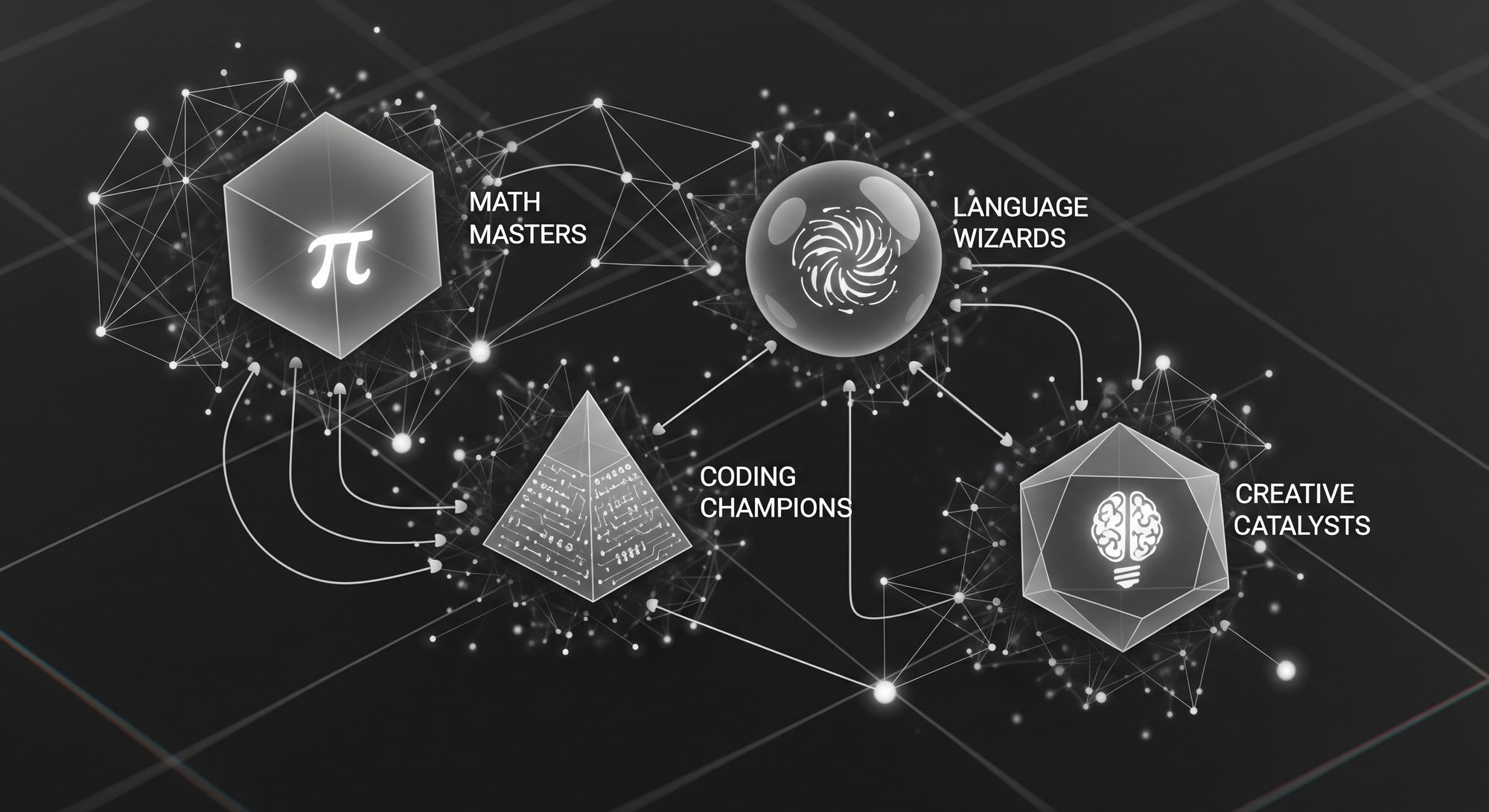
1. Math Masters: Best Educational Games for Mathematics
DragonBox, Prodigy, and Math Blaster are pioneering kids' educational games in mathematical learning, effectively turning a subject often dreaded by students into captivating adventures.
These educational games excel in demystifying complex mathematical concepts, making them understandable for learners of various age groups.
- DragonBox introduces algebra and geometry through intuitive gameplay that subtly teaches mathematical principles without overwhelming the learner. This learning app demonstrates how educational gaming can make abstract concepts tangible.
- Prodigy combines role-playing game (RPG) elements with math problems in these edutainment games, adapting difficulty to the player's learning pace. This educational app personalizes the educational experience, showcasing the power of adaptive learning.
- Math Blaster has been a staple in educational gaming for decades, offering space-themed adventures that challenge players to solve math problems to progress. These learning games highlight how edutainment apps can make learning math not just palatable but enjoyable, building positive relationships with the subject from an early age.
These examples highlight how edutainment can make learning math not just palatable but enjoyable, building a positive relationship with the subject from an early age.
2. Language Wizards: Learning Apps for Multilingual Education
Duolingo, Lingo Deer, and Babbel stand out as premier platforms for language learning, employing interactive techniques and real-world contexts to improve linguistic skills. These platforms are designed to make language acquisition both effective and engaging, using gamified lessons to maintain learner interest.
- Duolingo offers bite-sized lessons in a wide range of languages, using a blend of reading, visiting, listening, and speaking exercises within game-based learning environments. This educational app helps explain how learning games can make language learning accessible and fun.
- Lingo Deer focuses on Asian languages, providing structured lessons that explore grammar and vocabulary within a cultural context. These educational games show how interactive learning can preserve cultural authenticity while teaching languages.
- Babbel takes a conversational approach to language learning, emphasizing practical vocabulary and phrases to help learners quickly achieve conversational fluency. These platforms demonstrate the power of edutainment apps in making language mastery both achievable and enjoyable.
These platforms demonstrate the power of interactive learning, making the daunting task of mastering a new language both achievable and fun.
3. Coding Champions: Educational Gaming for Digital Literacy
In our increasingly digital world, coding skills are more important than ever. Kodable, Scratch, and Lightbot are leading the charge in introducing young learners to the fundamentals of programming through playful and engaging content.
- Kodable lays the groundwork for coding from the ground up, targeting younger children with its friendly interface and simple logic puzzles. These learning games demonstrate how educational gaming can introduce complex concepts through age-appropriate edutainment apps.
- Scratch, developed by MIT, allows learners to create their own games and animations using block-based coding, building creativity and computational thinking. This educational app shows how learning apps can empower students to become creators rather than just consumers.
- Lightbot offers a series of puzzles that teach programming logic and concepts without the need for actual code, making it accessible to beginners. These learning games prove that interactive learning can introduce fundamental programming concepts through engaging mobile educational games.
These platforms not only teach valuable digital skills but also encourage logical thinking and problem-solving, key competencies in a tech-centric world.
4. Creative Catalysts: Educational Apps for Innovation
Minecraft, Roblox, and Scribblenauts are at the forefront of promoting creativity, collaboration, and critical thinking. These educational gaming platforms provide a sandbox environment where imagination and innovation are not just encouraged but required.
- Minecraft offers an open world of possibilities, where learners can build and explore their own creations, learning about resource management, geometry, and even computer programming. This learning app demonstrates how game-based learning can teach complex subjects.
- Roblox enables players to design their own games within the platform, promoting not just gameplay but game creation, building a deep understanding of design and coding. This platform shows how edutainment apps can turn players into developers.
- Scribblenauts challenges players to solve puzzles using their imagination, by conjuring any object they can think of, encouraging creative problem-solving. Through these educational games, learners develop wide-ranging skills from creative design to strategic planning, showing how mobile educational games prepare children for futures where these skills will be invaluable.
Through these games, learners develop a wide range of skills from creative design to strategic planning, showcasing edutainment's role in preparing children for a future where these skills will be invaluable.
Educational Gaming Platforms and Technologies in 2026
The effectiveness of these edutainment games is greatly improved by the platform they're delivered on.
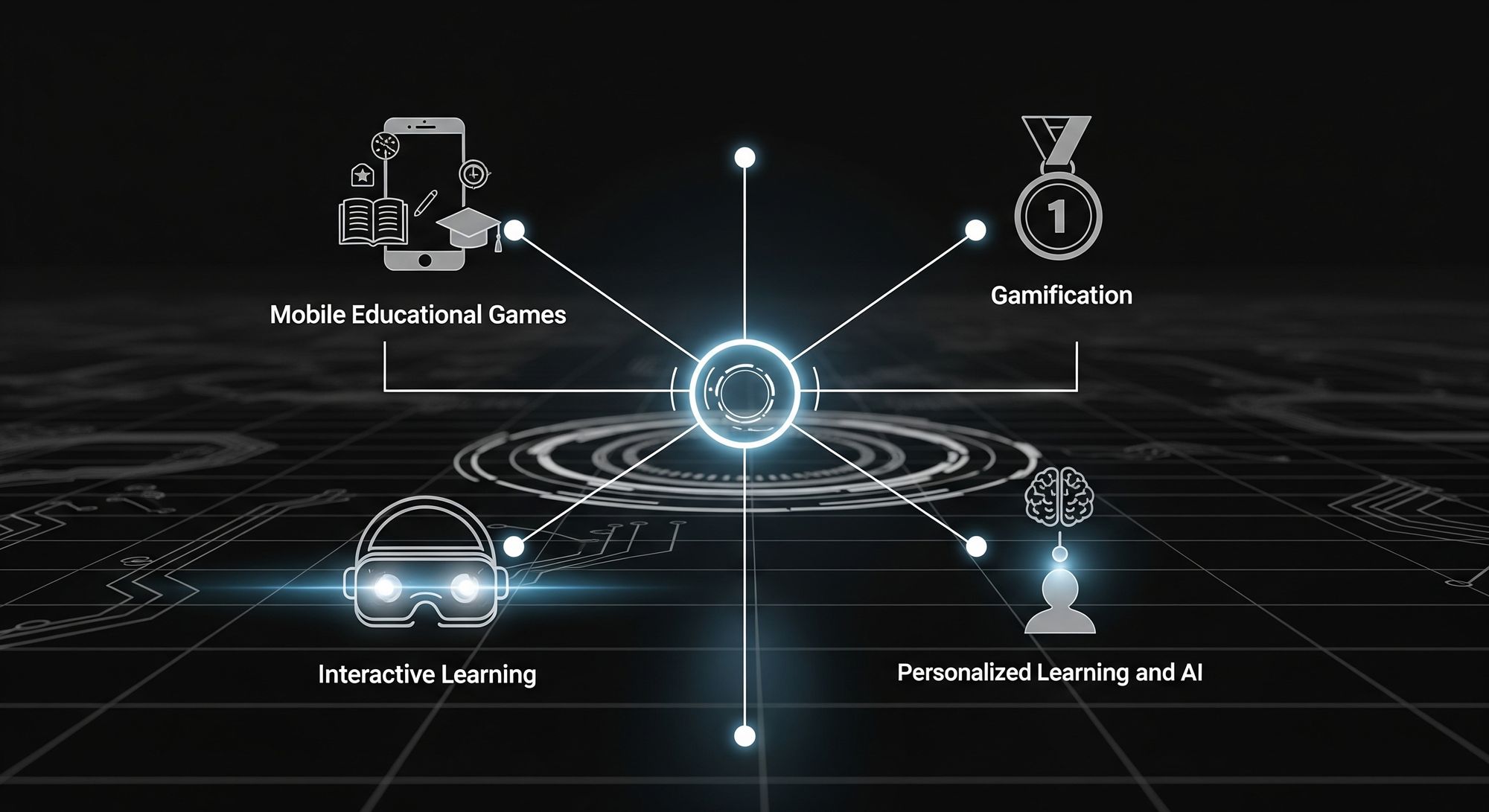
Modern educational gaming spans a variety of delivery methods, from mobile educational games and desktop software to web-based learning apps and immersive AR/VR technologies. Each platform offers unique advantages for interactive learning.
Mobile Educational Games and Learning Apps
Mobile educational games dominate the market with children under 12 owning mobile devices. These learning apps offer rare accessibility, allowing kids to play educational games anywhere, anytime. Educational apps on mobile platforms provide instant access to game-based learning experiences.
Gamification in Education Platforms
Gamification in education turns learning into games through points, levels, and reward systems. These educational gaming approaches make traditional subjects more engaging through learning game mechanics.
Interactive Learning Through Advanced Technologies
Virtual reality learning and augmented reality provide immersive educational game experiences that can simulate real-world scenarios or make abstract concepts tangible.
Personalized Learning Games and AI Integration
AI-powered learning games and personalized learning games adapt to individual student needs, providing customized educational gaming experiences that adjust difficulty and content based on performance.
1. Case Studies: Edutainment in Action

Access to Historical Documents with Edutainment Technology
Industry: Education
Client: National Institute for Newman Studies (NINS)
Website: NINS
Customer Profile
Daniel, the Chief Technology Officer at the National Institute for Newman Studies (NINS), was on a mission to make a vast collection of historical documents accessible to the public.
Customer Challenge
NINS possessed a treasure trove of over 250,000 images from the 19th and 20th centuries, but faced significant hurdles in making them accessible. These valuable materials were stored away in boxes, largely inaccessible to scholars and the public. The institute needed a reliable solution to digitize this wealth of data and a platform for scholars to continuously add new digitized materials.
Solution
After evaluating several existing solutions and finding them lacking, our team collaborated closely with Daniel to tailor a unique application that addressed all of NINS's specific requirements.
- Open-Source Editor Integration: We provided curators with tools to upload documents and manage public collections efficiently, streamlining the digitization process.
- OCR Technology: To minimize manual transcription, we implemented Optical Character Recognition (OCR) technology, changing images into searchable text and significantly reducing data entry time.
- Document Viewer with IIIF Protocol: Our integration of an advanced document viewer supports the International Image Interoperability Framework (IIIF), allowing users to easily view and share digitized documents.
- Elasticsearch for improved Searchability: By using Elasticsearch, we ensured users could effortlessly search through 40 terabytes of data, making the discovery of documents smooth and intuitive.
Result
The custom solution reshaped how NINS curators and the public access historical documents:
- For Curators: A dedicated portal for uploading scanned documents, complete with metadata, allows for the creation of organized, searchable collections. This automation has saved potentially years of manual digitization work.
- For Users: Scholars and the public now enjoy rare access to rare and previously difficult-to-access documents, enriching their research and learning experiences.
Technology Stack
Angular, React, Node.js, Jenkins, BigQuery, and MongoDB
2. Case Study: Smart Book

Overview
Smart Book is a knowledge-driven company specializing in educational content for both print and digital mediums. The company is known for publishing General and Children's books and offering a wide range of paper and non-paper stationery products. With a focus on improving the learning experience, Smart Book embarked on a project to integrate advanced technologies into its digital EPUB file publishing system.
Challenges
The primary challenge for Smart Book was to create an engaging learning game and an interactive learning environment. Learning. Additionally, the company sought to use Artificial Intelligence (AI) to offer fresh solutions such as generating mock quizzes from book chapters and providing summarized answers to aid in learning and revision.
Solutions
To address these challenges, Smart Book initiated a complete project with the following key components.
- Publisher's Capability to Author Books: improving the publishing system to allow authors to create and edit their content smoothly.
- Development of a PDF Viewer: Implementing a PDF viewer to enable users to read and interact with digital books in PDF format.
- Creation of an EPUB Viewer: Developing an EPUB viewer to support the widely used EPUB format, providing a better reading experience for digital books.
- Establishment of a PDF Editor: Introducing a PDF editor to allow users to make changes to PDF documents, facilitating a more lively learning process.
- Design of an EPUB Editor: Crafting an EPUB editor to enable modifications in EPUB files, ensuring content is up-to-date and customizable.
- Integration of a Large Language Model (LLM): Incorporating an LLM to generate book summaries, aiding students in quickly grasping the key concepts of their study material.
ResultsThe integration of these technologies changed Smart Book's digital publishing system, making it more interactive and user-friendly. The AI-powered features, like mock quizzes and summarized answers, provided students with a more engaging and efficient learning experience. The addition of audio and animation through Tradio Learning further improved the fun aspect of education, making learning more enjoyable for children.
Technology Stack
React, Node, AWS, Android, IOS
How to Choose the Best Educational Games for Your Children
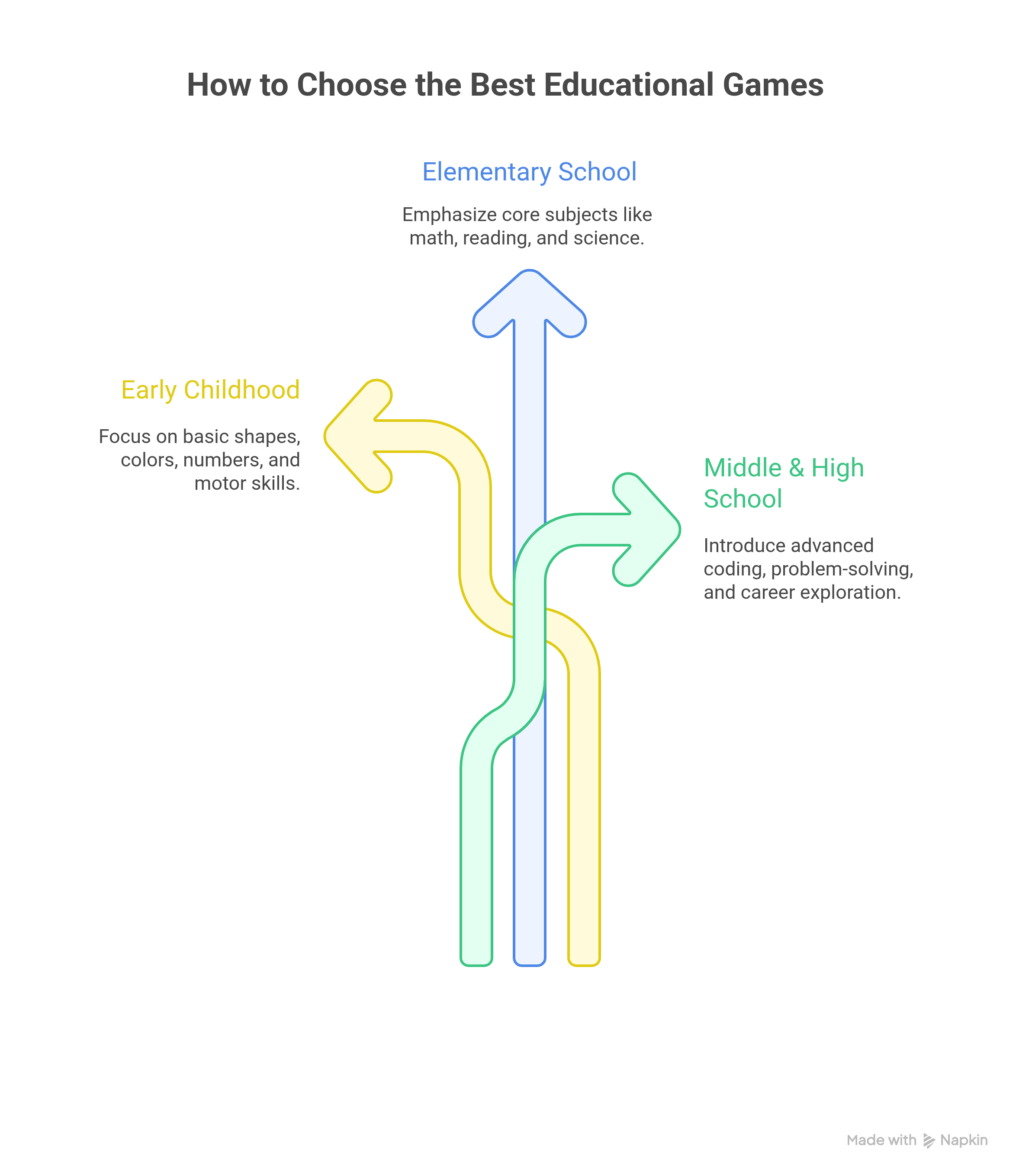
Age-Appropriate Educational Gaming Selection Guide
Early Childhood (Ages 3-5): Foundation Learning Games
Best Educational Games for Preschoolers:
- Simple Interactive Learning: Educational apps focusing on basic shapes, colors, and numbers
- Motor Skill Development: Learning games that improve hand-eye coordination
- Language Building: Kids' educational games with storytelling and vocabulary building
- Creative Expression: Edutainment apps encouraging artistic and musical exploration
Recommended Features in Learning Apps:
- Large, easy-to-tap buttons for mobile educational games
- Short activity sessions (5-10 minutes) in educational gaming
- Positive reinforcement without competition in learning games
- Parental controls for safe interactive learning
Elementary School (Ages 6-12): Core Subject Educational Games
Essential Educational Gaming Categories:
- Mathematics: Learning games like Prodigy and DragonBox for foundational math skills
- Reading & Language: Educational apps such as Reading Eggs and Duolingo Kids
- Science Exploration: Kids' educational games covering basic scientific concepts
- Critical Thinking: Game-based learning with puzzles and logic challenges
Key Features for Educational Apps:
- Progress Tracking: Learning apps that monitor skill development
- Adaptive Difficulty: AI-powered learning games that adjust to learning pace
- Curriculum Alignment: Educational gaming that supports school learning objectives
- Safe Multiplayer: Interactive learning with supervised social features
Middle & High School (Ages 13-18): Advanced Learning Games
Sophisticated Educational Gaming Options:
- Advanced Coding: Learning apps like CodeCombat and Swift Playgrounds
- Complex Problem Solving: Educational games that simulate real-world challenges
- Career Exploration: Edutainment games that introduce professional skills
- Collaborative Projects: Game-based learning with team-based challenges
Safety Considerations for Educational Apps and Learning Games
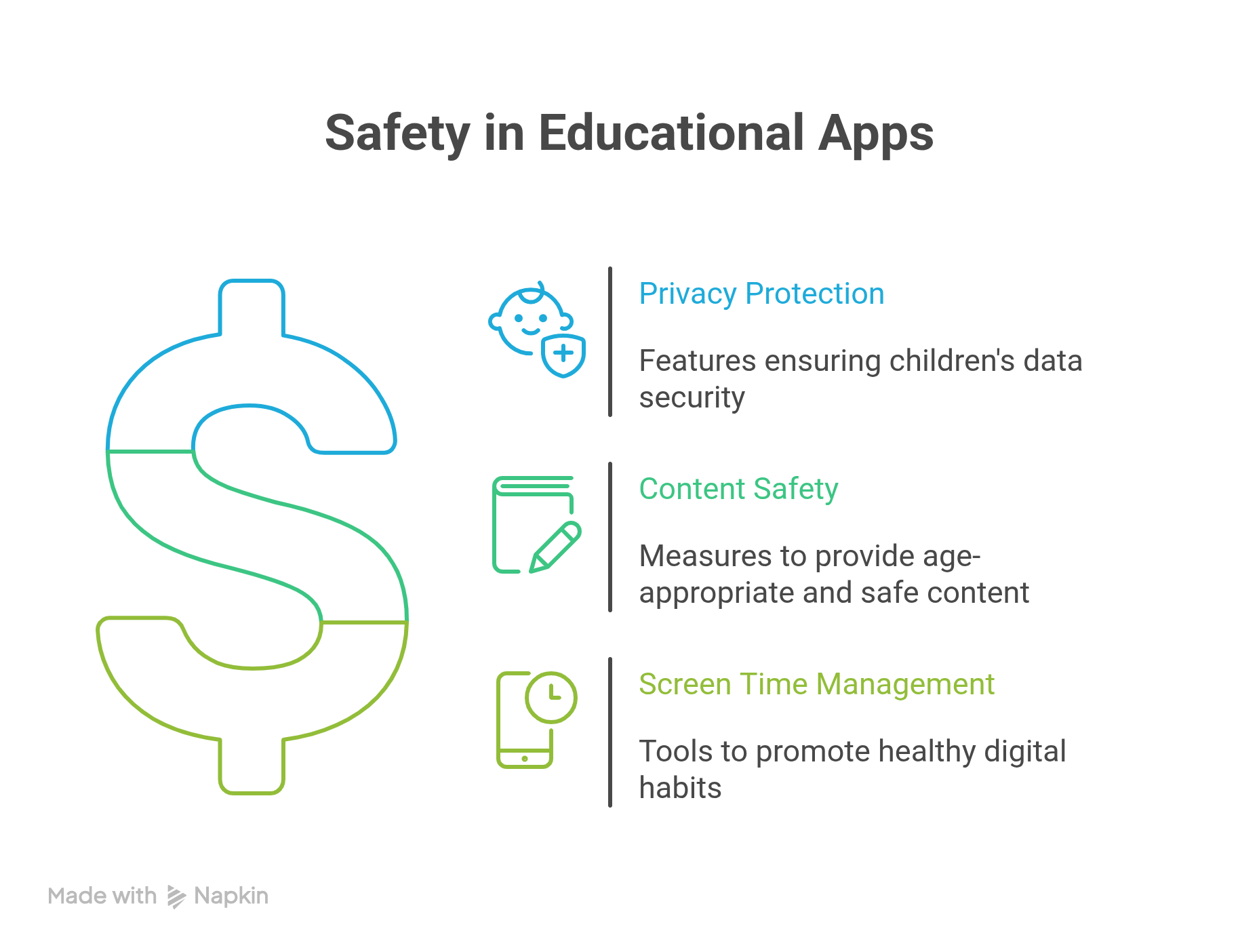
Privacy Protection in Educational Gaming
Essential Safety Features:
- COPPA Compliance: Educational apps that protect children under 13
- Data Minimization: Learning games that collect only necessary information
- Transparent Policies: Kids' educational games with clear privacy statements
- Parental Controls: Mobile educational games with complete oversight tools
Content Safety in Learning Apps
Monitoring Interactive Learning:
- Age-Appropriate Content: Educational gaming with verified suitable material
- Ad-Free Environments: Learning apps without inappropriate advertisements
- Moderated Communities: Game-based learning with supervised social interactions
- Regular Content Updates: Educational games with current, accurate information
Screen Time Management for Educational Gaming
Healthy Digital Habits:
- Built-in Time Limits: Learning games with automatic session controls
- Break Reminders: Educational apps encouraging physical activity breaks
- Progress Over Time: Edutainment games that reward consistent, moderate use
- Family Engagement: Interactive learning that encourages parent participation
Educational Gaming Platforms: Comparing Your Options
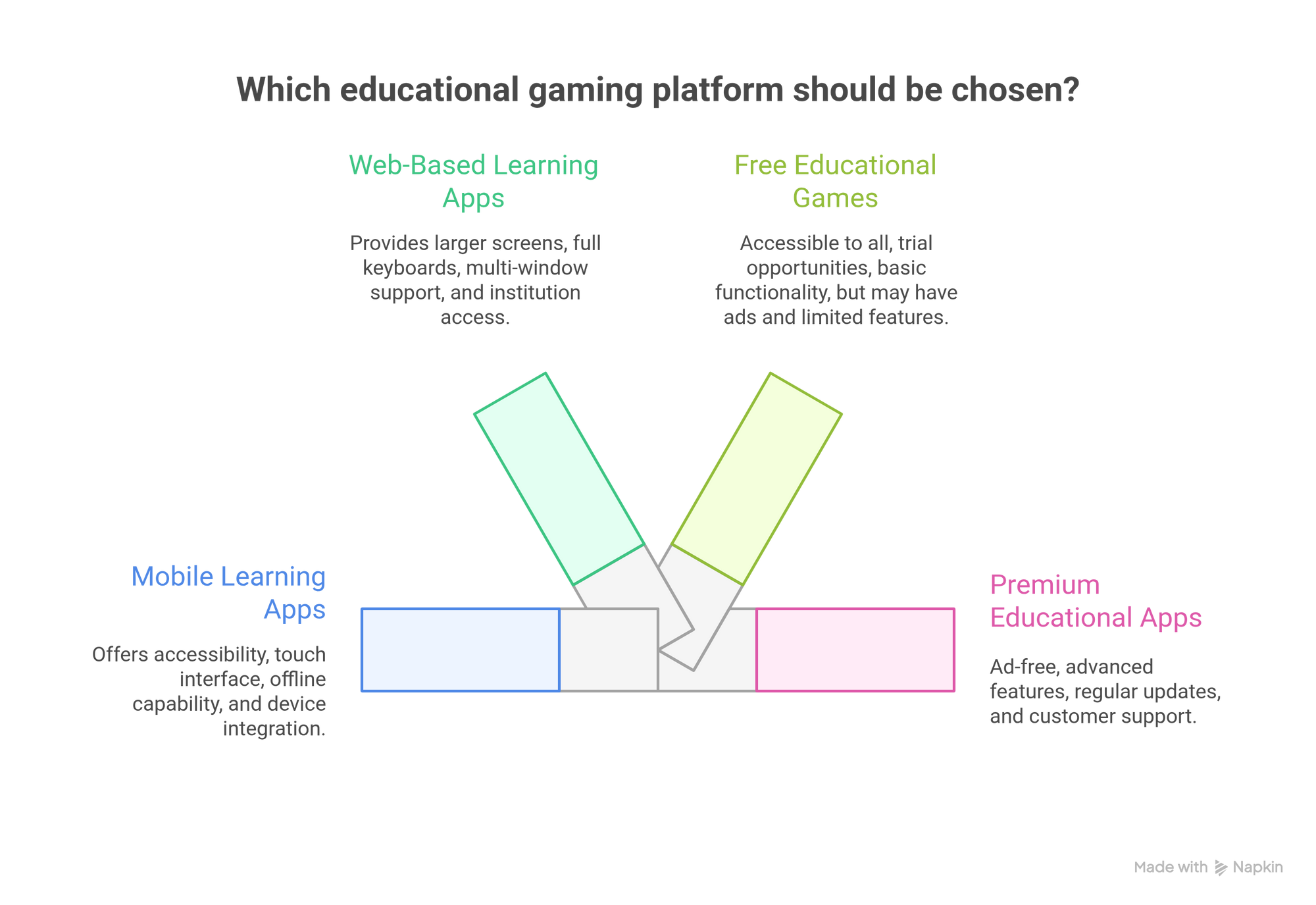
Mobile Educational Games vs. Web-Based Learning Apps
Benefits of Mobile Learning Apps:
- Accessibility: Mobile educational games are available anywhere with device portability
- Touch Interface: Educational apps designed for intuitive finger navigation
- Offline Capability: Learning games that work without internet connectivity
- Device Integration: Kids' educational games using camera, microphone, and sensors
Web-Based Educational Gaming Benefits
Advantages of Browser Learning Games:
- Larger Screens: Educational gaming with improved visual experiences
- Full Keyboards: Learning apps supporting complex text input and shortcuts
- Multi-Window Support: Interactive learning with research and reference materials
- Institution Access: Game-based learning through school computer labs
Free vs. Paid Educational Apps: Making the Right Choice
Free Educational Gaming Options
Benefits of Free Learning Games:
- Low Barrier to Entry: Educational apps accessible to all economic backgrounds
- Trial Opportunities: Kids' educational games for testing before commitment
- Basic Functionality: Learning apps covering fundamental educational needs
Limitations of Free Educational Games:
- Advertisement Presence: Mobile educational games with potentially distracting ads
- Limited Features: Educational gaming with restricted advanced capabilities
- Data Collection: Learning games that may monetize user information
Premium Educational Apps Value
Advantages of Paid Learning Games:
- Ad-Free Experience: Educational gaming without interruptions or distractions
- Advanced Features: AI-powered learning games with sophisticated personalization
- Regular Updates: Learning apps with ongoing content expansion and improvements
- Customer Support: Educational apps with dedicated assistance and troubleshooting
Choosing Educational Gaming Platforms by Learning Goals
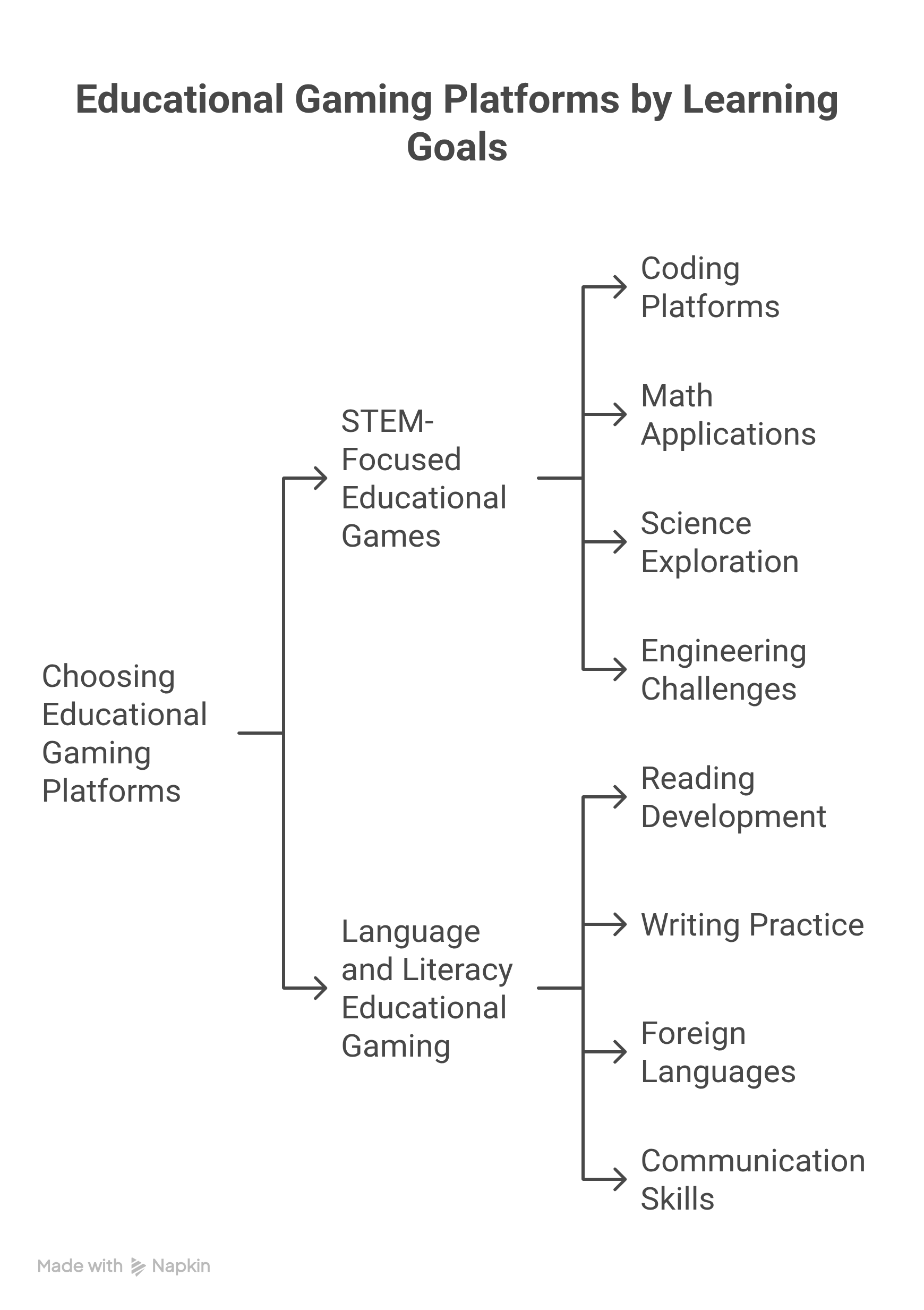
STEM-Focused Educational Games
Science, Technology, Engineering, Math Learning Apps:
- Coding Platforms: Learning games like Scratch Jr. and Hopscotch for programming
- Math Applications: Educational apps such as Khan Academy Kids and Mathletics
- Science Exploration: Kids' educational games covering physics, chemistry, and biology
- Engineering Challenges: Game-based learning with building and design activities
Language and Literacy Educational Gaming
Communication Skills Learning Apps:
- Reading Development: Educational games focusing on phonics and comprehension
- Writing Practice: Learning apps with creative writing and grammar exercises
- Foreign Languages: Edutainment apps like Duolingo and Busuu for multilingual learning
- Communication Skills: Interactive learning with presentation and storytelling features
We add personalized learning and AI tutoring to education platforms. Explore our AI development services →
How to Pick Games Your Child Will Actually Learn
The best educational games share three traits: they match your child's age and goals, they keep screen time healthy with built-in limits, and they turn a subject your child avoids into one they ask for. Start with one subject, try a free version first, then upgrade only if the engagement is real.
At Third Rock Techkno we build this kind of software ourselves. Our education software development team has shipped digital learning platforms like the National Institute for Newman Studies archive and the Smart Book AI publishing system, and our AI development services bring adaptive, personalized learning to those products.
Pick one game from the lists above, set a time limit, and learn alongside your child. The best learning apps for kids work best when a parent or teacher stays in the loop.