

The edtech startup landscape has exploded since the pandemic, creating unprecedented opportunities alongside significant startup challenges. The educational technology sector is no longer a niche market it's become a critical battleground where edtech entrepreneurs fight for market share in an increasingly crowded space.
EdTech industry growth has been staggering. According to Statista reports, the global edtech market is projected to reach approximately $30 billion by 2031, representing a massive opportunity for educational technology startups seeking to transform how we learn and teach.
This lucrative edtech market potential has attracted venture capital, corporate investors, and countless edtech startups, resulting in fierce competition. Every edtech entrepreneur now faces the reality that building great educational software isn't enough; success requires navigating complex edtech startup challenges that can make or break promising companies.
Through our experience developing multiple edtech solutions and working with dozens of educational technology startups, we've identified the most critical startup challenges that consistently derail edtech businesses. These obstacles range from startup funding difficulties to market validation struggles in conservative educational institutions.
EdTech startup challenges differ significantly from traditional tech startup challenges. Educational technology companies must navigate regulatory compliance, lengthy sales cycles, and risk-averse customers while competing for limited budgets in underfunded school systems.
This comprehensive guide reveals the 12 most dangerous edtech startup challenges that threaten educational technology companies, plus proven strategies successful edtech entrepreneurs use to overcome these obstacles. Whether you're launching your first edtech startup or scaling an existing educational technology business, understanding these challenges could determine your startup's survival.
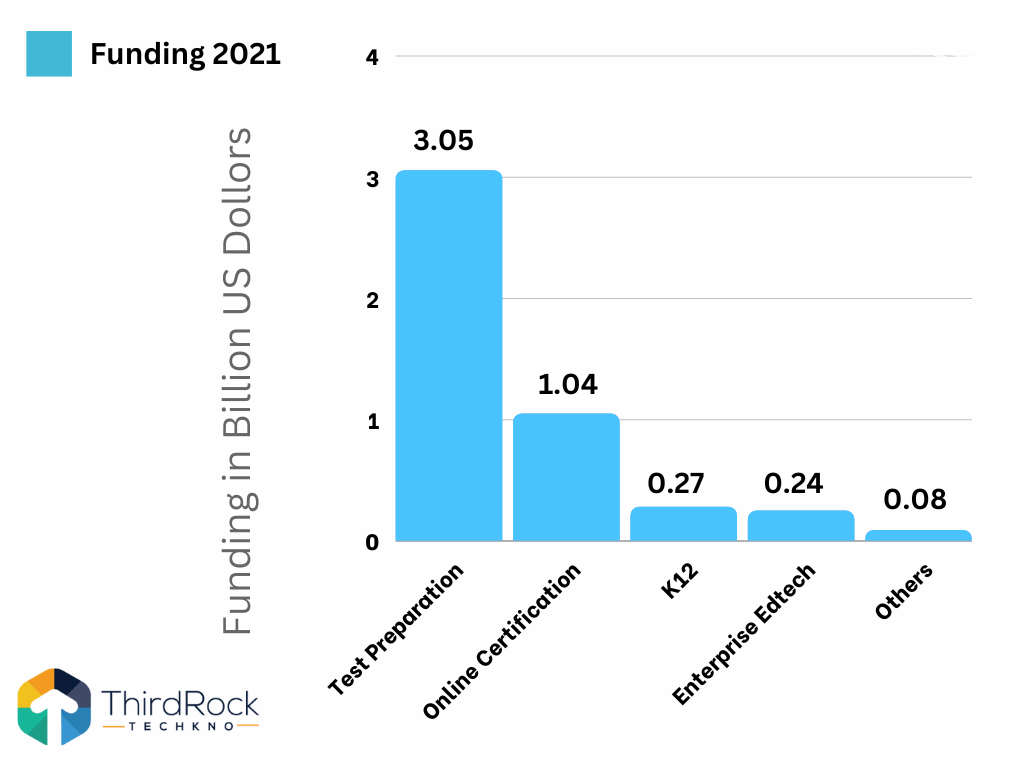
The EdTech Startup Challenge Landscape: What Every Entrepreneur Must Know
When educational institutions were forced to close during the pandemic, e-learning solutions became the lifeline for students and schools worldwide. This unprecedented shift created explosive demand for education software development and launched thousands of edtech startups into a rapidly evolving marketplace.
The edtech industry boom created massive opportunities for entrepreneurs. However, this edtech market growth has also intensified competition, making it increasingly difficult for new educational technology startups to advance in the ed-tech sector.
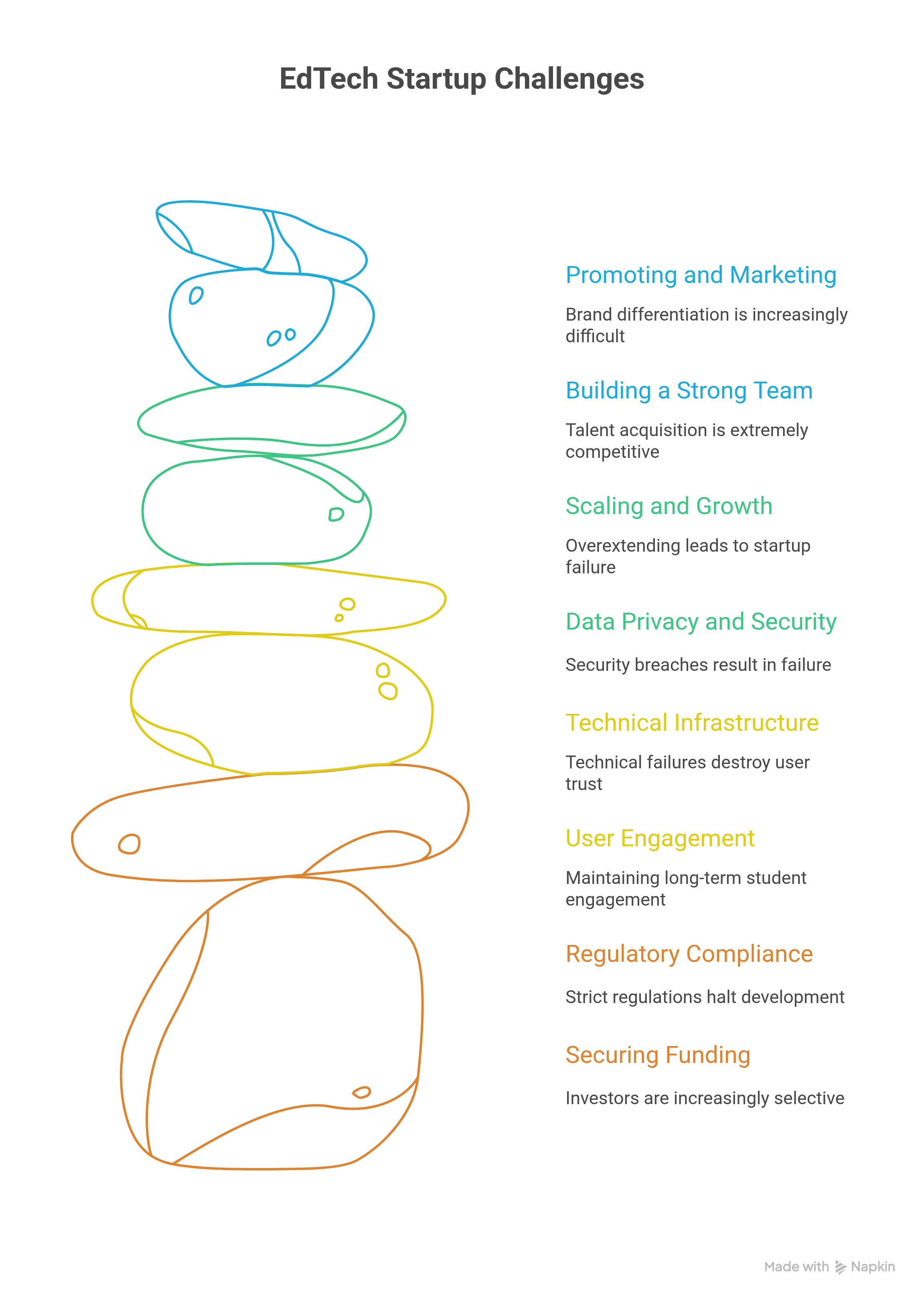
Here are the eight critical edtech startups challenges that determine success or failure in today's competitive educational technology market.
1. Securing Funding and Investment
Startup funding has become the biggest obstacle for edtech entrepreneurs. The increasing competition in the edtech market has made venture capital harder to secure, with investors becoming more selective about educational technology investments.
EdTech startup funding is particularly challenging because education sales cycles are long, making ROI projections difficult for investors. Many edtech startups face multiple rejections before finding investors who understand the educational technology sector's unique dynamics.
Critical funding strategies for edtech startups:
- Prepare investor pitches that highlight edtech market opportunities.
- Develop solid business plans showing clear edtech solution ROI.
- Demonstrate proven user acquisition and market validation.
- Present achieved milestones that prove startup development progress.
- Include comprehensive marketing plans for edtech business growth.
- Showcase your edtech startup team's educational technology expertise.
2. Regulatory Compliance and Legal Challenges
Regulatory compliance represents one of the most complex edtech startup challenges. The education sector operates under strict regulations, including FERPA, COPPA, and state-specific privacy laws that educational technology startups must navigate carefully.
EdTech startups face numerous legal obstacles, including intellectual property rights, copyright infringement, and data privacy regulations. These startup challenges can halt development and result in expensive legal battles that drain limited startup funding.
Essential compliance strategies:
- Establish robust data privacy protocols from day one.
- Conduct regular compliance audits for educational software.
- Collaborate with legal experts specializing in edtech industry regulations.
- Involve legal counsel in all edtech business development decisions.
Your EdTech Idea Could Change Education Forever
Stop letting funding fears and technical hurdles kill your vision. See how successful entrepreneurs turned obstacles into million-dollar companies.

3. User Engagement and Retention
User acquisition and retention pose critical edtech startup challenges. Educational technology platforms must maintain long-term student engagement to survive, but traditional educational software often struggles with monotonous content and a lack of personalization.
EdTech solutions face unique retention challenges because learning requires sustained motivation. Unlike entertainment apps, educational technology must balance engagement with actual learning outcomes, making user retention significantly more complex.
Proven engagement strategies:
- Implement gamification techniques in educational software.
- Create personalized learning experiences using AI.
- Design an interactive session that maintains student interest.
- Using learning analytics to understand user behavior patterns.
- Make data-driven decisions to improve edtech solutions.
4. Technical Infrastructure and Scalability
Technical difficulties plague many edtech startups as they struggle to build scalable educational technology. Rapid innovation in the edtech industry creates both opportunities and obstacles for startup development.
Educational technology startups must handle complex challenges, including software bugs, scalability issues, API integrations, and platform reliability. Technical failures can destroy user trust and halt startup growth immediately.
Technical success strategies:
- Conduct thorough testing before launching edtech solutions.
- Partner with experienced educational software developers.
- Design a scalable architecture from the beginning.
- Plan for peak usage during back-to-school periods.
5. Data Privacy and Security
Data security is paramount for edtech startups handling sensitive student information. Educational technology platforms collect personal data, academic records, and behavioral information that requires enterprise-level protection.
EdTech startup security breaches can result in legal penalties, lost user trust, and complete business failure. Educational institutions increasingly demand proof of robust data privacy measures before adopting new edtech solutions.
Security implementation essentials:
- Deploy enterprise-grade encryption for all student data.
- Conduct regular security audits of educational software.
- Maintain transparent data usage policies for users.
- Educate students and educators about their data rights.
Read Also : Demystifying EdTech: A Look at Key Technologies Shaping Education
6. Scaling and Growth
Scaling challenges become critical as edtech startups grow their user base. Rapid startup growth creates resource allocation problems, quality control issues, and customer support challenges that can overwhelm small edtech businesses.
Educational technology startups must balance growth speed with product quality. Overextending without strategic planning often leads to startup failure, while growing too slowly allows competitors to capture market share.
Effective scaling strategies:
- Define clear startup development objectives and milestones
- Invest heavily in customer support infrastructure.
- Optimize operational processes before scaling edtech solutions.
- Form strategic partnerships to accelerate edtech market penetration.
7. Building a Strong Team
Team building remains one of the toughest startup challenges for edtech entrepreneurs. Educational technology requires specialized skills in pedagogy, technology, and business development, making talent acquisition extremely competitive.
EdTech startups compete with established tech companies for top talent, often losing candidates to higher salaries and better benefits. Building a strong startup team requires creative compensation and culture strategies.
Talent acquisition solutions:
- Offer equity compensation and growth opportunities.
- Provide professional development in educational technology.
- Prioritize work-life balance and flexible arrangements.
- Create collaborative environments that attract mission-driven developers.
8. Promoting and Marking Difficulties
Marketing challenges significantly impact edtech startup success. The educational technology market is crowded, making brand differentiation and customer acquisition increasingly expensive and difficult.
EdTech marketing faces unique obstacles, including long sales cycles, multiple decision-makers, and conservative educational institutions resistant to change. Startup marketing budgets rarely match the resources needed for effective edtech market penetration.
Strategic marketing approaches:
- Leverage social media to build educational technology thought leadership.
- Partner with education influencers and industry experts.
- Use content marketing to demonstrate the value of edtech solutions.
- Highlight your startup's mission to improve education outcomes.
Tired of Hitting the Same Startup Walls?
Get straight answers on funding, compliance, and scaling from developers who've launched 50+ EdTech platforms. No fluff, just solutions.
EdTech Startup Success Stories: How Companies Overcame Critical Challenges
These real-world edtech startup examples prove that edtech startup challenges are conquerable with the right strategies. Learn how successful educational technology startups transformed obstacles into competitive advantages.
Case Study 1: Duolingo-From Funding Struggles to $6.5 Billion Valuation
The Challenge: Startup funding and user acquisition in a crowded language learning market.
Background: Luis von Ahn's edtech startup faced multiple investor rejections before securing initial funding. Traditional educational software was boring, and the edtech market was skeptical about gamified learning approaches.
How They Overcame Challenges:
- Started with university research grants instead of traditional venture capital.
- Built a proof-of-concept with minimal resources before seeking edtech startup funding.
- Demonstrated clear user engagement metrics to attract serious investors.
Changing User Engagement
- Implemented gamification techniques that made learning addictive.
- Used data analytics to optimize user retention and learning outcomes.
- Created personalized learning paths based on individual progress.
Measurable Outcomes
- 500+ million registered users worldwide.
- 90% user retention rates in the first month.
- 40+ languages supported across platforms.
Case Study 2: Coursera- Scaling Global Education Technology
The Challenge: Scaling challenges and regulatory compliance across international markets.
Background: Founded by Stanford professors, this edtech startup needed to scale educational technology globally while managing data privacy regulations, content licensing, and diverse educational standards.
How they overcame challenges:
- Partnered with established universities for content credibility.
- Built scalable technology infrastructure from day one.
- Developed compliance frameworks for multiple international markets.
Measurable Outcomes:
- 100+ million registered learners worldwide.
- $4.3 billion market cap at IPO.
- * 200+ university partners providing courses.
- $415 million annual revenue (2021)
Build Right or Watch Your Funding Disappear
Partner with EdTech specialists who know every regulation, every pitfall, and every shortcut to market success.
Overcome EdTech Startup Challenges with Strategic Planning & Innovation
The journey of edtech startups presents inevitable startup challenges, but these obstacles are entirely conquerable with the right strategy and partnerships. Regulatory compliance, user engagement, technical difficulties, data privacy, scaling challenges, team building, and marketing obstacles are simply part of the edtech industry landscape that successful educational technology startups learn to navigate.
By implementing strategic solutions and fostering innovation, edtech entrepreneurs can transform these edtech startup challenges into competitive advantages. The most successful educational technology companies don't just survive these obstacles; they use them to build stronger, more resilient edtech businesses that truly transform education.
Third Rock Techkno specializes in helping edtech startups overcome critical startup challenges through expert educational software development. Our skilled development team brings deep edtech industry expertise and proven experience building successful edtech solutions that scale.
Our edtech development team assists educational technology startups from initial concept through market launch, ensuring your edtech startup avoids common pitfalls that derail promising educational technology companies. Contact us today!