
Because the success of an application largely depends on its tech stack, it’s vital to understand the ins and outs of each framework you decide to use for your project. I have worked as a CTO for over a decade and notably, Angular happens to be my most preferred technology for web development. In this blog, I take you through the limitations and benefits of using Angular in a project so you can decide whether it’s a good fit for you or not.
Table of Content
- What is Angular, exactly?
- AngularJS vs Angular
- The journey of Angular so far
- What kind of web app development problems does Angular solve?
- What are some of the best apps built with Angular?
- Pros of Angular Development
- Cons of Angular Development
- When To Use Angular For Your Project
- Limitations and Benefits of Using Angular in Your Project - The Bottom Line
What is Angular, exactly?
Angular is a front-end framework that operates on JavaScript. It is a commonly preferred framework for building web applications.
While you may have read a lot about the Angular vs React debate, it’s vital to understand that, unlike React, Angular is not a library. It is in fact a much broader technology that consists of libraries and other supporting tools for quick web application development.
Before we move forward, I’d like to clarify that by the word Angular, I am referring to Angular 2+ versions. Here’s a quick overview of Angular history and why we are talking about Angular 2+ today.
AngularJS vs Angular
Google released the first-ever version, AngularJS, in 2010 under the MIT license. The framework received mixed reviews during the initial years.
Some web developers loved how it made the process of web app development so easy! On the other hand, some developers found AngularJS to be a very complicated tool that made their jobs even harder.
So over the following 5 years, the Angular team worked towards making the framework a good fit for the evolving web development landscape. In the process, they had to rewrite AngularJS completely in order to enhance it with advanced features.
As a result, Angular 2 was released in 2016, and in no time, it garnered great popularity amongst the development community.
As of March 2021, Angular has released 9 versions at a steady gap of six months. Angular v2, v4, v5, v6, v7, v8 are no longer under support. However, each version is given Long Term Support for an extended period of time. The Angular team does this to ensure every Angular app owner has sufficient time to migrate to the latest version without encountering many breaking changes.
The journey of Angular so far
Before you ask why Angular is so popular, I want to talk about its journey a bit.
Angular has seen some great and some not-so-good times so far. For example, the Stack Overflow Survey in 2017 revealed Angular to be the most wanted (front-end) web framework by web developers.
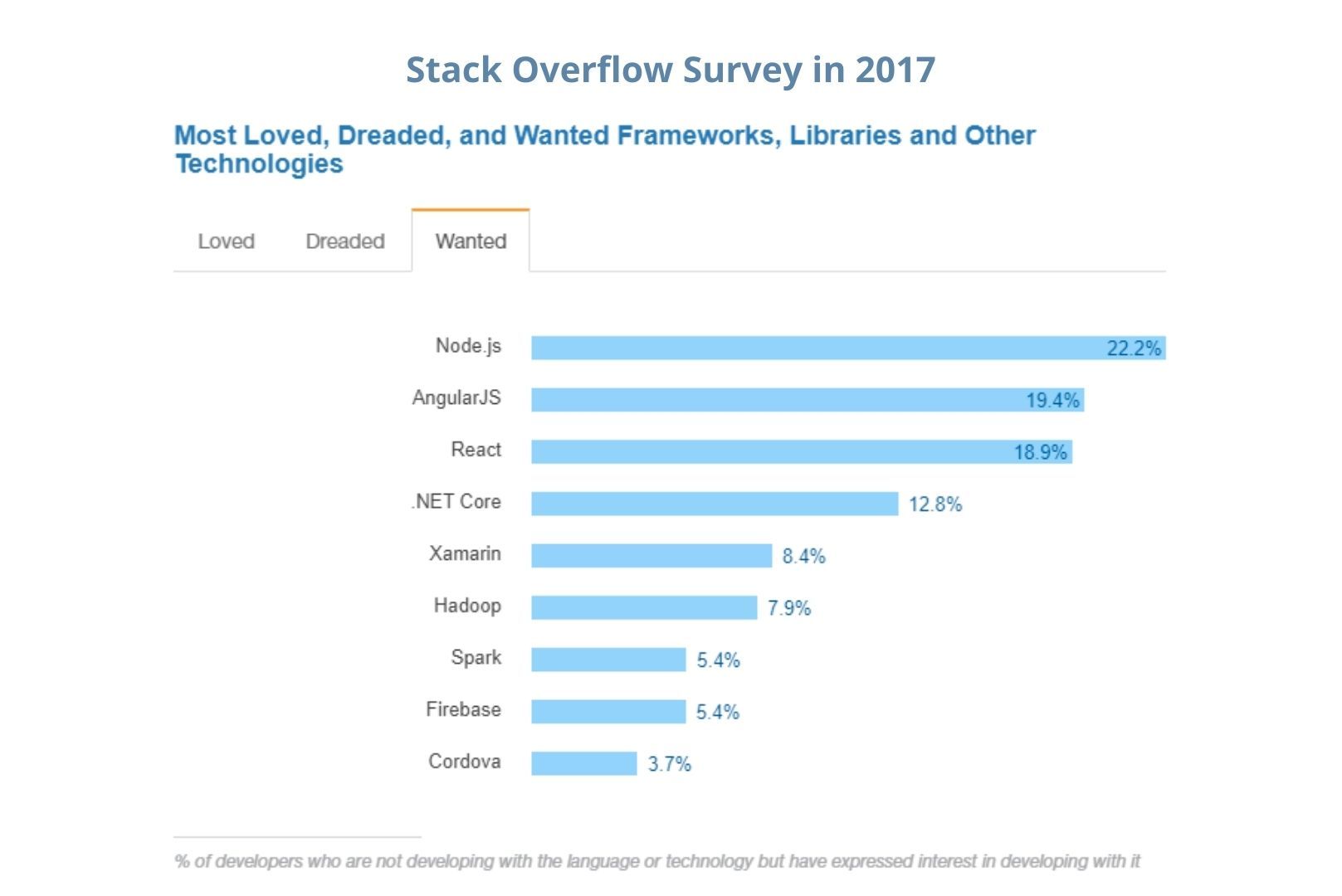
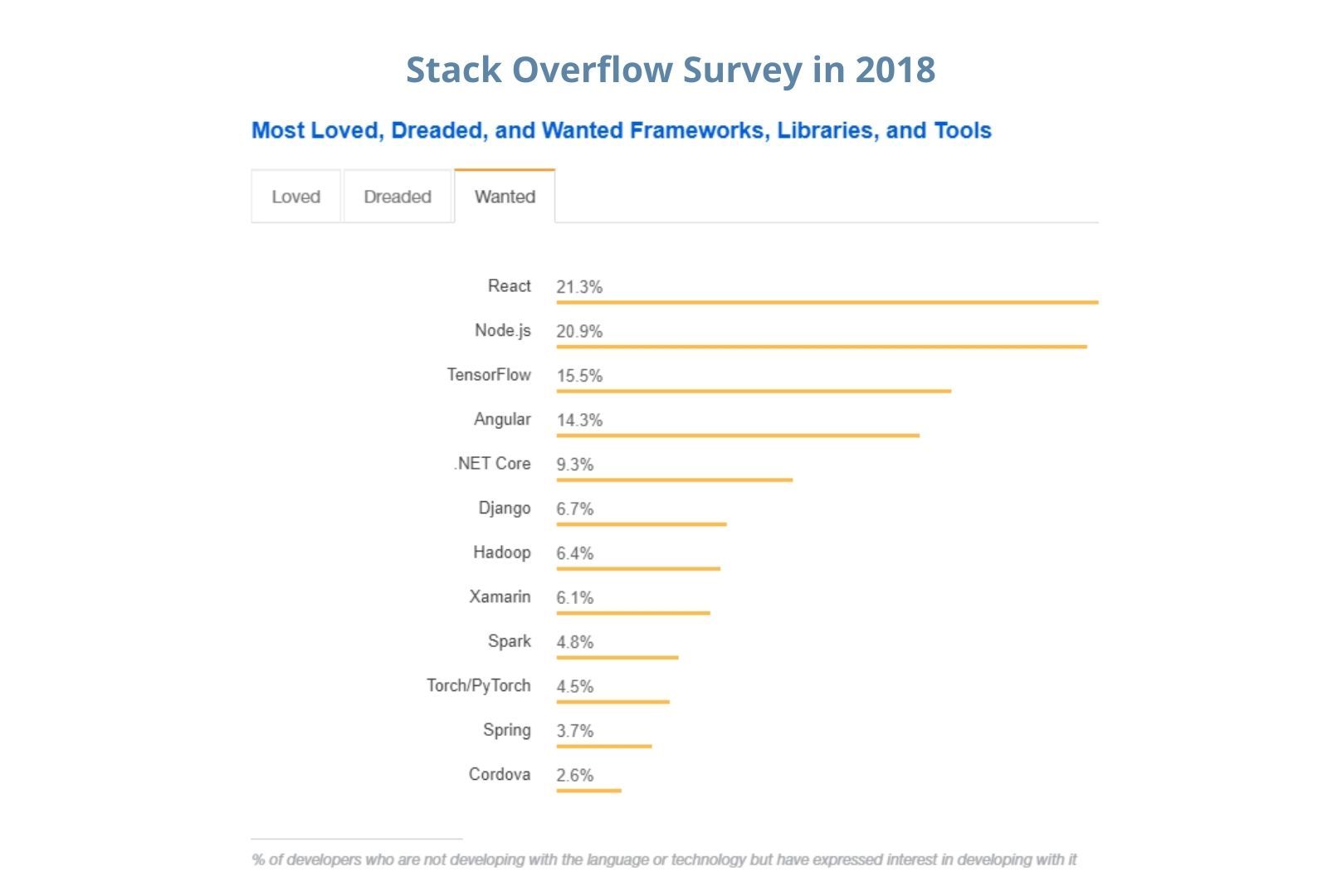
However, in 2018, it slipped to the fourth position while React topped the list of most wanted web frameworks.
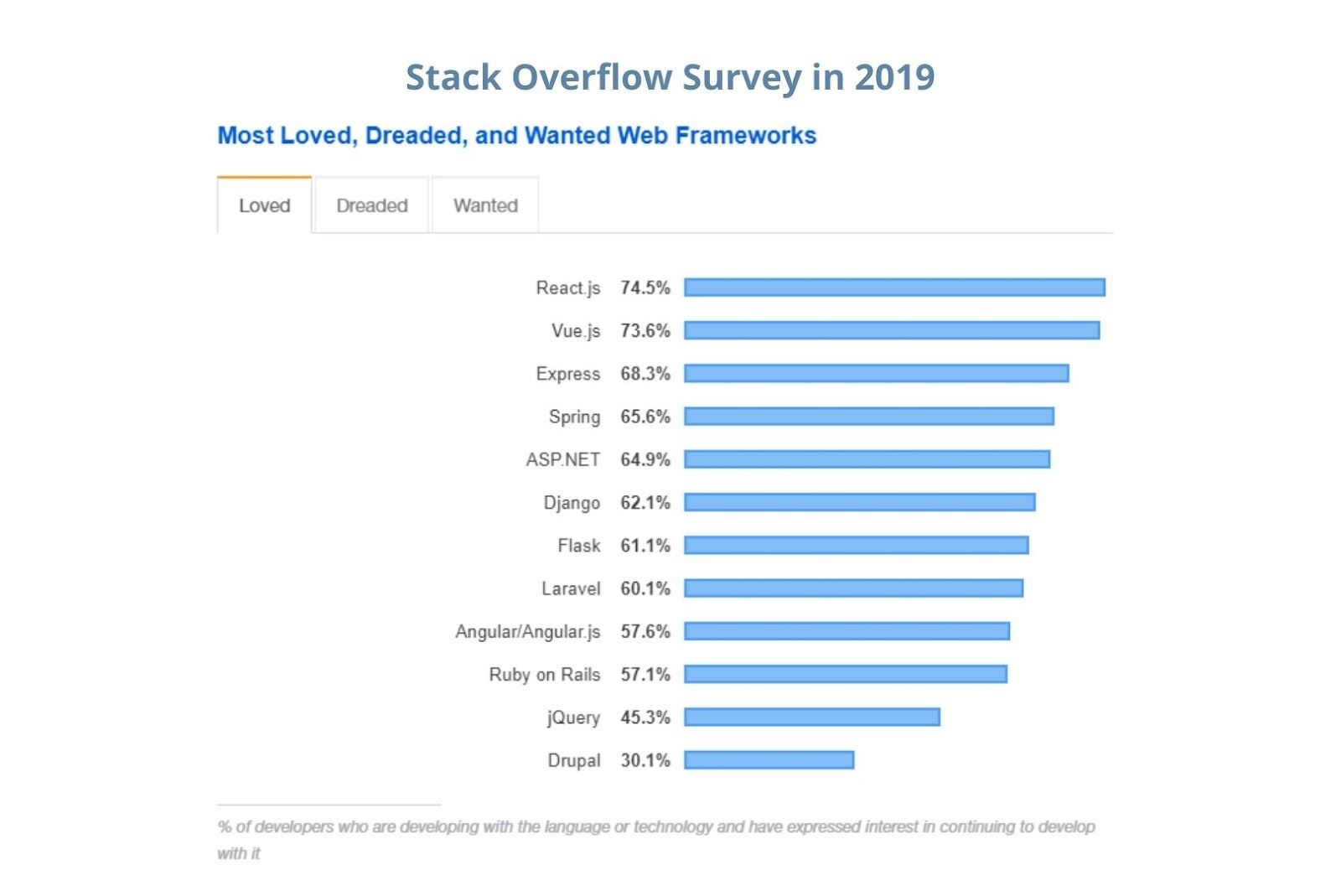
In 2019, a relatively new entrant, Vue, also surpassed Angular in the list and 2020 saw a similar trend.
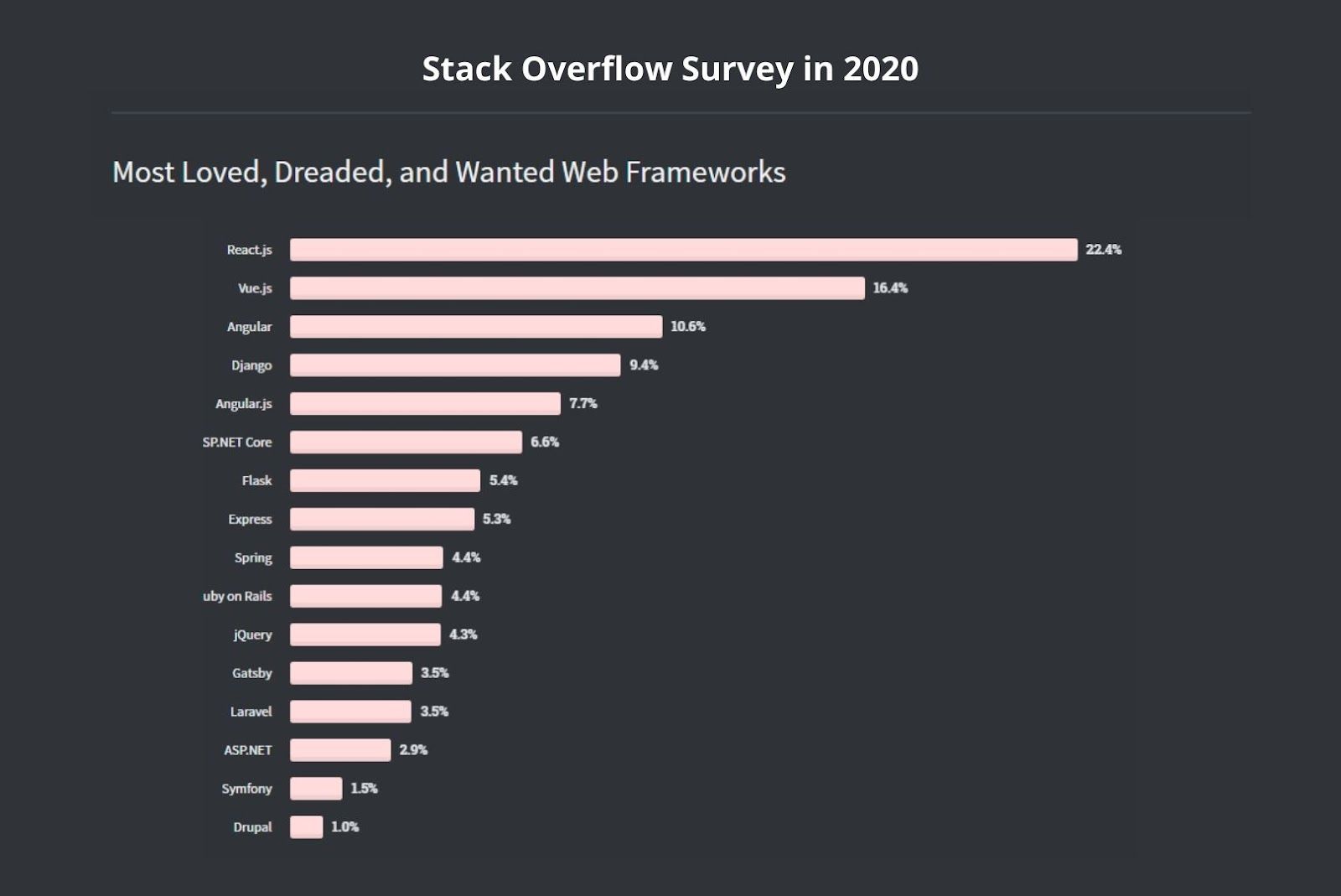
Despite a slight fall in its popularity as a top web framework, Angular still remains one of the most used tools worldwide. That’s because it does a tremendous job at simplifying the process of web app development, especially for large apps.
What kind of web app development problems does Angular solve?
If I had to summarize this section in one sentence, it would be this:
Angular was developed to make writing code with JavaScript faster and thus, building the front-end of a web application easier.
Let’s talk about the benefits of using Angular from a very basic perspective.
If you are a JavaScript developer, you know that writing code with this language can get really, really tedious. For every component of a web application, you need to copy-paste the existing code and then add more code. It goes on and on until you have the entire JavaScript stack ready for your web app.
Google wanted to resolve this daunting task with something that can serve as a basic ready-made scaffolding for a web application. And so, they built AngularJS (and then, Angular) - a comprehensive tool that eases the most common front-end tasks like condensing sidebars, aligning margins and text blocks, etc.
Angular provides you with a set of tools and libraries that can kickstart your project within seconds.
Moreover, you also have a bunch of ready-to-use code available for building common UI elements and the overall front-end of a web application.
What are some of the best apps built with Angular?
To put things in perspective, I feel it’s best to glance through some of the prominent Angular apps once. So here’s a list of 5 popular apps built with Angular:
Forbes (Angular 5)
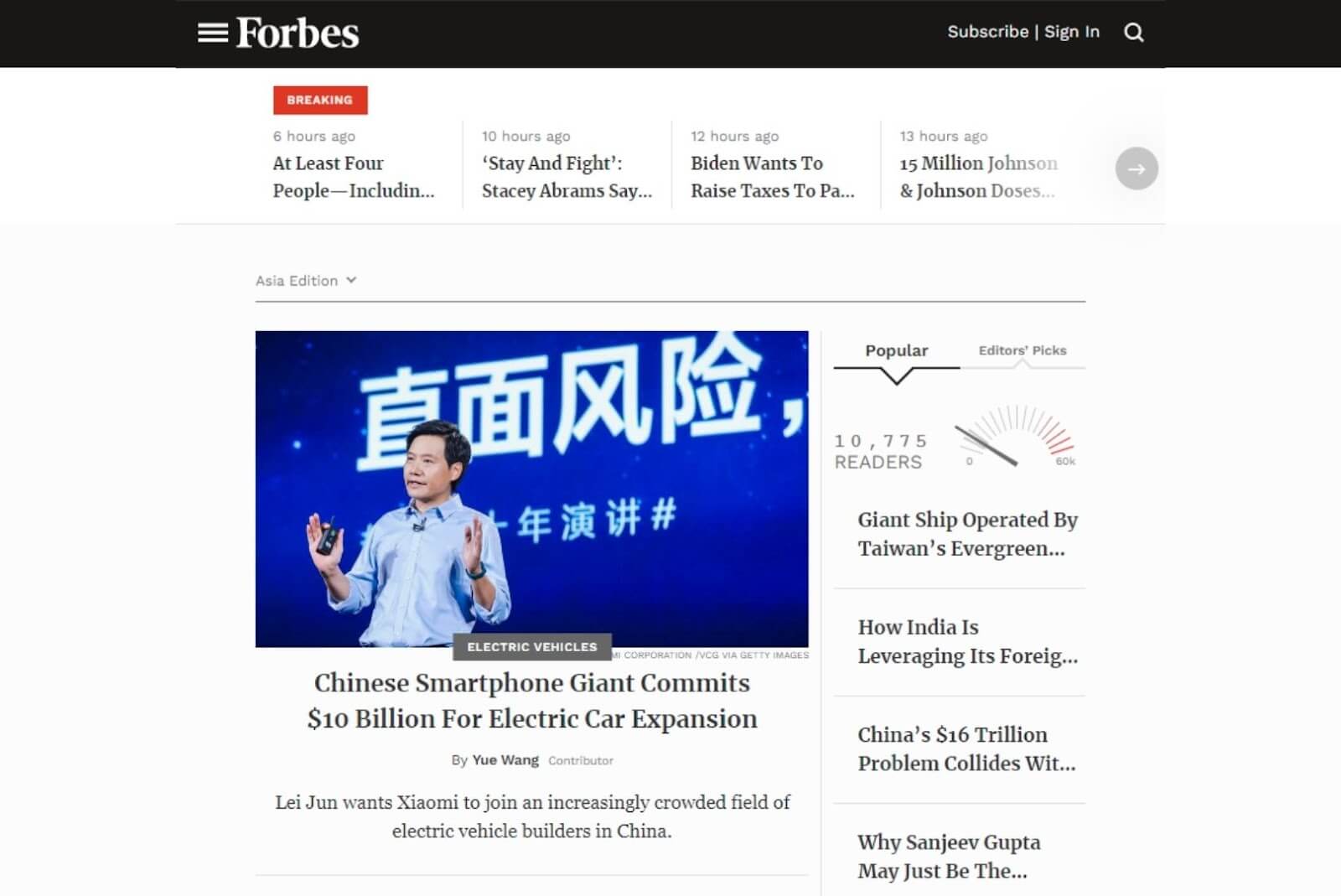
For a content-intensive web app like Forbes, Angular was an obvious choice for two reasons.
First, they wanted the homepage to be a single-page app in itself. Second, the updates on the front end are very frequent.
Angular, with its advanced tools, makes for the best front-end framework for a single-page web app like Forbes that needs constant content updates.
Xbox (Angular 4)
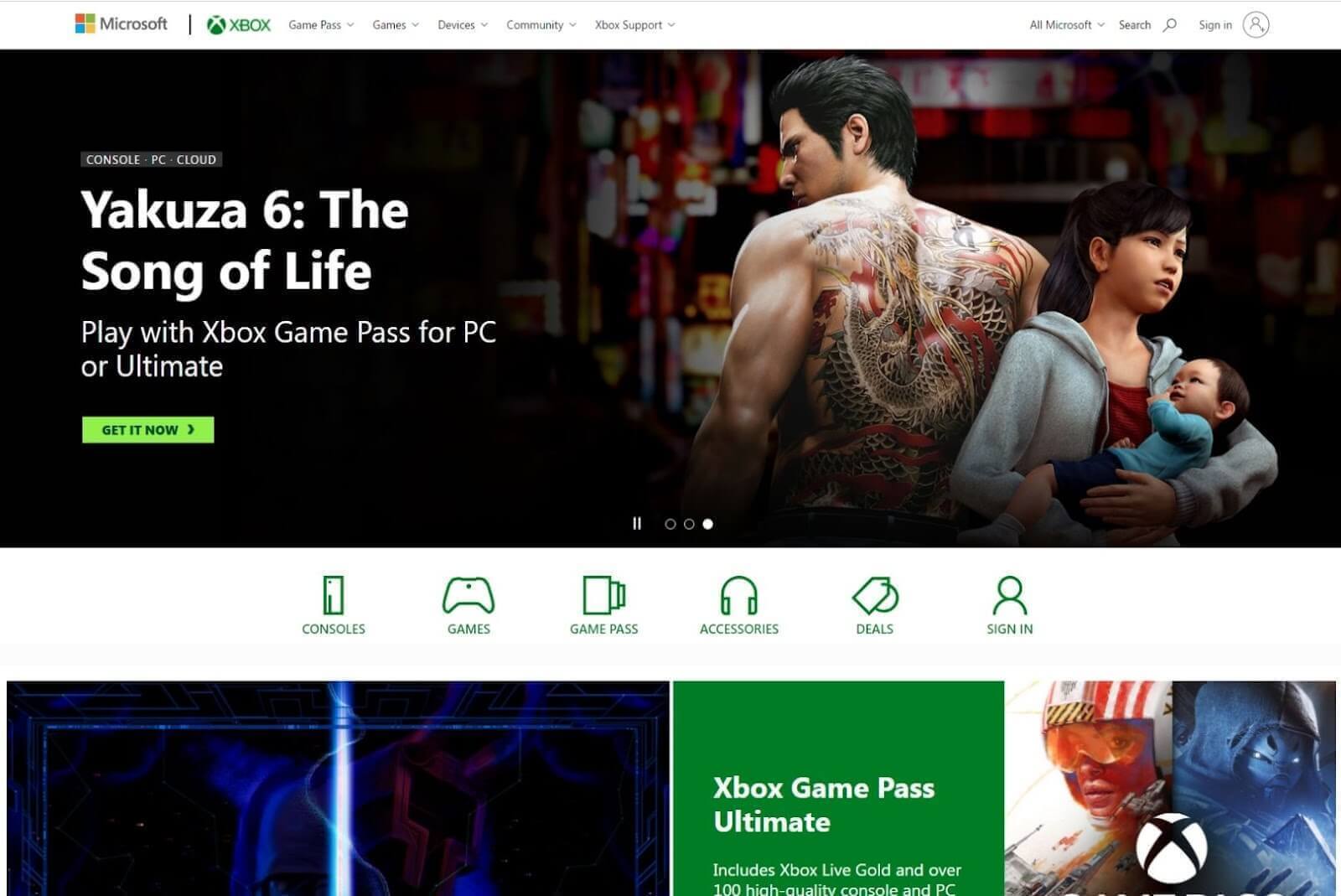
Again, for a gaming company like Xbox, the web app needed to be extremely dynamic and responsive in nature.
Web apps for any brand in the gaming industry are expected to present heavy visual content with absolute smoothness. Angular does a great job of helping the web app deliver just what is needed from it!
Delta (Angular 6)

Delta Airlines is one of the most popular airlines across the world.
In the United States alone, the website is ranked third in attracting travel-related traffic on the internet. Not just that, the web app is mainly used to search for flight dates, fares, etc.
Naturally, it needed a heavy framework that can handle such heavy traffic while also facilitating dynamic search results within a second. And the benefits of using Angular are exactly the ones needed here.
That is why Angular was the first choice for Delta Airlines to specially build the home page of their website.
LUIS by Microsoft (Angular 6)

Language Understanding Information System is a cloud-based API service developed by Microsoft. The sophisticated AI used in LUIS makes it an exceptional tool for building text or voice-based chatbots.
Because this is an API meant to be used for building/scaling applications, the web app had to be developed with chunks of code that could be reused or replaced per the user’s needs.
Angular’s component-based architecture and modularity made it an ideal framework for the LUIS website.
Google Web Apps
Well, the tech giant didn’t build such a vast framework just as a gesture of kindness towards the developer community. They obviously built it to modernize their own web applications.
All the amazing utility web applications like Google Docs, Gmail, and community-based web apps like Product Experts, Think With Google are powered by Angular.
Pros of Angular Development
Let’s talk about the real deal here. I have already shared that Angular is a great choice for web apps like Forbes and Gmail. But why is that so? What is it about the framework that makes it so special?
I have compiled the top 5 benefits of using Angular here. Please note that there are also other magnificent features of Angular, you can read them here.
Code reusability with component-based architecture
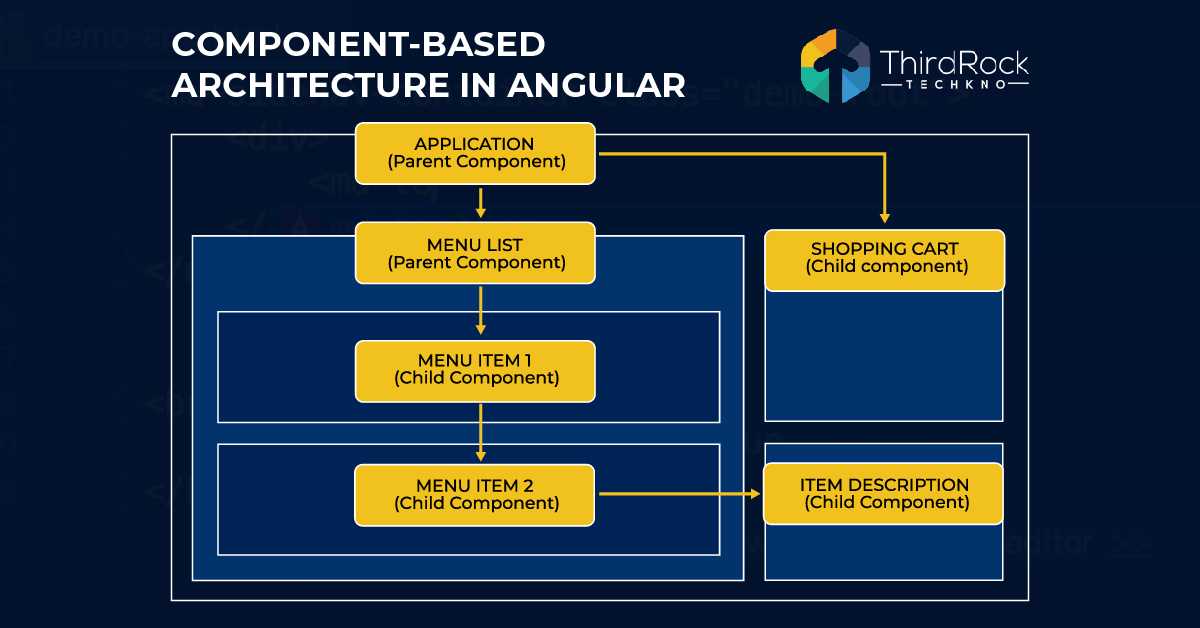
Unlike AngularJS, the Angular framework enables you to divide the UI elements of your web app into separate components. Each component is encapsulated with its own functionality and hence, is independent.
How is this helpful in the long run?
When you want to scale your web app or want to build a web app with similar components, you can reuse the chunks of code that went into building the components.
Clearly, Angular reduces the development time with its self-sufficient components.
On top of that, Angular’s component-based architecture also makes unit testing quite easy. Because you can decouple one component from another easily, different testers can work on assuring the quality of different parts of the app.
READ ALSO : Importance of AngularJS Development Services in the Banking Sector
Cleaner code with TypeScript
While some developers find TypeScript in Angular as a drawback, I strongly advocate for its efficiency. In fact, TypeScript is one of the biggest advantages of using Angular.
TypeScript is the superset of JavaScript. That means, when you do use it for writing code, it will still be compiled to JavaScript during the run time.
The major reason why most programmers love TypeScript is its static nature.
Unlike JavaScript, you can actually identify errors or bugs while you are still writing the code with TypeScript. Thus, it minimizes the need for rework on the code after testing and saves those precious development hours for you.
Vast ecosystem facilitating easy third party integrations
An important consideration while choosing a framework is whether there are other supporting tools and add-ons in the industry that can enhance the framework’s functionality. This is to ensure you have a variety of options to speed up your development process or to adorn the app with useful features.
Because Angular has been around for over a decade now, it has a rich ecosystem of useful packages, add-ons, plug-ins, and much more.
Check the Angular Resources page to have a look at the exhaustive list of IDEs, data libraries, UI components, and other tooling options for faster Angular app development.
The more options for third-party integrations you have, the easier it is to build complex apps with a web framework.
Maintainable code with hierarchical dependency injection
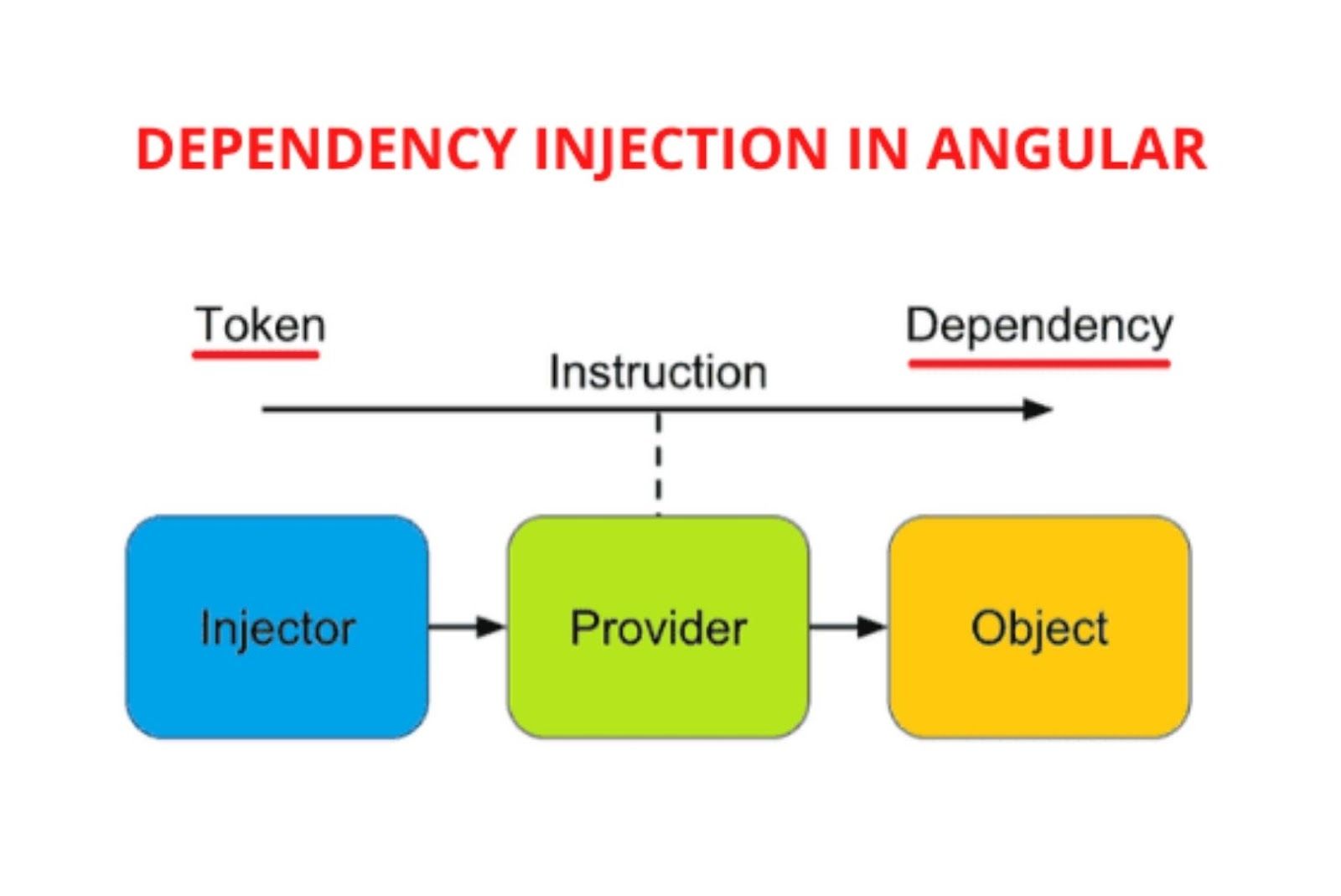
One of the most controversial features of Angular is its hierarchical Dependency Injection (DI). I say controversial because as much as web developers love this feature, they also find it extremely time-consuming to build the DI in their Angular web application.
DI is basically a design technique to empower the classes in the app architecture with external dependencies. That means each class can serve its full functionality without creating the objects themselves.
The reason why having DI in a framework helps is that it lets the developer organize classes independent of each other. The cherry on the cake in the case of Angular is that the classes are organized in a strict hierarchy.
So whoever takes a look at the code can understand at once how the components are related to one another. Because you have a clear idea of how changes in one class will impact the others, maintaining and updating your application code will be a more organized affair.
Faster performance with lazy loading
Angular gives you a component-based architecture and a hierarchical dependency injection. These are common benefits of using Angular for building a web app.
But most importantly, Angular gives you the convenience to organize different chunks of your app code into modules.
A module in your Angular app can be anything. It could contain classes, components, directives, or even other sub-modules. The direct advantage of this modularity in Angular is that you can easily manage different parts of the application when you scale it.
However, the best thing about this modularity is that it makes way for lazy loading. That is, your Angular app can very well understand the user request and loads only that part of the app first that the user requested to view.
The result? Instant loading of the requested page plus faster loading of other pages because they keep loading in the background while the user engages with the first web page.
Cons of Angular Development
Of course, Angular is not all good and no bad. Along with the benefits of using Angular, you should also know the limitations that come with it.
SEO limitations
Angular is meant to be used for building highly functional Single Page Apps (SPA). Although you can work your way around and use it for a multi-page app too, it’s not recommended in most cases.
Now the problem with single-page apps is that you have to render them on the client-side. As a result, web crawlers aren’t able to access the complete content (and its updates) on these web pages. This leads to a poor SEO performance of the Angular apps.
So if you are building an Angular app, you have to make extra efforts to make it accessible to web crawlers of search engines. For example, using Angular Universe to render the app on the server-side is a common solution.
Technical debt
Because Angular is a comprehensive front-end framework in itself, it comes with tons of pre-built tools and features.
This means when you integrate your app with Angular, it can harm the app’s performance by burdening it with huge chunks of technical debt.
That is why Angular is not a suitable choice for all kinds of applications.
When To Use Angular For Your Project
So what is Angular mainly used for? Check out the best use cases for Angular below:
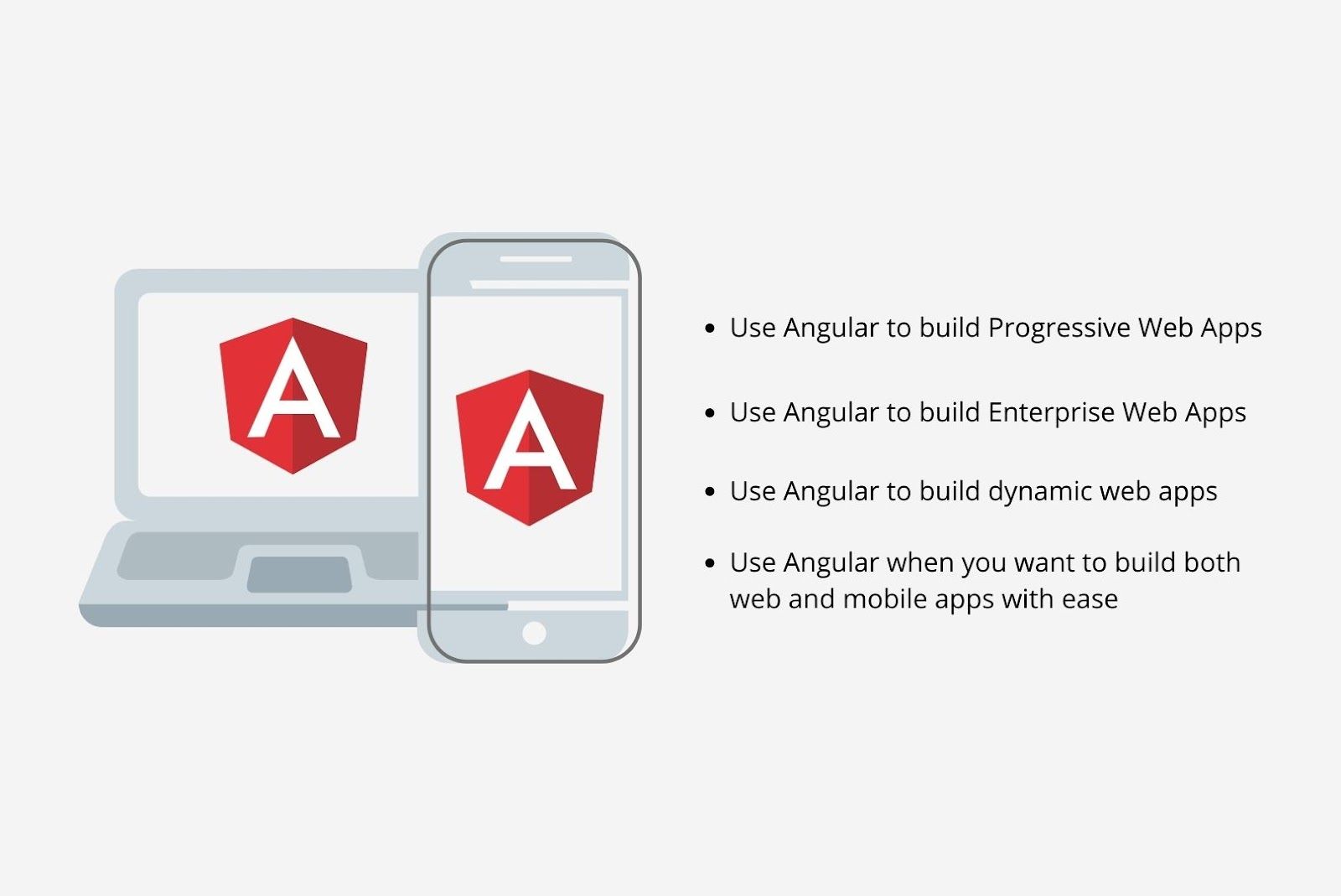
Use Angular to build Progressive Web Apps (PWA)
When Google first introduced the term Progressive Web Apps in 2015, the idea took the entire software industry by storm. Big players like Twitter and Alibaba were quick to switch to this all-encompassing form of a website and reaped huge benefits.
So Google decided to roll out all the versions of Angular (post-2015) with in-built support for building a PWA. Angular is a wonderful tool to build dynamic PWAs for businesses across all industries.
Use Angular to build Enterprise Web Apps
Big companies or institutions need large-scale software to maintain their databases and provide comprehensive functionalities. Angular is best for enterprise web apps because of the unique benefits of using Angular. It makes the app scalable, maintainable and has solid security protocols.
Use Angular to build dynamic web apps
Web apps like those of Forbes, Xbox, YouTubeTV thrive on their dynamic content. Their visitors engage with the websites based on how quickly they can see the updates in response to their requests.
Angular’s capabilities to build highly compelling dynamic SPAs and its dependency injection make it a go-to choice for dynamic web apps.
Use Angular when you want to build both web and mobile apps with ease
Interestingly, you can also combine Angular with NativeScript and create both web apps and mobile apps by reusing major chunks of the code. Or, you can use Ionic instead of NativeScript and build hybrid mobile apps with a native look and feel.
Limitations and Benefits of Using Angular in Your Project - The Bottom Line
Just like any other development tool, there are both pros and cons of Angular too. The key, however, is to understand the limitations vs benefits of using Angular in a project type.
We know that Angular has tremendous scope for code reusability, its dependency injection makes maintaining apps easier. Moreover, it has a vast ecosystem so you can always count on community support for faster app development with Angular. So if you are building a project which needs these features, don’t hesitate to go for Angular.
Similarly, because Angular is not very great with web crawlers and search engines, don’t use it for websites that thrive on their SEO performance. Also, to ensure you are not overburdening your app, always go for smaller frameworks for building simple web apps or apps that have static content.
If you are still not sure whether your software project requires Angular, get in touch with our consultants and they can help you pick the right tech stack for your project.
Looking For Expert Guidance on Your Dream Project?
Our diverse team of industry leading veterans can help you build the most viable solution.
Schedule a free consultation callKrunal Shah
Krunal Shah is the CTO and Co-founder at Third Rock Techkno. With an extensive experienced gained over a decade, Krunal helps his clients build software solutions that stand out in the industry and are lighter on the pocket.
 | Let's connect!