

Enterprise web applications have greater challenges in performance optimization compared to mobile apps. With users getting used to super-fast apps like Netflix and PayPal, businesses are under tremendous pressure to build their enterprise apps the perfect way. If your enterprise app fails to load within a few seconds, you lose out on a large section of your target audience. So it’s vital to choose technologies like NodeJS for enterprise apps. Let’s take a detailed look at the features of NodeJS and how they help businesses make the most of their large scale enterprise apps.
Table of Content
* What is NodeJS?
* Popularity of NodeJS for enterprise apps development
1. NodeJS for enterprise apps ensures scalability and efficiency
2. NodeJS enables cross-functional teams to work on enterprise apps
3. Huge NPM registry reduces development time and costs for enterprise apps
4. Microservices architecture in NodeJS makes it ideal for enterprise apps
5. NodeJS facilitates cross-platform development for enterprise apps
6. Caching in NodeJS makes enterprise apps blazingly fast
7. NodeJS has an easy learning curve and good long term support
What is NodeJS?
NodeJS is a cross-platform run time environment built on Chrome’s V8 engine. It has become a popular platform for web application development for how it simplifies the development process for small to large web apps.
With NodeJS, it’s possible to write JavaScript code and execute it outside of the browser. It’s also extremely lightweight as it works on an event-driven I/O model that is non-blocking and asynchronous. This results in two-way communication between the server-side and the client-side of a web application.
So NodeJS kind of revolutionized the process of web development by bringing both client and server-side coding under a common hood.
Popularity of NodeJS for enterprise apps development
The growth and popularity of NodeJS have drastically increased in the past decade. More and more developers have been working and talking about it on Stack Overflow, as you can see in the image below.

Image source: Stack Overflow Trends
Moreover, the Stack Overflow Survey in 2020 revealed NodeJS maintained its top position as the most popular technologies under the “miscellaneous” category for the second year in a row.
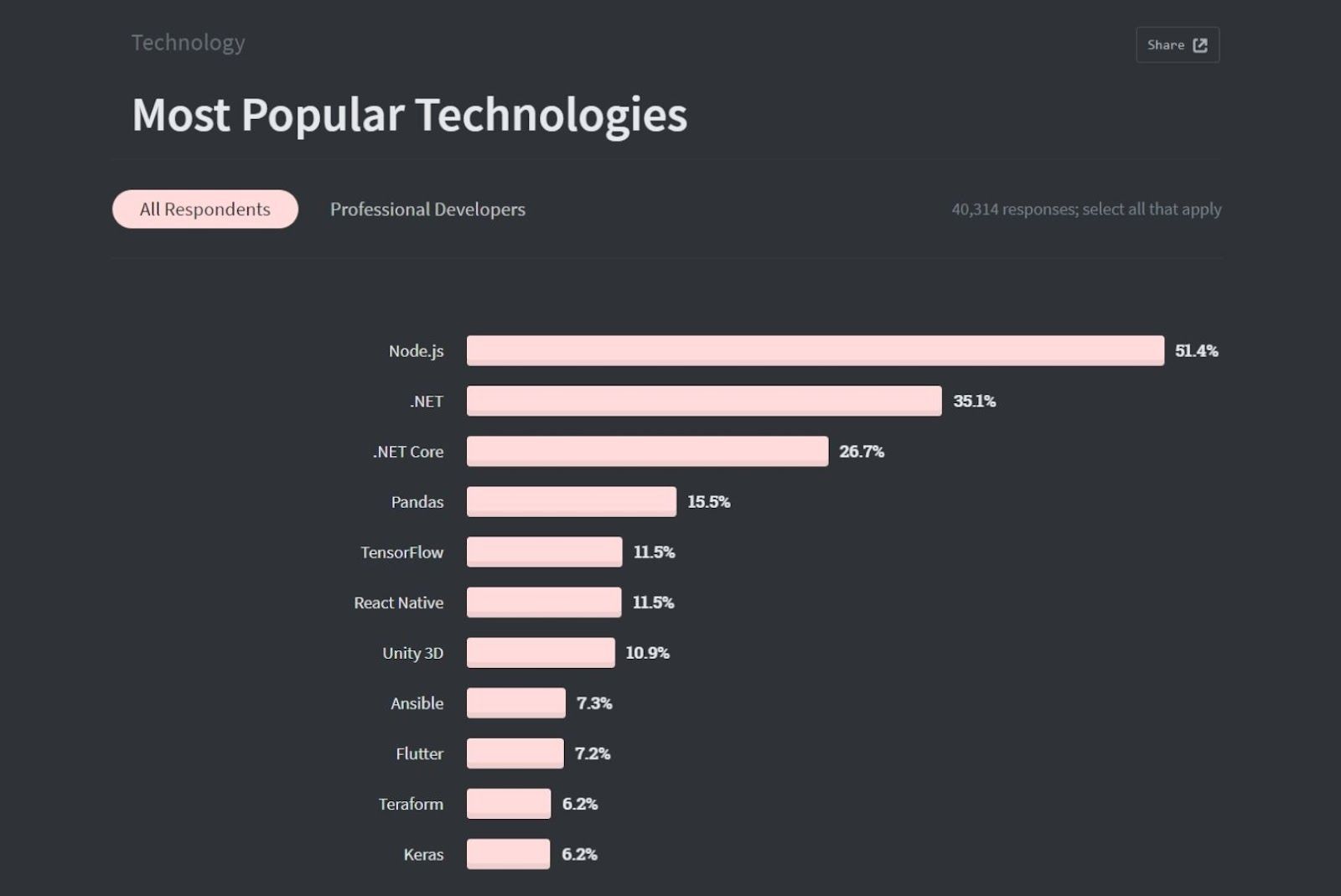
Image source: Stack Overflow Survey Report 2020
Now this “miscellaneous” technology has been widely used for building enterprise apps. A user survey conducted by the NodeJS team found that over 43% of NodeJS developers use it to work on enterprise app development.
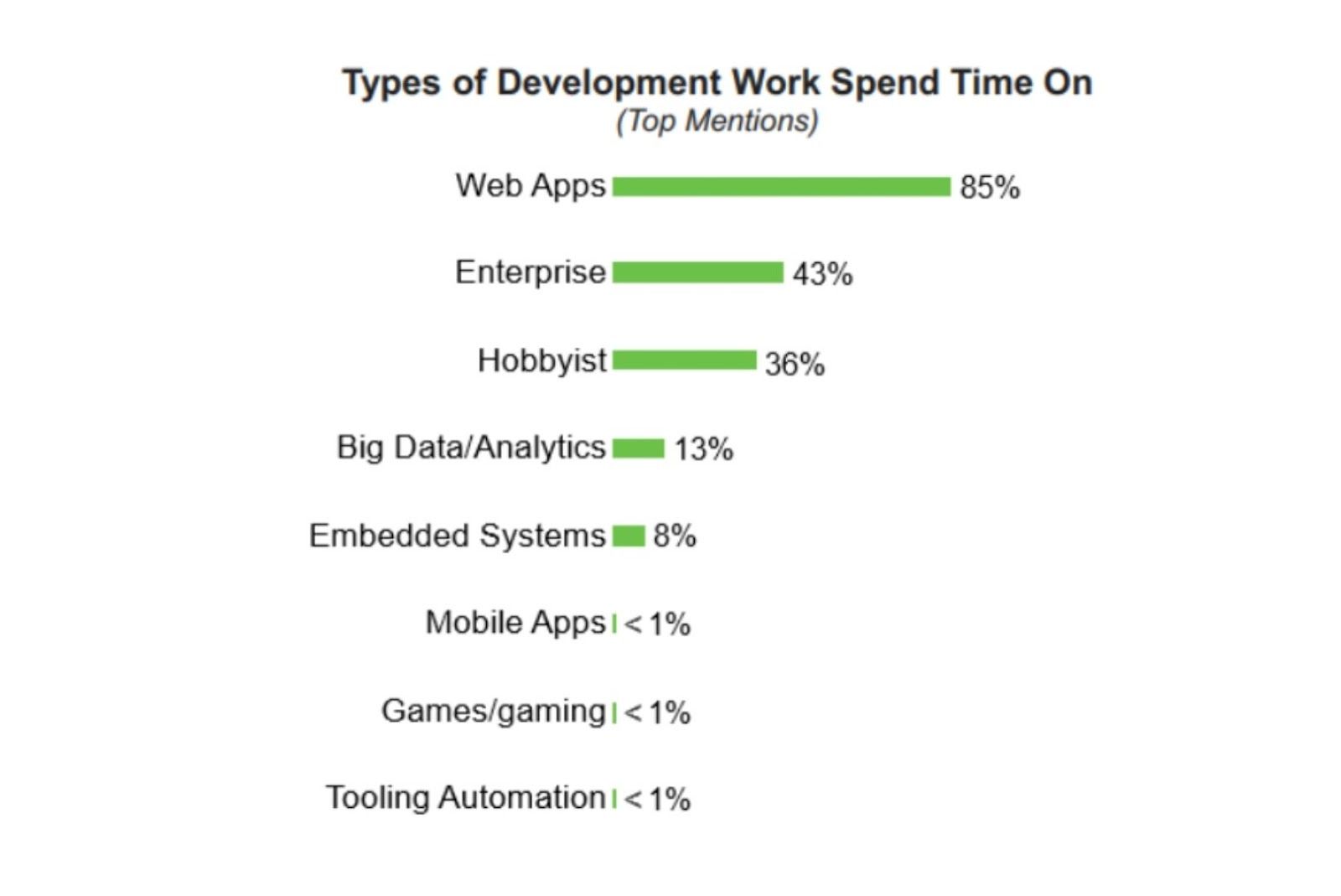
Image source: NodeJS User Survey Report
So what is it that makes NodeJS such a hot favorite for enterprise apps? Take a detailed look at the most enviable features of NodeJS.
1. NodeJS for enterprise apps ensures scalability and efficiency
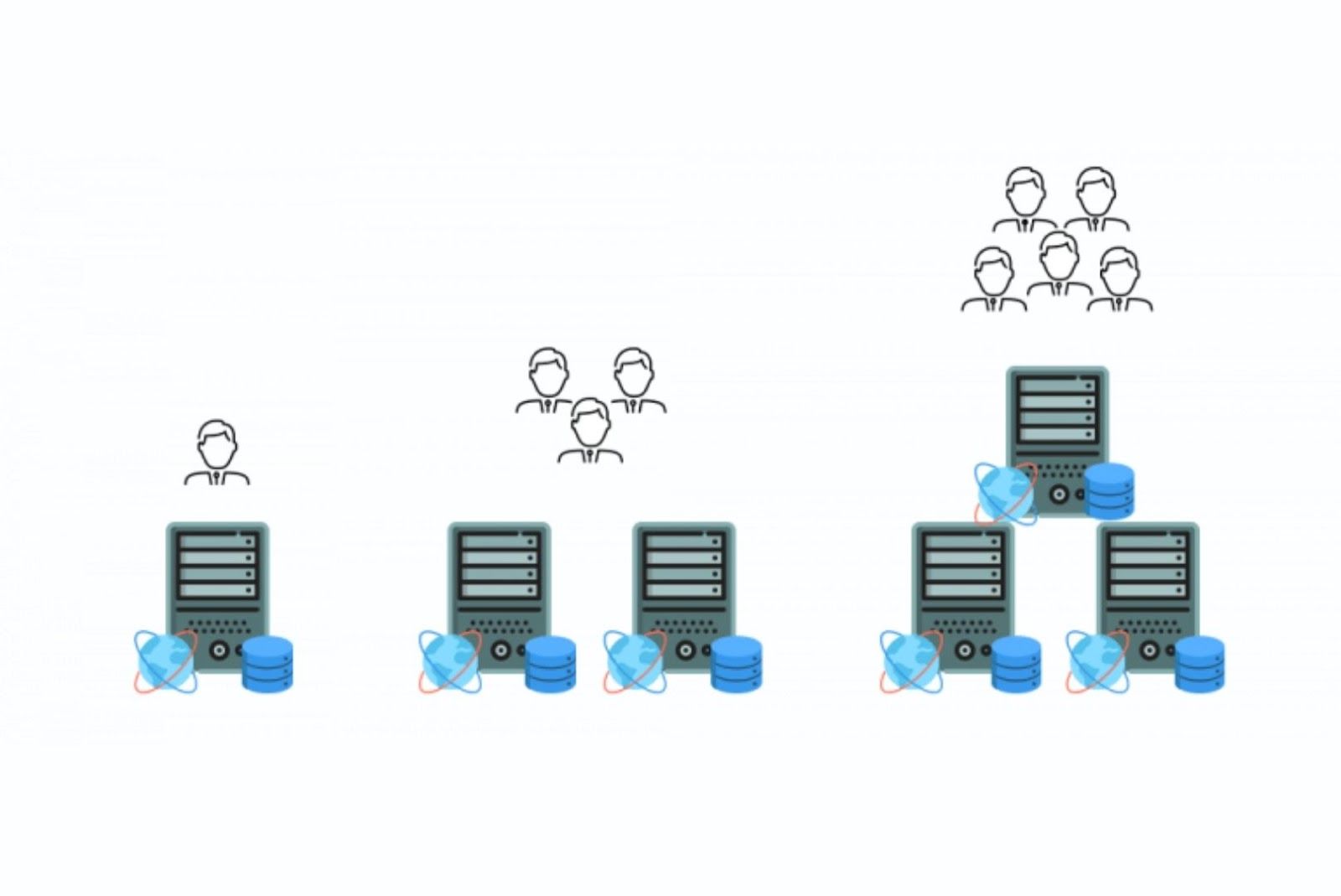
An enterprise app must be scalable. Scalability is essential because you never know when your venture will outgrow its current size.
A sudden growth can wreak havoc on the existing structure of the app. If your app cannot scale fast, then either the competition will out-run you, or your app will die under its weight.
Performance optimization with V8 runtime of Google Chrome
NodeJS is built upon the V8 runtime of Google Chrome. Written in C++, developers can use NodeJS on multiple operating systems.
The V8 engine is popular for how it facilitates speed and performance in large enterprise apps.
It’s also always packed with the latest JavaScript features as it goes through regular updates, latest security patches, and performance enhancements.
NodeJS is single-threaded
NodeJS is a single-threaded platform that carries out I/O operations using callbacks and event lockup. This unique architecture of NodeJS helps developers manage multiple connections simultaneously.
So it’s wise to use NodeJS for enterprise apps because of its ability to handle a large number of connection requests efficiently.
PM2 in NodeJS keeps enterprise apps alive
A process manager for NodeJS apps, PM2 is a reliable tool to monitor the app’s memory uses regularly.
It has a load balancer that ensures your NodeJS app is always working. You can rely on it to reload your app without any downtime. When you use NodeJS for enterprise apps, PM2 makes it easy for you to track app logging and clustering for a large user base.
PM2 also has a range of command-line tools that you can use to deploy your enterprise NodeJS app quickly.
6 Types of Applications You Can Build With Node.js
Read More2. NodeJS enables cross-functional teams to work on enterprise apps

A cross-functional team is characterized by how each member is associated with each phase of the development process. It’s a critical principle of agile methodology and is essential for getting different perspectives on how the app is shaping up.
This kind of in-depth collaboration always leads to more innovation and better solutions for enterprise apps.
NodeJS is one of the very few JavaScript frameworks that can be used for the front-end as well as the back-end. So when you have a team or hire NodeJS developers, they can effortlessly work on both sides without having to learn any additional technologies.
Thus, using NodeJS for enterprise apps allows you to give significant attention to each aspect of the client and the server-side. This, in turn, makes your enterprise app foolproof and reduces the efforts for changing things in the future.
3. Huge NPM registry reduces development time and costs for enterprise apps
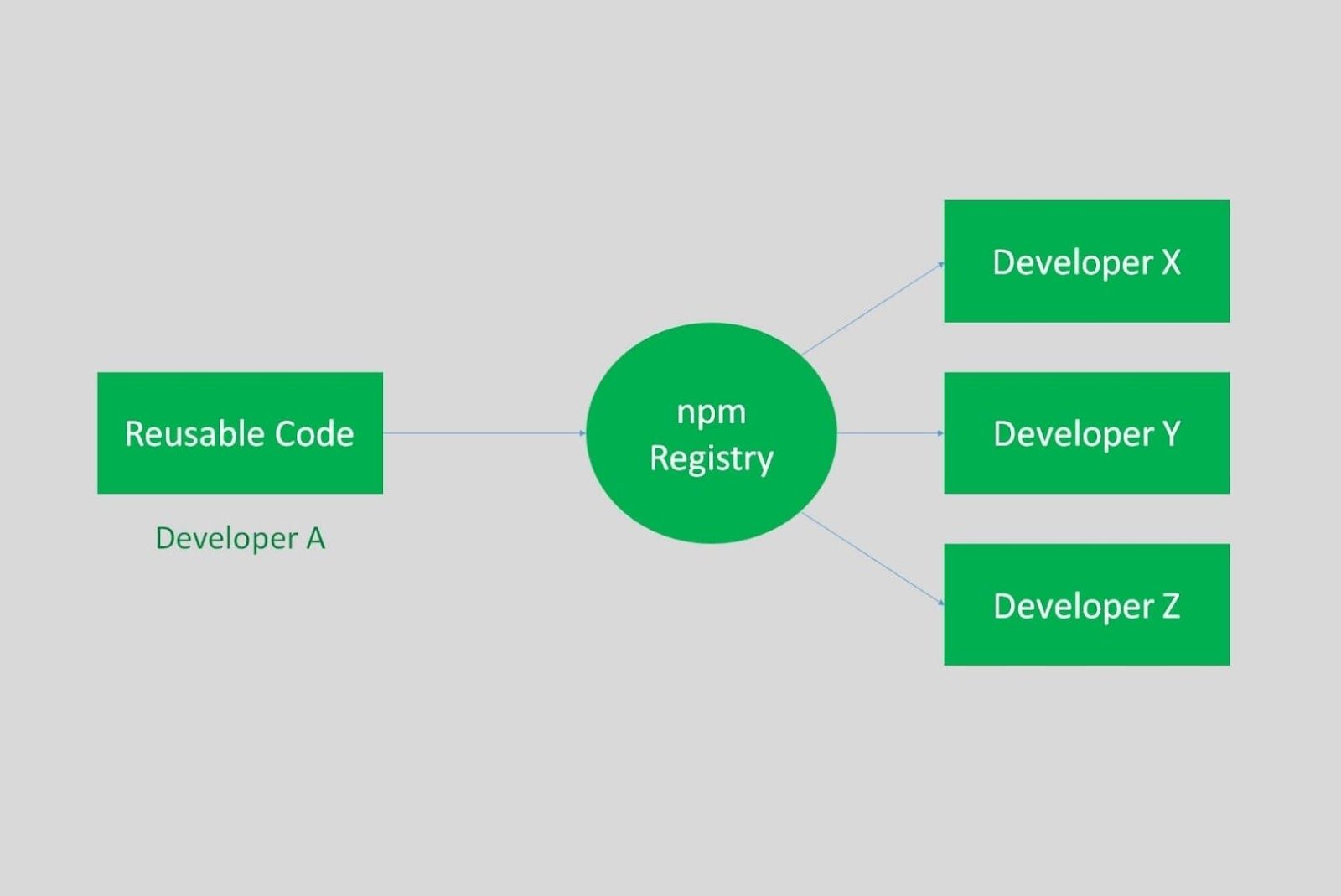
NPM (Node Package Manager) is one of the most critical features of NodeJS. NPM allows developers to install, update, and use open-source software modules. With NodeJS, you don’t have to write common features from scratch. So you can avoid getting into new layers of complexity in unknown territories.
Managing local dependencies of enterprise apps with NodeJS
NPM is also greatly helpful for managing the local dependencies of project tools, even globally installed tools.
NPM provides a package – lock.json, which displays all dependencies of the project. So you can download standalone tools to use right away. Using NPM, it’s possible to manage multiple versions of code and code dependencies with minimum manual effort.
A new version perfectly suitable for enterprise apps
Enterprises have privacy and security concerns in using open source modules. To address these concerns, NodeJS released the enterprise version of NPM.
Organizations working with sensitive data like Fintech or Meditech are wary of storing their data in the cloud. The NPM enterprise version enables you to run the NPM infrastructure behind your company's firewall.
So enterprises can easily control access to code, replace unsafe code, and identify security vulnerabilities with NodeJS and NPM.
4. Microservices architecture in NodeJS makes it ideal for enterprise apps
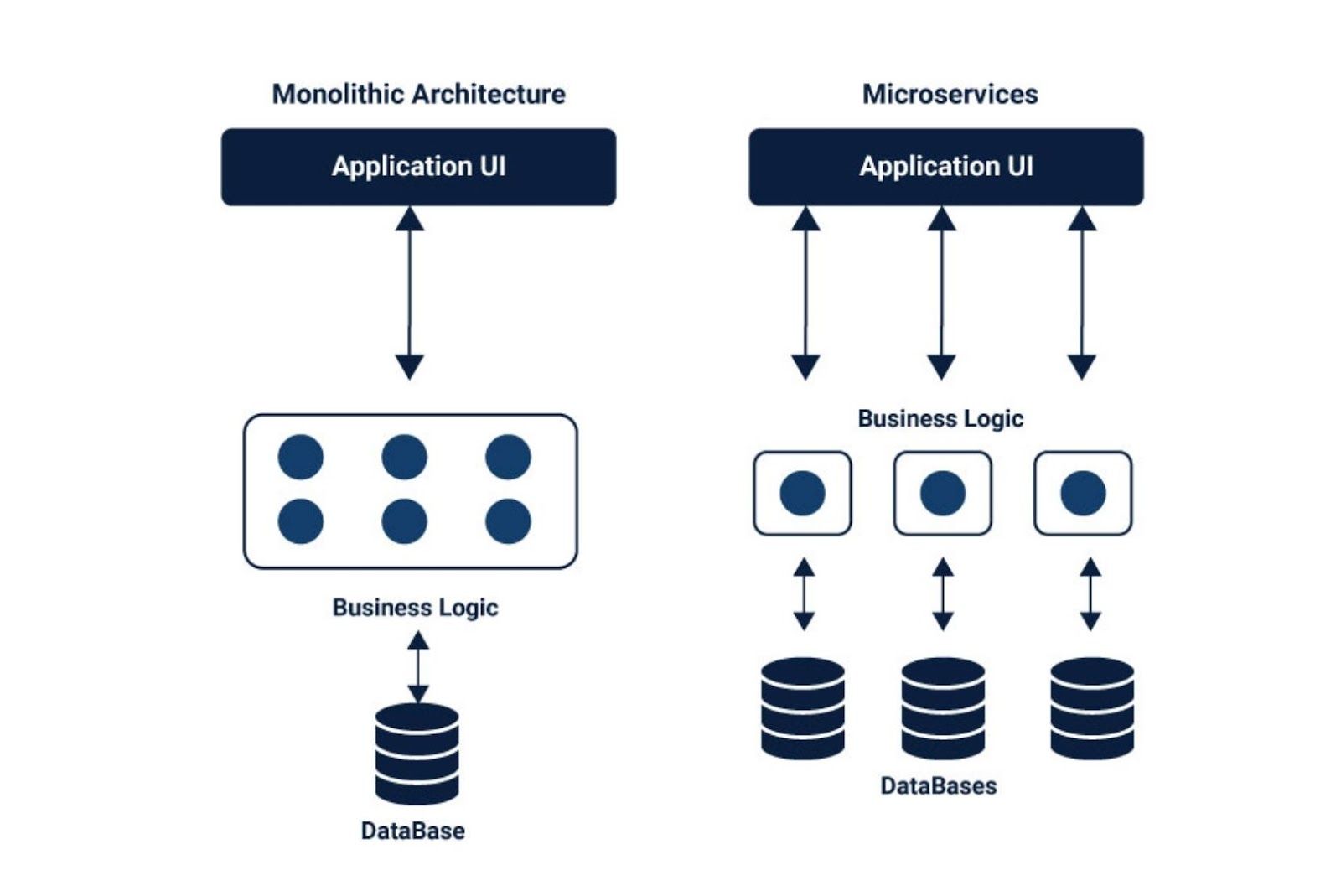
The most common reason why businesses use NodeJS for enterprise apps is its ability to help with app upgrades.
Common problems of upgrading enterprise apps
Every enterprise project starts its life as a small MVP release. With time, the project grows. It gains new features and users in the process. Before you even notice, you may end up with a project with which your development team struggles.
You may need to add new features to your app frequently. This feature will aid you in providing a top-notch experience to your users. But this is often easier said than done.
In reality, it becomes increasingly difficult to introduce new changes and features into the app. Increased complexity with growth is a common problem among enterprise applications.
Let’s understand with an example
For instance, consider that you are running a marketing application that serves three separate and equal areas.
- CMS
- Email marketing
- Reporting
In most cases, the users will use only one feature more often than the other two. Some people might only use the CMS part of the app while ignoring the rest.
As the user base grows, you will have to add more computing power. The computing power will ensure that the app works properly and does not crash.
The ideal way to do so would be to scale just the CMS part as it is the most used part. Developers assume that the other two pieces will deal with the traffic loads just fine.
The approach is impossible with monolithic apps, as you will have to scale the whole system eventually. The app becomes difficult to handle, and deployment becomes a real pain for the developers. Moreover, the team gets too big, creating coordination issues between them.
Microservices in NodeJS makes scaling enterprise apps easy and pain-free.
NodeJS allows the developers to use the microservices architecture for app development.
A microservice is a single self-contained unit that can work independently of the other units. The developers can work on these small units separately. In this way, different teams working on various programming languages can coordinate and work together on a project.
Cut costs and improve efficiency with microservices
NodeJS allows you to run separate outsourced as well as in-house teams in different parts of the world. This feature of NodeJS cuts costs and also improves the efficiency of the project. The reason is that smaller and more distributed teams are much easier to manage.
You need not apply the entire codebase every time you want to introduce some minor change in one part of the app.
As the business grows, you will need to address a broad spectrum of situations to avoid breakdowns.
The microservices architecture of NodeJS will help you in managing small aspects of your web development operations. Using microservices patterns, you can manage your microtasks like
- CMS
- Email marketing
- Deployment
- Reporting
For these reasons, companies like PayPal, Netflix, GoDaddy leverage the power of microservices in their enterprise apps.
5. NodeJS facilitates cross-platform development for enterprise apps
Platforms like Electronjs or NW.js allow you to build cross-platform apps with NodeJS. Thus, you can reuse some of the code from your web app for Mac OS, Windows, and Linux.
NodeJS allows you to use a single team to deliver a web app and a desktop app. Moreover, you would not require the help of experts in C# or Objective C.
NodeJS developers have access to the same tools as front-end developers. NodeJS allows them to debug and profile back-end and desktop apps efficiently as client-side apps.
So NodeJS developers don’t need a Mac to write a Mac OS app or a windows machine for windows apps. Code-sharing among various platforms is effortless in most cases.
Cross-platform app development with NodeJS helps enterprises in reducing development costs significantly.
6. Caching in NodeJS makes enterprise apps blazingly fast
Developers working on NodeJS enterprise apps enjoy the benefits of caching singular modules.
In NodeJS, when someone requests for the first module, NodeJS caches it automatically on the application memory. The caching ability of NodeJS makes it possible for a webpage to load faster. That’s because the app doesn’t need to re-execute the code time and again.
Secondly, caching in NodeJS also makes it easier for users to navigate the app. This aids in improving the user experience as the response time of apps is pretty fast. Faster response time also helps in improving the SEO rankings of the app.
Thus, NodeJS for enterprise apps is a good choice also from the SEO perspective of the businesses.
7. NodeJS has an easy learning curve and good long term support
One of the most significant advantages of NodeJS is that one can learn it easily and quickly. NodeJS is a javascript-based language. It saves developers the hassle of syntax learning and grasping procedure.
It is straightforward for programmers to learn, code, develop, and deploy scalable NodeJS apps. NodeJS allows developers to program on both Windows and Unix with ease. Even beginner-level developers find it easy to learn NodeJS.
How the easy learning curve and long term support of NodeJS impacts enterprise app development process
The fact that it is easy to learn NodeJS cuts the development time significantly. It’s easy to find and hire NodeJS developers at competitive rates. So the base development costs are quite low.
Secondly, for an enterprise app, long-term support is one of the most vital points to consider. Nobody wants to switch between technologies and platforms consistently.
NodeJS provides long-term support to its developers. This feature of NodeJS lets developers base a business on a particular technology and removes the hassle of switching between various platforms.
As promised in the protocol, every NodeJS release is maintained for at least 18 months. After these 18 months, versions will be subject to a 12-month maintenance period. NodeJS does not make any new additions to the module during this period.
Also, NodeJS ensures that it fixes all the security issues and bugs in this period. The long-term support feature of NodeJS makes the choice of NodeJS for enterprise apps pretty straightforward.
The Bottom Line
NodeJS is packed with features that are super helpful in overcoming the challenges of enterprise app development. By bridging the gap between front-end and back-end development, it simplifies the process of development. Also, the microservices architecture in NodeJS enables a large team to work collaboratively on the efficiency and performance of an enterprise app.
The best part is NodeJS for enterprise apps facilitates cross-platform development which can be critical at the time of building an MVP. So from building an MVP to scaling the web app in later years, NodeJS is your companion that will walk with you and take care of your business’ changing needs.
Third Rock Techkno has been a trusted development partner for enterprise apps, especially using NodeJS. Our team consists of business experts from a wide range of industries. They are adept at understanding client requirements and scoping the project in sync with the latest industry trends.
Hire NodeJS developer from Third Rock Techkno for reliable services and updated expertise.
Want to build an enterprise app using NodeJS?
Our experts can guide you on all the important aspects of NodeJS app development, specific to your industry.
Talk to a NodeJS expert for free