
ReactJS and Next.JS are leading app development frameworks that are used widely in the software realm. In this blog, we will gauge both the app development tools on different parameters and see who pins down the other.
It is essential to be clear about the development platform before beginning any project. This is because, if the developers have a clear idea about the app development platform, they plan the entire development process accordingly.
React and Next.js are two of the most popular tools for front-end development as they are used to build immaculate user interfaces (UI). Now as both the tools are superlative in their own right, it is essential to understand the difference between React and Next.js for their best usage.
Therefore, in this blog, we will discuss details about React Vs Next.js by understanding their definition and background. After that, we will be comparing both the development platforms on different parameters such as performance, speed of coding, features, etc. And in the end, we’ll see when business organizations should hire ReactJS developers or Next.js according to their requirements.
What is ReactJS?
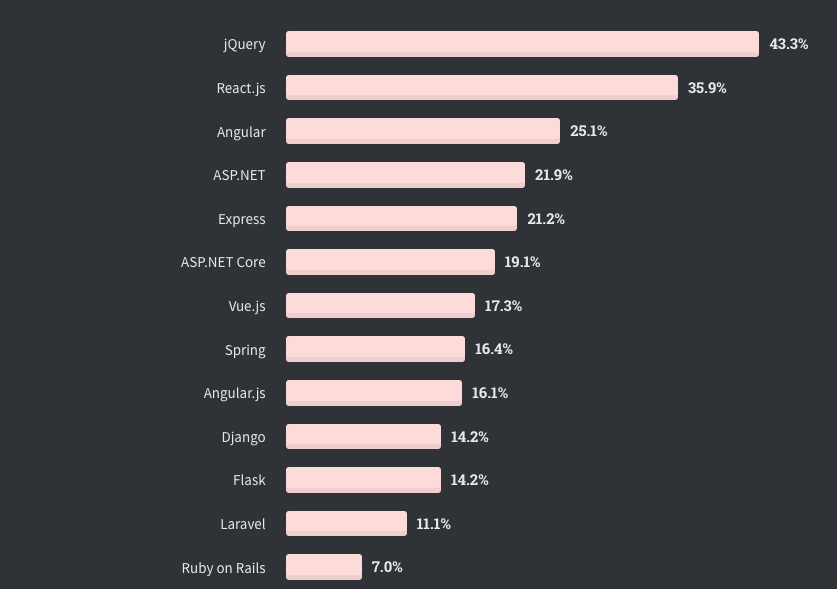
Created by Facebook in 2013, ReactJs has since proliferated and has now become one of the most popular front-end libraries. The framework uses a reactive approach and functional programming paradigm and is one of the most used JavaScript frameworks as well. Thus, the platform can create wonders for the mobile app development process.
ReactJS has state management patterns with Redux libraries. In addition, it is easily extendable and has features such as routing. However, the developers need to create their own workflow while using React. This is because it is considered more as a library and less as a framework.
For example, Redux is an excellent library for enterprise-grade React applications. But on the other hand, it disrupts development productivity and makes it difficult for the developers when they are introducing a new feature.
Also Read: Top 10 Popular React Websites of 2022
What is Next.JS?
The primary use of Next.JS is to build user-friendly and super-fast static websites. This JavaScript framework has automatic static optimization that allows it to build hybrid applications that have both statically generated and server-rendered pages. It was first released in October 2016.
Some of the top advantages that pin Next.JS ahead in the battle of Next.JS vs React is that it has a rich user experience and superlative performance. Moreover, as the framework is based on Babel and Node.JS and it integrates with React, it is very helpful for developing single-page applications.
The latest version of Next.JS (12.0.1) has everything that is needed to build a ready-to-go application. Also, it has great documentation which makes it more popular among front-end developers.
React Vs Next.JS: comparison on different parameters

After going through the introduction and understanding the background, it is time to gauge React Vs Next.JS on different parameters:
React vs NextJS: Performance
Applications that are built using Next.JS are incredibly effective because of the host of performance optimization features. It has image optimization which was introduced in Next 10 and it takes care of the speed and effectiveness of the apps.
Because of automatic server rendering and code splitting, apps built by Next.JS provide immaculate performance. Also, with server-side rendering, the overall performance of the app gets an extra push as well.
On the other hand, ReactJS only supports client-side rendering. Thus, as compared to Next.JS, it is not good enough to develop high-performance applications. Therefore, as a developer, to develop high-performance apps, it is beneficial to not opt for ReactJS development services.
Result: Next.JS is the winner
React Vs NextJS: Documentation
When it comes to comparison between NextJS and React, documentation becomes the most overlooked section. There is an acute need of exhaustive and dry documentation besides having instructional exercises to begin a development project.
Moreover, good documentation is essential in any software development project as it helps the developers to understand the tools and figure out the libraries. These detailed documents are available with React and Next.JS in equal proportion.
React has a ‘learn by doing’ documentation set up along with many tutorials that assists in explaining the basics of the framework. On the other hand, NextJS has a similar setup in the documentation that makes the developers understand component creation and routing. Therefore, in terms of documentation, NextJS vs React settles in a draw. Moreover, if the developers are interested in knowing more, they should check out the official documentation page of both ReactJS and Next.JS.
Result: Draw
Also Read : A Comprehensive Guide to Svelte Vs React
React Vs NextJS: Ease of coding and speed
If the developers need to make a change in a Next.JS project, they need to add a page to the pages folder with the necessary component link. In case of doing a React project, the developers need to make a segment and then add it to the router. Therefore, in both situations, the developers have to write less code and the project becomes easier to understand.
In case, the developer is a rookie in using React, they should Create React App (CRA) as it is an extraordinary method to learn. This method gives the developer an early advantage of assuming they need React to create a Single Page Application (SPA).
CRA uses Babel and WebPack, but the developers don’t need any knowledge to use them. Moreover, it is only responsible for creating a front-end assembly only. The developers can use it with the server of their choice such as Node.
Thus, CRA makes life easier for the developers by saving them from the hassle of customizing an app development environment. In both React VS Next.JS, all they need is to run one command that will set up the tools without wasting time on customization. Thus, it allows the developers to immediately focus on building an application.
Result: Draw
React Vs NextJS: Community
A great developers’ community becomes vital when there is a roadblock during the app development process. Along with having detailed documents, both React and Next.JS have a huge developers’ community that can provide assistance during the app development process.
In ReactJS, it requires a long period of development for the libraries to mature. Moreover, there are extraordinary features for developers to do YouTube recordings, blog entries, etc. Also, there are chances for the developers to discover relative content on React documents and Stack Overflow.
As far as NextJS vs React is concerned, there are more inquiries and less conventional exercises and discussions from GitHub. The members of the Next.JS are easily available in the open-source world as well.
Both ReactJs, as well as Next.JS, have a highly functional community that renders a positive experience to the developers.
Result: Draw
React Vs NextJS: Learning curve
If the app development framework has a well-written and neatly curated documentation, it will dramatically cut the learning curve of the developers. Both NextJs and React have exemplary videos, courses, guides, etc. for the developers to make their learning process easier.
React Vs Next.JS have top-notch learning materials that assist the developers to get familiar with the platforms. Although, to begin with, Next.JS, the developers will require a bit of training, but they're too they can start relatively quickly.
Result: Draw
React VS NextJS: Availability of developers
While comparing the availability of talented developers for React Vs NextJS, ReactJS emerges as a clear winner. This is because everything is centered around JavaScript and React. The Next.JS developers need to know React and the React developers must have knowledge about JavaScript. As everything is built on top of each other, there is no way to use Next.JS without React and React without JavaScript.
Thus, when we compare the number of Next.JS and React developers, React leads the race by a comfortable distance.
Finding a ReactJS developer is very simple as compared to Next.JS. Moreover, it is easier to scale the project with ReactJS as compared to Next.JS.
Result: React.JS is the winner
React Vs NextJS: Typescript and Maintainability
When it comes to maintainability, both NextJS and ReactJS have very opinionated CRAs. The CRAs release the updates frequently and are well-maintained. All the developers have to do is stay updated with the releases.
Moreover, as far as the typescript is concerned, NextJS supports the configuration and TypeScript with touch tsconfig.json. On the other hand, ReactJS initializes and supports CRA by using ‘npx create-react-app my-app --template typescript’.
Result: Draw
React vs NextJS: Cost of development
Both ReactJS and NextJS are pocket-friendly app development frameworks that can be used by businesses of any size. Moreover, as both the platforms are open-source, they are free to use. But, it is essential for businesses to find the right set of developers for their projects. Always hire experienced ReactJS development service providers or NextJS service providers to avail the best benefits of these platforms.
Result: Draw
Advantages of React JS
The detailed list of benefits of ReactJS are listed below, let us have a look:
Reusable components:
There are a plethora of reusable components in ReactJS. And each of the multiple components has its own logic as well as control. All these components are responsible for providing small and reusable pieces of HTML that can be used as per requirement.
Virtual DOM:
ReactJS has virtual DOM that helps in increasing the performance of the application.
Dynamic websites:
It becomes easier to build dynamic websites with ReactJS. Prior to ReactJS, HTML strings were used which made the entire process of coding more complex.
Easier to learn:
As seen earlier, ReactJS has a wide and detailed set of documentation. Moreover, any developer with an understanding of JavaScript can easily start building applications with ReactJS.
Convenient tools:
React has a handy set of tools that helps in making the task of developers clear and relatively simpler.
SEO optimized
ReactJS solves the issue that traditional JavaScript frameworks face with SEO. It assists the developers to navigate through various search engines with ease. This happens because React runs on the server and returns to the browser just like a normal website page.
Also Read: Pros and Cons of ReactJS Web App Development
Advantages of Next.JS
As Next.JS is a leading app development platform in its own right, it has a myriad of advantages as well. Let us have a look at it in detail:
Simple deployment
Deploying Next.JS is a matter of a few clicks. Easy deployment was one of the major goals of Vercel, the organization behind Next.JS and they achieved just that.
Fast
Next.JS is incredibly fast. As they have static site creation and server-side rendering, the apps developed have immaculate speed.
Easy setup
Next.JS allows the developers to add Webpack loaders or Babel plugins to make the setup easy.
API routes
If the app needs easy third-party API integration, it will usually require a native API. And with Next.JS, it is very easy to build it. This is because Next.JS offers API routes that make the entire process simpler.
Final thoughts
It is essential for business owners to understand the difference between ReactJS and Next.JS because this will help them make informed business decisions. ReactJS is supported by a strong developers’ community and it is easier to build things through. While with Next.JS, there are several tools and conventions available out of the box that make life of the developers simpler. Thus, understand the business requirements before hiring ReactJS development service providers or Next.JS
More on:
Why Choose Reactjs For Your Next Project: Features and Benefits